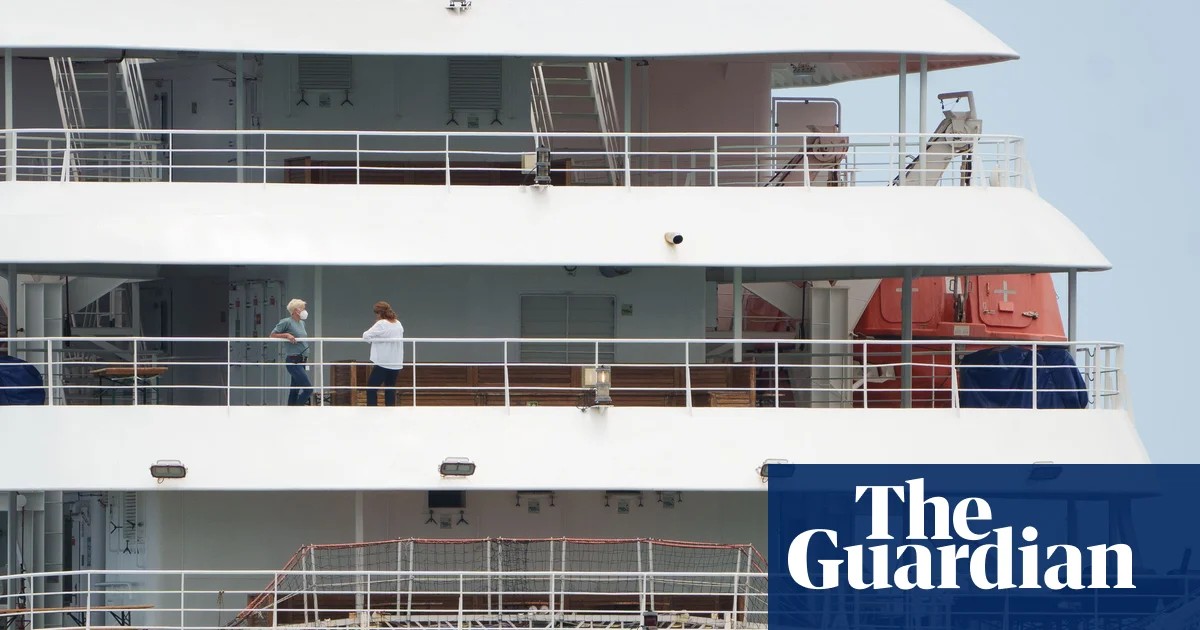
It was supposed to be the dream voyage. Instead, the MV Hondius turned into a horror story. Three passengers died of hantavirus. Others fell ill. Just recently.
Norovirus is plaguing another vessel. E. coli, varicella, the flu—they all thrive on metal decks floating over cold water. Remember the Diamond Princess? It was 2020. The ship became a trap. More than 700 people out of 3,711 tested positive for Covid-19 while quarantined off Japan. Two weeks of lockdown at sea.
Does it surprise you that ships are infection factories? Hardly.
These are floating behemoths. Crowded. Close quarters. People from different countries mix constantly. Different immune systems clash. The ship itself moves through new pathogens every day.
“Which means you have people potentially in touch with germs they don’t see day-to-day,” says Dr. Charlotte Hammer from Cambridge University.
Add in an older demographic. Seniors. More vulnerable to severe disease. The setup is basically begging for trouble.
David Heymann at the London School of Hygiene notes it starts with the passengers. Who gets on? Are they already sick? Which germ are they carrying? That is the roll of the dice.
Transmission happens two ways mostly. Respiratory and food.
Airborne threats like Covid or flu spread via aerosols. Tiny particles hanging in the air. Or droplets landing on surfaces. Ships have tried to boost ventilation. But physics fights back. You cannot build high ceilings on a boat. Most cabins don’t have windows. No cross-breeze from two open panes. The engineering is finite. There is only so much space to play with.
Food is another vector. Norovirus loves E. coli outbreaks. Kitchens are hygienic sure. But they are also a single point of failure.
You cannot have five backup kitchens on a deck. Space is at a premium.
Buffets? Dr. Vikram Niranhan calls them perfect spreading points. Shared serving spoons. Communal touching. Ships aren’t necessarily dirty. They are just incredibly efficient mixing chambers.
Water systems pose their own nightmares. Legionnaires’ disease happens when bacteria in water droplets get inhaled. Detecting it? Nearly impossible for a crew without proper labs. Proving the bug is in the pipes takes time and equipment most ships simply do not have.
Once the outbreak starts diagnosis gets tricky. Hantavirus is rare. One doctor onboard might not recognize it. It looks like a generic viral infection at first. You need multiple cases to trigger suspicion.
“If you saw just one hantvirus infection it looks like any other virus,” Heymann says.
Ships lack full laboratories. Medical space is tight. Staff is sparse. Maybe one doctor for thousands of souls. They aren’t equipped for mass casualties.
Collapsible isolation cabins might help. Training doctors in epidemiology could too. Maybe. But it requires change. And cruise ships are built to avoid change.
What can passengers do? Don’t board if sick. Wash your hands. Vaccinate. Pack a mask. Get travel insurance. Standard advice. Easy to ignore.
Hammer points out the harsh reality. You can’t fix the risk without fixing the concept. Change the space and movement. You ruin the product.
Make the ship stay still. Then it is no longer a cruise.
So we sail. We mix. We get sick. Is that price we accept for the adventure? Or do we finally look at the hull and see it for what it really is.