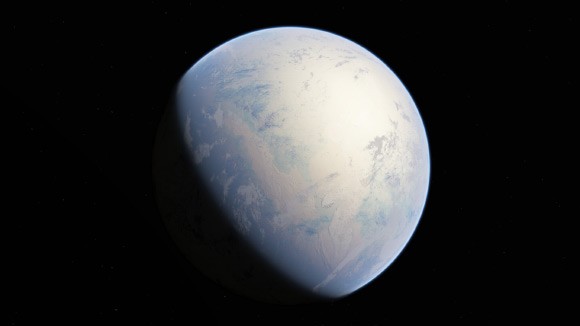
For decades, geologists have struggled to explain a peculiar paradox in Earth’s deep history: the Sturtian glaciation, which occurred roughly 720 million years ago, lasted for 56 million years. Standard climate models suggest that once a “Snowball Earth” event begins—where ice covers the entire planet—it should either end quickly or remain frozen indefinitely. A duration of tens of millions of years defies these predictions.
New research from Harvard University offers a compelling solution: Earth was not locked in a single, unbroken freeze. Instead, the planet likely cycled repeatedly between Snowball Earth (frozen) and Hothouse Earth (ice-free) states throughout the Neoproterozoic epoch. This oscillation helps explain not only the timeline of the glaciation but also how complex life managed to survive such extreme environmental volatility.
The Carbon Cycle as a Thermostat
The study, led by Harvard graduate student Charlotte Minsky and published in the Proceedings of the National Academy of Sciences (PNAS), utilizes a coupled model of ancient climate and the global carbon cycle. The researchers identified a specific geological trigger: the Franklin Large Igneous Province, a massive volcanic region in northern Canada.
Here is how the cycle worked, according to the simulations:
- The Trigger: Volcanic eruptions in the Franklin province released vast amounts of fresh basalt rock.
- The Cooling: As this basalt weathered (broke down) upon exposure to the atmosphere, it absorbed significant amounts of carbon dioxide ($CO_2$). This drawdown of greenhouse gases triggered a global glaciation.
- The Thaw: Over time, volcanic activity and other processes slowly rebuilt atmospheric $CO_2$ levels. As the greenhouse effect strengthened, the ice melted, exposing new basalt surfaces.
- The Repeat: The exposure of fresh rock led to renewed weathering, pulling $CO_2$ back down and triggering another freeze.
This self-sustaining loop of freezing and thawing could naturally maintain glacial-interglacial swings for tens of millions of years, resolving the discrepancy between the geological record and previous climate models.
Why This Matters for the History of Life
The implications of this research extend beyond climate physics; they touch on the very survival of early life. The Neoproterozoic epoch marks the period just before the explosion of animal life. If Earth had remained in a single, permanent Snowball state, atmospheric oxygen levels might have collapsed, making it difficult for aerobic (oxygen-dependent) organisms to survive.
The study suggests that periodic returns to warmer, ice-free conditions allowed atmospheric oxygen to stabilize. These “breathers” in the climate cycle may have provided the necessary environmental stability for life to persist and eventually evolve into more complex forms.
“Global glaciations near the dawn of animal life… are among the most extreme climatic perturbations in Earth’s history and likely exerted a strong influence on biological evolution,” the researchers noted. “This could help explain how aerobic life persisted through such an extreme interval.”
Resolving Longstanding Geologic Puzzles
This model aligns with several previously puzzling observations in the geologic record:
- Sedimentary Patterns: The rock layers from this era show signs of repeated wetting and drying, consistent with cycles of thawing and freezing, rather than a static ice sheet.
- Oxygen Stability: Despite extreme climate upheavals, oxygen levels remained relatively stable, a feat difficult to explain under a permanent ice cover scenario.
- Duration: The 56-million-year timeline of the Sturtian glaciation fits perfectly within the predicted duration of these carbon-cycle-driven oscillations.
Conclusion
By viewing the Sturtian glaciation not as a single event but as a dynamic cycle, scientists have bridged the gap between climate modeling and geological evidence. This understanding highlights the delicate balance of Earth’s carbon cycle and underscores how planetary climate mechanisms played a crucial role in shaping the conditions necessary for the rise of complex life.