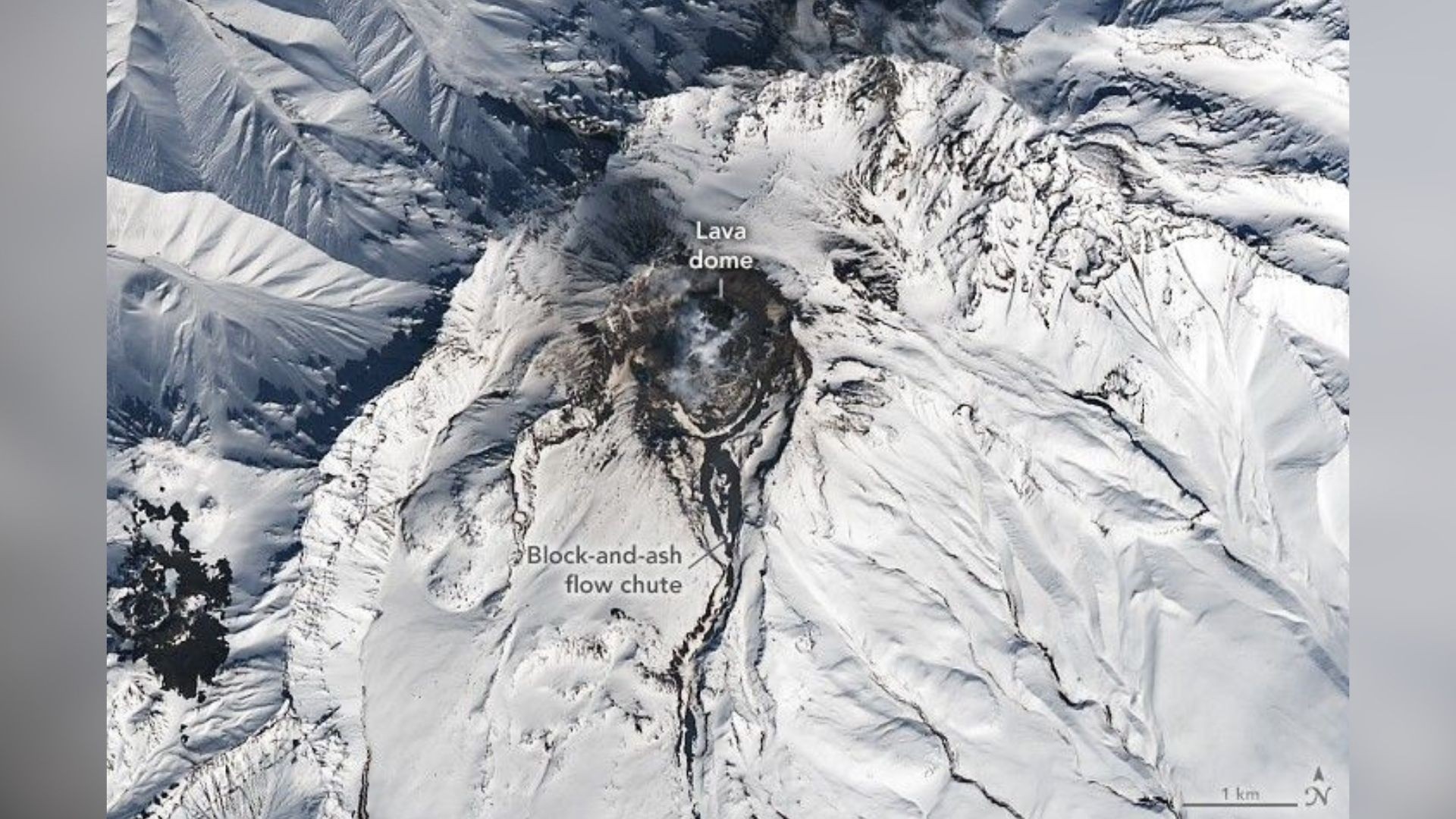
Recent satellite observations have provided a striking visual record of Shivelyuch, one of the most active volcanoes on Earth, as it continues to exert thermal influence over its frozen surroundings. Images captured by NASA’s Landsat 9 satellite on April 23 reveal distinct dark channels of ash and volcanic debris cutting through the snow-covered slopes of the Kamchatka Peninsula in far eastern Russia.
These visuals highlight a critical geological process: volcanic heat seeping through the landscape long after eruptions have ceased. The contrast between the white snow and the dark, heat-retaining volcanic deposits offers scientists a clear view of the volcano’s persistent activity.
The Mechanics of Shivelyuch’s Activity
Shivelyuch, also spelled Shiveluch, holds the distinction of being the northernmost active volcano in Kamchatka. According to NASA Earth Observatory, it is characterized by near-constant unrest. This activity is not limited to explosive eruptions; it includes frequent ash emissions, detectable heat signatures, and avalanches of hot rock cascading down its flanks.
At the heart of this activity lies a growing lava dome. Located within Shivelyuch’s horseshoe-shaped crater, this mound of thick, viscous lava has been expanding in recent months, as monitored by the Kamchatka Volcanic Eruption Response Team (KVERT).
The instability of this dome is a primary driver of the volcano’s hazardous behavior. When sections of the dome collapse, they trigger pyroclastic flows —fast-moving currents of hot gas, ash, and volcanic rock. These flows leave behind thick deposits that act as thermal insulators, retaining heat for months or even years.
Why the Heat Lingers
The recent satellite imagery captures the aftermath of these processes. The dark scars visible on the slopes are not merely cosmetic; they indicate areas where fresh volcanic deposits have spread in recent months. Crucially, some of these areas may still be radiating residual heat from Shivelyuch’s massive 2023 eruption.
This lingering thermal energy is sufficient to melt snow from the “inside out,” creating the visible channels seen in the April 23 images. This phenomenon underscores the long-term impact of major volcanic events, demonstrating that the geological footprint of an eruption extends well beyond the initial explosion.
“Shivelyuch is an incredible volcano that has collapsed over and over again,” said volcanologist Janine Krippner. “It goes through cycles of collapse but then builds itself up again and again through constant volcanic activity.”
A Cycle of Destruction and Renewal
Shivelyuch’s behavior exemplifies a dynamic geological cycle. Rather than remaining dormant after major events, the volcano continuously rebuilds itself through ongoing magmatic activity. This resilience makes it a subject of intense scientific interest, offering insights into how volcanic systems manage energy and material over time.
The ability to monitor this heat retention from space provides valuable data for understanding volcanic hazards. By tracking where heat persists, scientists can better assess risks related to snowmelt-induced flooding or further structural instability in the crater.
Conclusion
The latest satellite imagery of Shivelyuch serves as both a scientific tool and a vivid illustration of volcanic persistence. It confirms that the volcano’s activity is not just episodic but continuous, with thermal energy shaping the landscape long after the initial violence of an eruption has subsided.