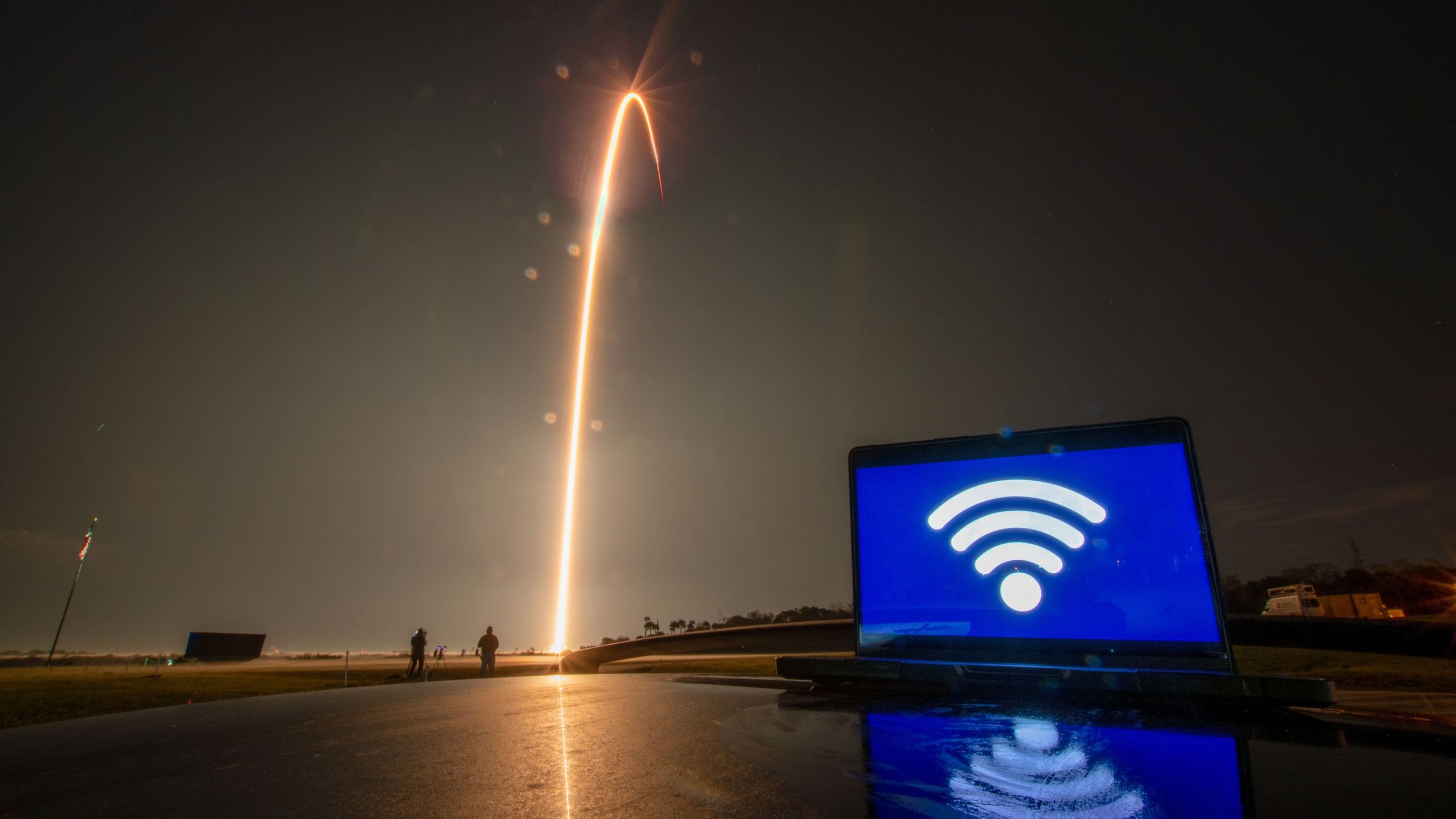
NASA is finally giving the Orion capsule the digital lifeline it needs for the deep future. The Artemis III mission won’t just be about landing. It’s going to be about streaming.
That’s right. The crew aboard Orion during this 2027 flight will beam 4k video back to Earth in real time. They’re using SpaceX Starlink lasers.
This isn’t a theoretical upgrade. NASA and SpaceX have signed a partnership to equip the spacecraft. The hardware? Two mini laser terminals. They attach to Orion’s exterior. They plug directly into the existing Starlink network already orbiting overhead.
Why does this matter? Data capacity.
For decades, deep space communications have been bottlenecked. We send bits back slowly. Painfully. Radio waves are wide but narrow in throughput. Lasers? They’re tight. Fast. Incredibly dense with information. The added capability pushes more data to Houston. Real-time video. High-definition feeds. Live views from lunar orbit that look like they’re being filmed in your living room.
The mission is tentatively slated for the second half of 2024. No, wait, the second half of 202. And yes, SpaceX is doing more than just the lasers. They’re providing the Starship rocket.
Think about the infrastructure supporting this. SpaceX currently operates over 10,000 satellites in low Earth orbit. That’s nearly global coverage. These aren’t just internet hotspots for laptops. They’re a web of interconnected nodes. More than 25,000 active lasers keep that mesh stable.
“SpaceX currently operates more than 1,000 Starlink spacecraft… equipped with over 2,000 lasers currently in LEO.”
SpaceX already proved this works. Look at the Fram2 mission. The privately funded flight launched the first human into polar orbit back in 2020. Starlink acted as the relay. High-data streams. Live HD views. Falcon 9 launches. Starship launches. All streamed live because the network could handle it.
Artemis III changes the game for NASA.
The Artemis program aims to return astronauts to the Moon. Then build a permanent base. Artemis III serves as a practice run. Orion will rendezvous and dock with commercial lunar landers in low Earth orbit. Specifically Starship from SpaceX. And Blue Origin’s Blue Moon.
This is a rehearsal. A dress rehearsal in the closest possible orbit before the actual landing. Compare that to Artemis II.
Artemis II flew Orion around the far side of the Moon this April. Ten days. The first crewed flight of the capsule. They used laser comm there too. But the ground stations were limited. Jet Propulsion Lab in California. White Sands in New Mexico. They handled data loads too big for standard radio networks. But the range was huge. The Moon is far.
Artemis III sticks to LEO.
The distance shrinks. The signal strengthens. Communication limitations become manageable. Maybe even solvable.
If Artemis III goes off without a hitch, the next step is immediate. NASA is targeting a Moon landing for Artemis IV. 2028. Starship will be the vehicle. It’ll land the astronauts on the surface.
But until then, we’ll be watching. From 4k feeds. Streaming through the stars.