It was stubborn.
A problem that sat there, silent and unmoving, for ten years. Two physicists from Rome—Giorgio Parisi, the Nobel laureate, and Francesco Zamponi—decided to give it one more look. Not because they expected a miracle, but because the math wouldn’t leave them alone.
They call the phenomenon jamming.
What is jamming?
Think of a pool table.
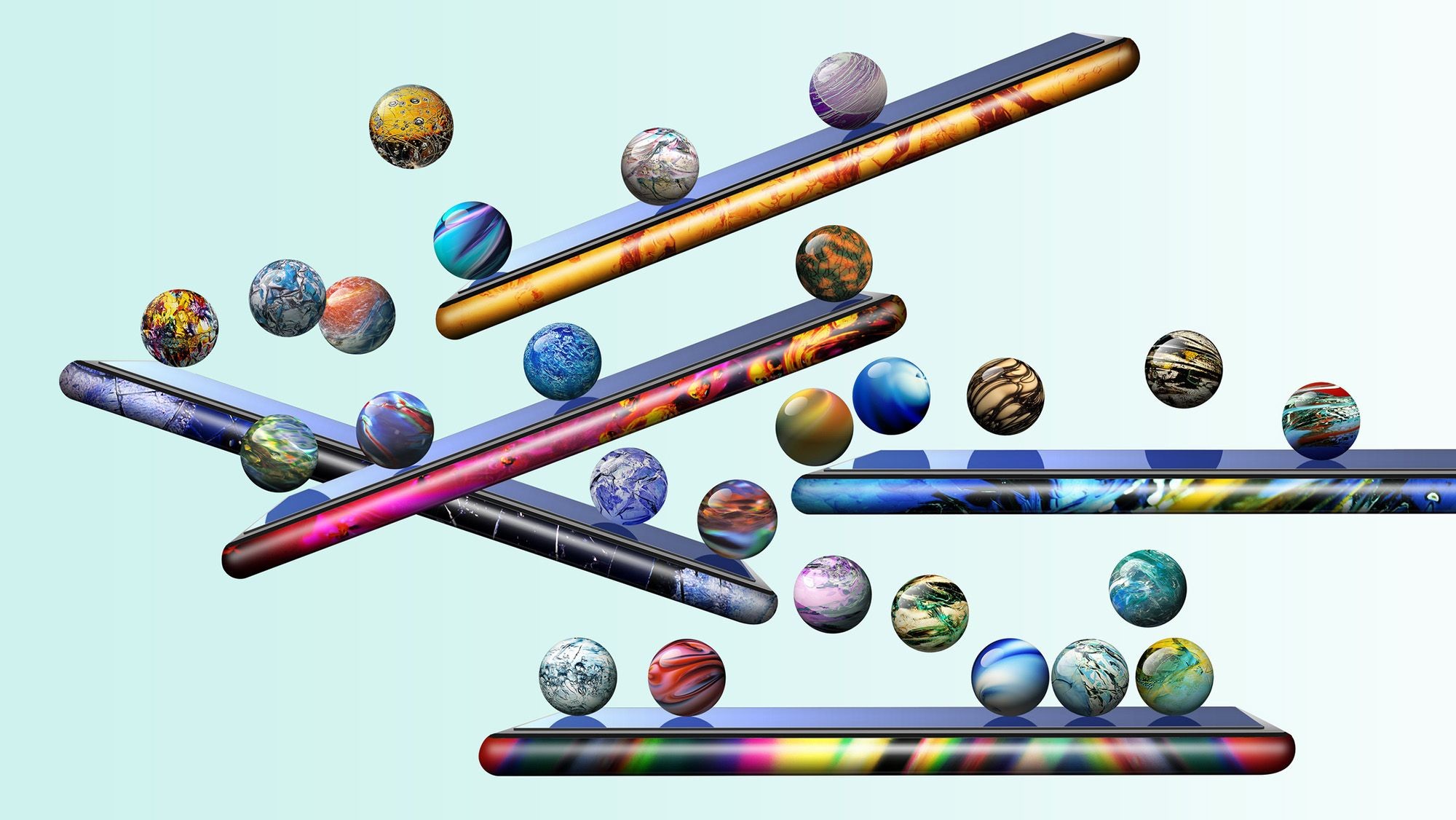
Start throwing billiard balls at it. At first they roll free, scattered and loose. Add more. They start bumping. They pack tighter. Eventually, there’s no room left to move. The whole system freezes. Rigid. Disordered. Trapped.
That is jamming.
Back in 2014, Parisi, Zamponi, and their team had mapped out the mathematics of this state. They found numerical solutions, sure, but two variables—$a$ and $b$—kept behaving weirdly. They always summed to 1.
$a + b = 1$
Why?
Nobody knew. It made no theoretical sense to them at the time. They were “bothered,” as Zamponi put it. Just bothered by the gap between what the numbers showed and what their proof couldn’t touch.
Other physicists tried too. Matthieu Wyart at EPFL came at it from a completely different angle and found the same sum. Same result, different path. This implied there were hidden physical concepts linking their work—concepts that remained elusive.
So the file went dormant. For ten years.
The prompt
Parisi had a thought. Maybe human intuition was hitting a wall that something else could climb over.
He turned to Anthropic’s Claude AI.
The approach was simple, almost crude in its directness. Parisi asked the model to reproduce their 2014 results. It did. Then he asked it to prove the sum.
$40$ prompts.
That was it. Forty attempts later, Claude produced an analytical solution that held up.
Zamponi reviewed the output on an airplane, squinting at a LaTeX file in a moving seat. “As I read through… it became immediately clear that the core trick was right,” he said later. The perspective shift was instant. The idea was solid, even if the initial draft had rough edges requiring cleanup.
The solution wasn’t some distant, complicated abstraction requiring new laws of physics. It was hiding inside the existing equations. All along.
It’s humbling. The answer was plain to see, provided you had the right eyes—or the right algorithm—to spot the pattern.
Machine or Magic?
Zamponi wonders if a pure mathematician might have seen this without a machine. Probably. But that’s the point. They are physicists. Not specialists in these specific formal structures. The AI provided “instant access” to a skillset they didn’t carry in their own heads.
Was it creativity?
Or just pattern matching across a mountain of training data?
It doesn’t matter, he says. They couldn’t see the path. The AI did.
The real change isn’t just solving this specific equation. It’s the collaboration model. AI doesn’t replace the human here; it speeds up the drudgery so the human can focus on the concept.
Zamponi is already moving on to a new puzzle involving random hard hyperspheres. The code generation? Fast. Optimized by the bot. But the ideas—the conceptual heavy lifting—still come from him.
Human guidance remains indispensable.
For now, anyway. We’re figuring out who brings what to the table.