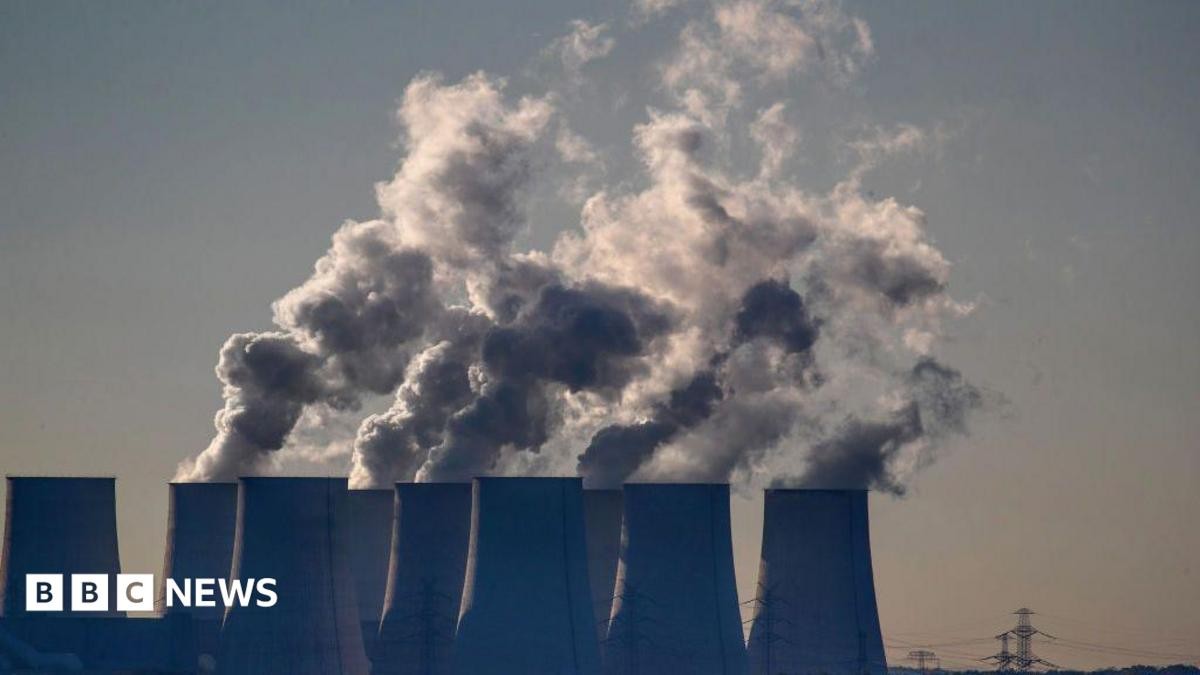
The European Union just hit the brakes on its carbon timeline.
Brussels proposed a major overhaul of the bloc’s climate policy. Specifically, it wants to slow down how fast businesses must cut greenhouse gas emissions. It’s a significant pivot from the stricter rules that were previously on the table.
“We are adopting a more business-friendly approach,” EU climate commissioner Wopke Hoikstra said. “And, may I say so, a savvy one.”
The mechanics behind relaxing emissions caps
So why change course? The goal is political survival. Countries like Italy have spent years arguing the Emissions Trading System (ETS) is essentially a disguised tax. It keeps energy prices artificially high while offering little comfort to consumers struggling with bills.
The Commission argues these adjustments keep the ETS aligned with the EU’s ultimate target: reducing carbon emissions by 90% by 2040 (relative to 1990 levels).
But the path to that goal just got longer for heavy industry.
Under the old plan, many companies faced a hard stop on certain emission allowances in 2034. The new proposal lets some sectors obtain allowances until 2038, provided they commit to investing in actual decarbonization efforts. It’s a carrot, not a stick. At least not this time.
The system itself hasn’t changed drastically in structure, only in pace. Since its inception in 2005, the ETS has forced power plants and large industries to buy permits for every tonne of CO2 they emit. If you pollute, you pay. You can also buy extra permits or trade with other firms. Some businesses even receive permits for free. This helps them compete with foreign rivals who don’t pay such carbon costs.
Here is what actually changes in the math:
- The rate at which the permit cap lowers annually will drop to roughly 3.7% starting in 2031.
- From 2036, that rate slows further to just 1.7%.
- Compare this to the current rate of 4.3%. It is a noticeable deceleration.
Free permits are another sticking point. The plan keeps them on the table until 2038 rather than cutting them off in 2034 as originally planned. Previously, those free allowances were slated to be replaced by a carbon border tax on imports for certain sectors. Now? The timeline is delayed.
Companies with serious plans to invest in green technology within Europe will get 80% of those free permits upfront. The remaining 20% comes after the investment is actually made.
Who wins and who loses the policy shift
Politics is messy. The response to this “savvy” approach split almost perfectly down partisan and national lines.
Paulina Hennig-Kloska, Poland’s climate minister, cheered the move. Poland has historically pushed for weaker climate targets to protect its coal-heavy economy.
“This is a huge success for Poland,” Hennig-Kloska noted. “Although we will fight for more.” She sees a softening of the EU’s stance as a victory in itself.
Then there is the other side.
German MEP Michael Bloss didn’t mince words. He called the plan a recipe for “gigantic climate pollution.” His warning wasn’t about economics. It was existential.
“The next generation will have a worse quality of life because of this.”
It’s a valid concern. The science doesn’t care about permit trading rates or border adjustments. Europe is warming fast. Geography plays a role in how different regions heat up, but the trend is uniform enough to be alarming. We are seeing more extreme heatwaves. More frequency. More intensity.
Slowing the cutback on emissions gives businesses breathing room. It might save industries from immediate cost spikes. It might prevent some factory closures or layoffs.
But it also delays the transition.
The proposals still need approval from EU countries and lawmakers. That process could take another year. Or two. The clock is ticking either way. Just at a slower speed.