Look at a rabbit. It’s fuzzy. It curls up. From three feet away, it’s basically a loaf of bread.
But Chris Law, an evolutionary biologist, says that’s a trick of the light. Rabbits aren’t spheres. They’re elongated tubes with legs attached, just hiding it well. True roundness in animals is rare. On land, it’s almost nonexistent.
“They’re physically not as round as their appearances,” Law said.
So who takes the title? And more importantly, why is being a ball such a bad idea for most creatures?
Why round animals fail on land
Gravity hates circles.
If you are a small mammal, heat is the enemy. A sphere has the lowest surface-to-volume ratio of any geometric shape. Curling into one traps body heat. Armadillos and hedgehogs know this. They scrunch down to present armor to predators, saving their soft innards for later.
But they don’t stay curled. Unfolded, their skeletons are angular. If an animal were truly round, 24/7, it would have trouble moving. Imagine trying to wedge a perfect sphere into a crevice. You can’t. You roll. On a smooth surface, you’re fine. In a forest, you’re sitting ducks.
Obese house cats get joint problems. Wild animals die.
“There are several reasons why round creatures are never found on land,” Law explained. Being too round strips mobility. Predators spot you. They take you.
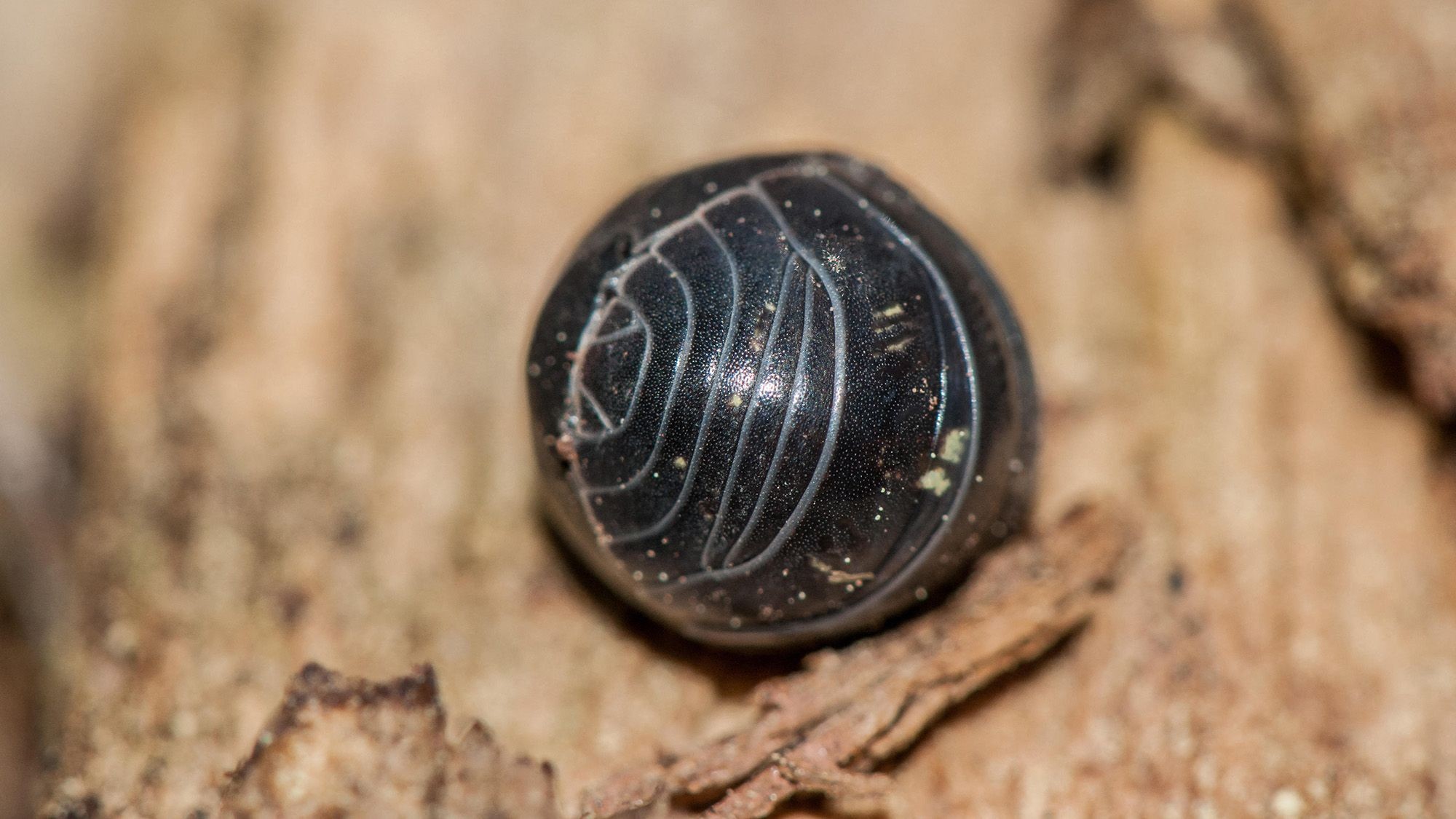
Beetles cheat the system. They are small. Gravity doesn’t care as much about a ladybug. Their hard carapaces hide their roundness under armor. Rain frogs inflate like balloons, but only when scared. Once the threat leaves, they deflate back into… well, frog-shaped blobs.
If we count temporary inflation, the pill bug wins. The rolly-polies curl tight. But are they truly the roundest? Ladybugs have flat undersides to walk on. Rain frogs are lumpy. They are contenders, but they aren’t spheres.
Lumpsuckers hold the line underwater
Water changes everything. Buoyancy fights gravity. You feel lighter. The penalty for being fat or round disappears.
Enter the lumpsucker.
Karly E. Cohen studies them at Friday Harbor Labs. These fish look like lumpy pebbles with faces. They have a suction cup on their bellies. Not flesh. Enamel.
“The curve of their bodies… modifies the drag… creating a force that pushes them down.”
Their round shape helps them stick. The armor on their backs protects them from sharks and cod. Try biting a lumpsucker. You can’t. It’s like chewing a hardcover book.
“There’s no real good way to move a apple whole; you have a to bite it,” Cohen noted. Then you realize the apple has teeth.
Symmetry is where roundness lives
But the lumpsucker isn’t the winner.
The problem? It’s bilaterally symmetric. Like you. Two halves. Left and right. A lumpsucker has a front and back. A round animal should not.
To be the roundest, you need radial symmetry. Or at least pentaradial.
Think of sea stars. Urchins. Sand dollars. Five points of symmetry around a center. Laurent Formery, a biologist in France, notes this is unique among modern animals.
They don’t have brains like we do. Their nervous systems are scattered. Their skin is full of eyes, in a way.
“They are kind of like big crawling eye and brains.”
They sense danger from every angle. If a predator comes from the north, they shift their “face” north. They eat in all directions. This decentralized setup makes radial symmetry functional, not just pretty.
Sponges? No symmetry. They look like exploding lightbulbs. The death ball sponge hooks everything to its spherical centers. Messy, but not perfectly round.
The crown goes to sea urchins
Ignore the spikes for a moment. Look at the shell.
Some urchins are disturbingly circular. The genus Histocidaris is the top contender. Histocidaris purpurata. Histocidaris formosa.
These marine urchins sit on the ocean floor like dark marbles. Their symmetry is nearly flawless. Their shape, combined with their sharp exterior, makes them untouchable meals.
Is that the final word? Probably.
Being the roundest animal doesn’t seem like much of an award. But studying them reveals how bizarre evolution can be. Organisms find every hack available to survive. Even if that hack involves looking like a ball of spikes on the seafloor.