Stop looking at your blood like it’s just red fluid.
It is. But it’s also older than you, older than humans, and possibly older than the concept of being a “many-celled organism.” We treat it as background noise. A hum in the background of existence. Scientists at Kyoto University disagree. They think your blood is a time machine.
Specifically, it’s a relic from 700 million years ago.
Ghosts in the Data
Tracking cells through evolution is annoyingly difficult. Bones fossilize. Feathers stick to tar pits. Cells? They dissolve. There’s no “ancient cell” buried in rock for you to dig up.
So the researchers used proxies. They looked at transcriptomes—essentially a snapshot of which genes are shouting and which are whispering in different cells.
The list was long. Humans. Mice. Zebrafish. Sea squirts. Sponges. Even some lonely, single-celled organisms.
They weren’t just looking for similar DNA sequences. Anyone can spot that. They were hunting for similar patterns of regulation. The wiring, not just the hardware. If two distant species use the exact same switchboard to control cell growth, they likely inherited it from the same grandparent.
The Amoeba Ancestor
The result wasn’t the sleek red courier you picture when you think of oxygen transport.
No.
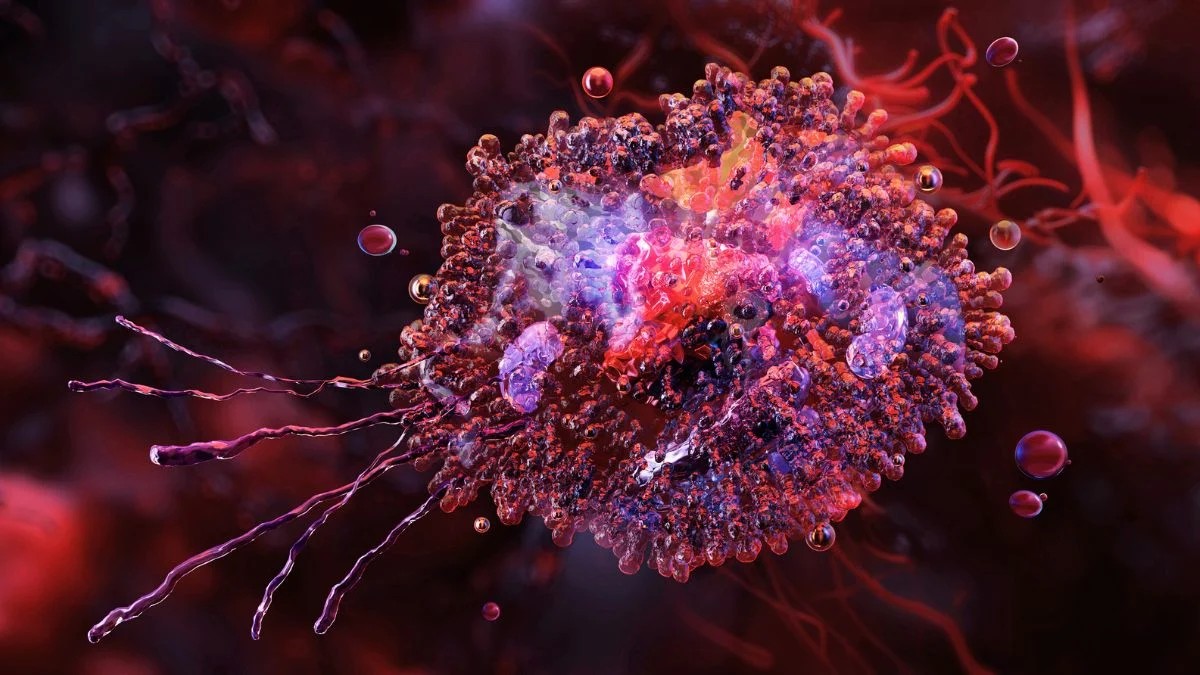
The first “blood cells” were likely messy. Scrappy. Amoeba-like things. Basically macrophages. Those are the tank-class cells in your immune system, the ones that wander around eating invading microbes for breakfast.
And they didn’t invent themselves when animals arrived.
The genetic fingerprints matched those of single-celled organisms living hundreds of millions of years earlier. One specific gene stood out: Fos.
It regulates cell growth. It pops up everywhere in this study. The team took a single-celled organism and cranked up Fos expression to maximum. What happened?
The cells stopped clustering. They stayed isolated. They acted like amoebas.
It’s hard to ignore the implication. The genetic toolkit for behaving like a blood cell existed long before there were veins to put it in. It was recycled machinery, upgraded, repurposed.
Two Paths Forward
From those macrophage-like ancestors, the family tree split.
One branch stayed put. These became the ancestors of modern macrophages and, eventually, the B-cells that manufacture antibodies.
The other branch? They became the alarm system.
They turned into mast cells, which then spawned T-cells, platelets, and red blood cells. The scavengers and the couriers. Two sides of the same ancient coin.
“The differentiation pathways of vertebrate blood cells reflect a 700-million-year history,” says lead author Hiroshi Kawamoto.
He’s not wrong.
Who Are We Anyway?
We usually think of ourselves as separate from the “primitive.” As if single-celled life is something else entirely, a lowly starting line we crossed long ago.
This study smears that line.
Your blood isn’t just carrying oxygen. It’s carrying a legacy from when your ancestors were single organisms trying not to be eaten by their neighbors. You aren’t just housing them. You are them, processed and packed.
Yosuke Nagahata, a first author on the paper, noted he feels “closer to distant ancestors” knowing this legacy circulates inside him.
It’s a heavy thought. Maybe too heavy for a Tuesday morning. But the next time you get a blood draw, remember. That vial doesn’t just hold your health data.
It holds history.
What else are we missing, right under our nose, or in it?