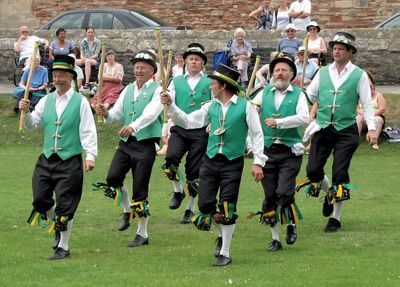
Morris dance is one of those things you either know by heart or have only seen in a blurry tourist video. It’s traditional English folk dance performed in groups. You know the vibe. Spring. Early summer festivals. May Day. Guys in white shirts. Bells clanging on their shins.
It’s coordinated footwork. Steps. Hops. Leaps. And live folk music.
For a long time, it was strictly men’s territory in rural communities. But that’s changing fast. Today, the dance is recognized for its diversity and growing inclusivity. It’s not just about preserving the past anymore. It’s about who gets to dance it now.
Styles and European Roots
There isn’t just one Morris dance. There are dozens of styles, each with its own DNA. Cotswold. Border. North West. Molly. Sword dances.
Each style is shaped by distinct local histories. The moves differ. The props differ. The music differs.
And it’s not just an English phenomenon. Scholars point out that Morris dance is connected to related seasonal or dramatic forms such as mumming. That’s a winter tradition where costumed performers enact short folk plays.
Look across the water. Comparable stick and ritual dances appear across Europe.
- Spain’s moriscas (or moriscos )
- Western Europe’s ball de bastons
- Romania’s călușari
This geographic distribution is significant. Some scholars suggest it reflects a shared ancient European heritage. We’re looking at a continent-wide tradition that split into distinct branches over centuries.
The Face Paint Controversy
Here is where it gets messy.
Some Morris and Molly dancers, especially in Border traditions, have historically painted their faces black. Or used other forms of disguise.
Why?
Some performers say it was to avoid being recognized while performing in public. Others claim it reflected the appearance of local workers like coal miners or chimney sweeps. Those stories feel plausible on the surface. But scholars point out that face-blackening became more widespread in the 19th century.
That timing matters.
The 19th century saw the rise of blackface minstrel shows. Those racist caricatures were everywhere. It’s likely they influenced the practice. Earlier theories—like trying to look Moorish or appear “exotic”—lack direct evidence. They sound good in a lecture hall. They don’t hold up under scrutiny.
Today, many teams use colorful face paint or masks instead.
They are acknowledging the troubling history of blackface. They are aiming to make their performances more inclusive.
The Performance Mechanics
Groups, called sides, typically perform Morris dances in sets or lines.
The choreography is demanding. It involves coordinated steps. Hops. Leaps. Capers. A caper is a playful jump.
You need rhythm. You need synchronization.
Dancers wear bells strapped to their shins. White garments. Colored sashes. Ribbons. Decorated hats. It’s a visual spectacle.
Props come into play. Sticks. Handkerchiefs. Swords. They clash. They wave. Stylized patterns fill the air.
Live folk music drives the whole thing. Melodeons. Fiddles. Concertinas.
Sometimes characters join the fray. A fool. A beast. Hobby horses. Owls. Fanciful figures.
They engage the audience. Inject humor. Playfully disrupt the performance.
Take bean-setting. It’s characterized by paired stick clashing and mimed planting movements. It evokes agricultural themes. Seasonal cycles. Spring planting.
It’s not just a dance. It’s a ritual.
The History Gap
We’ve covered the what. The how. The who.
But the history section of the source material cuts off.
That leaves a gap. A big one.
Where did the first Morris sides actually form? Who were the first dancers? What happened to the dance during the Industrial Revolution?
The text hints at it. 19th-century influence. Blackface minstrel shows. The shift from blackface to colorful paint.
But the deep roots? The pre-19th century origins?
That part is missing.
So we’re left with a dance that is clearly evolving. From rural ritual to public spectacle. From exclusive male groups to diverse, inclusive sides.
The bells still clang. The sticks still clash.
But the context is shifting. Fast.
How long until the “traditional” look is completely unrecognizable?
Or
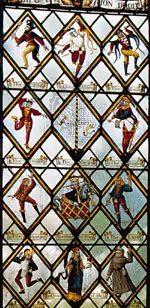
It started in the courts of 15th-century England. What began as elite entertainment eventually drifted into the mud of village traditions. The etymology is murky, but most scholars point to morisco —the Spanish word for “Moorish.” By the time Tudor monarchs like Henry VIII and Elizabeth I took the throne in the 16th century, Morris dancing had become a staple of court masques and public pageantry.
The tradition settled deep into rural soil by the 17th century. It was a fixture at May Day celebrations and rush-bearing events. Communities would lay fresh rushes on church floors to keep the stone cold and dry. Dancing, music, and celebration followed naturally.
Then the decline hit.
The 18th and 19th centuries saw the art form retreat into rural obscurity. Urbanization changed public life. Cultural norms shifted. Morris dancing almost vanished.
But it didn’t die.
Saving the Steps from Obscurity
The revival began in the early 20th century. Folklorists and enthusiasts panicked over the disappearing tradition. They sought to preserve and formalize it before it was gone forever.
Cecil Sharp was the central figure in this rescue mission. In 1899, the music teacher and folklorist watched the Headington Quarry Morris Men perform in Oxfordshire. He was struck by the spectacle. He documented their dances. He began collecting folk songs and dances across England.
Sharp compiled nearly 5,000 tunes. He founded the English Folk Dance Society in 1911. His efforts shaped the early folk revival.
Sharp faced criticism later. He was accused of selective collecting. He marginalized collaborators. Suffragette Mary Neal, for instance, was pushed aside. But his work preserved the traditions that form the backbone of modern Morris dancing. Without his archive, the steps might have been lost.
Breaking the Male Monopoly
Morris dancing is often perceived as a male-dominated tradition. That perception is incomplete. Women and girls have participated since at least the late 19th century. Regional forms like North West Morris saw female involvement early on.
Newspaper accounts from the era provide proof. A girls’ team was documented in the Cheshire village of Goostrey in 1898. By 1912, a mixed-gender team existed in Holmes Chapel.
Participation wasn’t widespread then. But it was locally significant. It grew gradually.
Some teams were trained by former male dancers from established sides. Others relied on local dance instructors with broader experience.
World War I changed the landscape. Conscription and casualties reduced the pool of available male dancers. The number of women-led teams grew during and after the war. It was a necessity born of tragedy.
Adaptation and New Forms
The 1920s and 1930s saw a surge in female and mixed-gender teams in northwest England. May Day festivals and community events created demand. They provided public venues for performance.
These teams adapted older dances. They innovated new figures. They created new formations.
By the late 20th century, women’s Morris dancing was integral to the folk revival. It expanded through reinterpretation of traditional forms. It also saw the development of new styles.
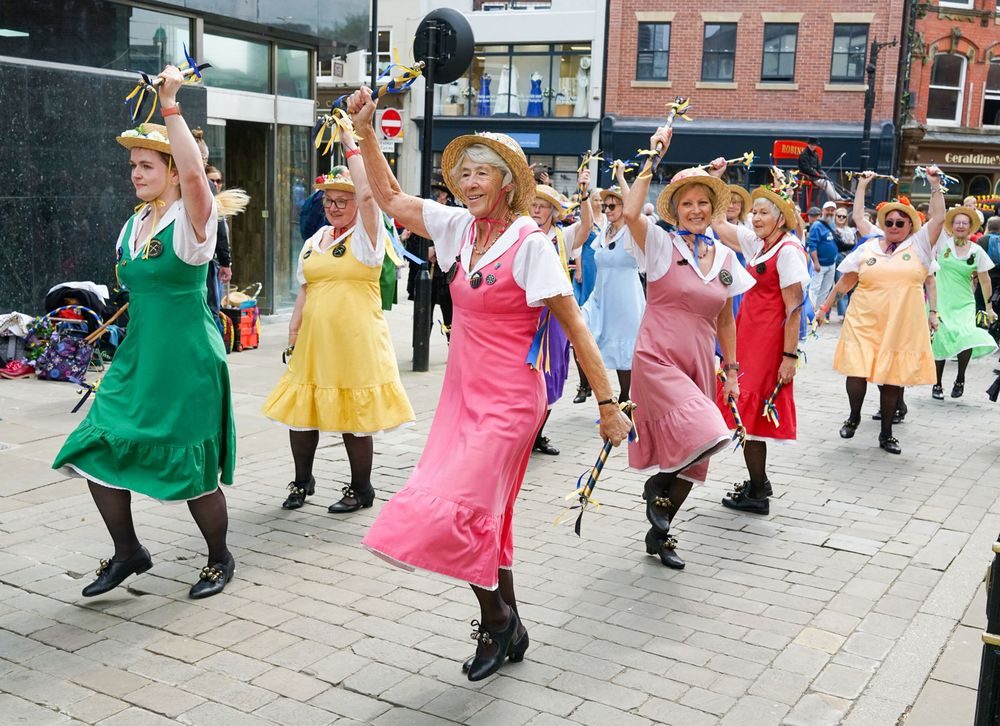
The 2023 Morris Census offers a stark contrast to the 19th-century reality. Women now comprise more than 50 percent of participants in the U.K. Representation from nonbinary and gender-diverse dancers is growing.
Teams like Boss Morris and Molly No-Mates are pushing boundaries. They integrate feminist and queer themes into their dance styles and presentation. They embrace performance as a means of cultural expression.
They continue the legacy of gender play historically embedded in Molly dancing. The tradition is no longer just about preserving the past. It’s about redefining the present.
The Regional Rhythm of English Morris
You think you know Morris dancing? That’s probably just the Cotswold style. It’s the one with the white shirts, ribbons, and bells clanging against your shins. Originating in Gloucestershire, Oxfordshire, and those surrounding counties, it’s the most recognizable form. Dancers wave handkerchiefs or tap sticks. Simple enough. But English Morris is a sprawling, messy, vibrant thing. It’s not a monolith. It’s a patchwork of regional styles, each with its own steps, costumes, and musical drivers.
Look to the west and you hit Border Morris. This isn’t polite. It’s vigorous, theatrical. Think rag coats, face paint, and maybe a full disguise. Developed in the Welsh border counties, it leans into bold, percussive movement. Stick clashing is the norm here. It’s visual spectacle first, dance second.
Then there’s the North West. Industrial heartlands of Lancashire, Greater Manchester, and Cheshire. The dancers here wear clogs with iron soles. Hard shoes on hard pavement. Colorful costumes, sure, but inspired by 19th-century festival dress, not folk purity. They parade through towns and villages. Garlands, short sticks with bells, or braided slings become part of the chaos. Energetic stepping in time with the music creates a festive, rhythmic atmosphere that feels less like a pageant and more like a celebration of labor.
Subversion and Spring
Cross the map to the Cambridgeshire Fens, and things get weird. In a good way. This is Molly dancing. Associated with Plough Monday—the first Monday after Epiphany, when farm workers finally got back to plowing after the midwinter break—it’s rooted in a marshy, low-lying region of eastern England.
Disguise is key. Cross-dressing was common. Historically, it was considered rough, humorous, or even socially subversive. Today, revivals have leaned into that spirit. Creative costumes. Playful gender expression. It’s a direct link to a time when the dance was a way to push back against rigid social norms.
Percussion and Blades
Footwork changes depending on where you stand. In English clog step, developed in industrial northern towns, workers wore heavy wooden-soled shoes. It’s all about rhythmic percussion. But jump the Atlantic to Appalachia, and the style shifts. Appalachian clog blends English, Irish, and African American traditions. It’s varied. It’s American. The roots are similar, but the branches have diverged completely.
Then there are the swords. You don’t want to get poked.
Longsword dancing, from Yorkshire, uses rigid blades. Teams hold them and form intricate circular patterns. The finale? A star or lock formation. Tight. Precise. Rapper sword dancing, however, comes from the northeast. It uses flexible steel blades. That flexibility allows for fast, complex figures. Figures that would be impossible with rigid swords. It’s a display of agility and trust. Miss a step, and you’re holding a flexible steel blade a few inches from your nose.
Spring’s Symbolism
Finally, there’s the seasonal stuff. Maypole and stave dances. These are group performances centered on symbolic props. Maypole dancing is a staple of May Day celebrations. Dancers weave ribbons around a central pole in elaborate patterns. It’s colorful. It’s communal.
Stave dancing is different. Rooted in southwestern counties like Somerset and Dorset. Performers carry long decorated poles on their shoulders. Choreographed steps follow. It’s less about weaving and more about balance and formation.
The styles shift. The music changes. The risks vary. You’re not just watching a dance. You’re watching history move across a field.