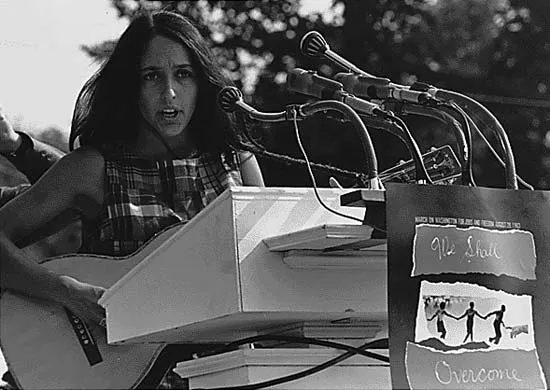
Joan Baez changed the sound of protest music. Born on Staten Island on January 9, 1941, she didn’t have a traditional musical upbringing. Her family moved often during her childhood. She received little formal training. Yet she became the defining voice of the 1960s folk revival.
Her soprano voice cut through the noise. It was usually accompanied by her own guitar arrangements. She popularized traditional songs through performances and best-selling records. But she was more than a performer. She was an active participant in the protest movements of the 1960s and 70s.
The Voice of a Generation
Baez made free concert appearances at civil-rights rallies. She also played at anti-Vietnam War events. Her voice became synonymous with peace. It wasn’t just about the music. It was about the message.
She sang for the marginalized. She sang against injustice. This commitment to activism shaped her career. It also defined her public image.
Notable Recordings
Her discography includes several key albums. Diamonds and Rust (1975) remains a classic. Gone from Danger (1997) showed her continued relevance. These recordings highlight her range. They showcase her ability to blend traditional folk with contemporary songwriting.
Legacy
Joan Baez is more than a folk singer. She is a cultural icon. Her influence extends beyond music. It touches on social justice and political activism. She proved that art and activism can coexist.
Her story is still being written. The questions about her impact linger. How much of her legacy is the music? How much is the movement? The answer lies in the intersection of both.