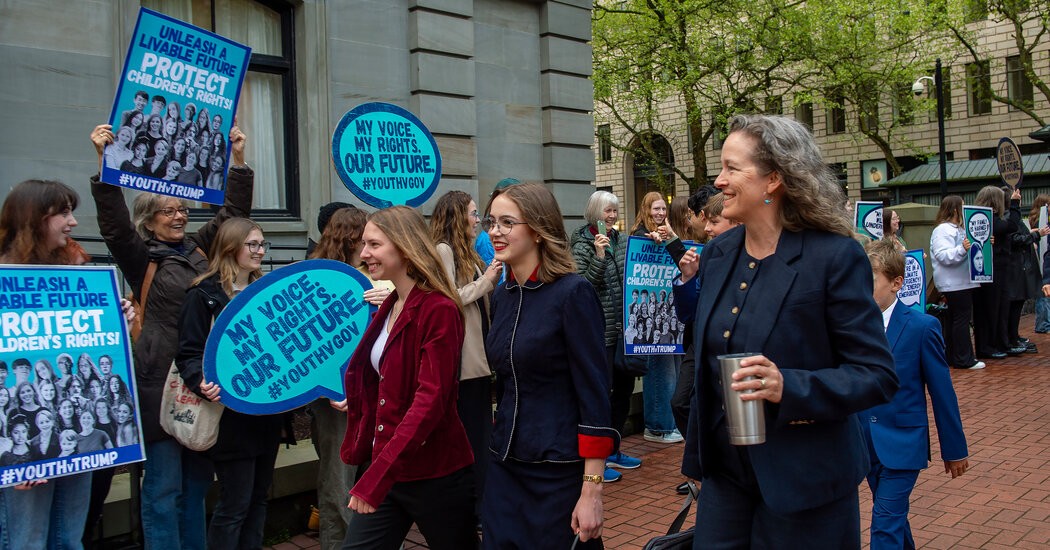
A group of 22 young plaintiffs is fighting to bring their legal battle against the Trump administration back to life. Appearing before the Ninth Circuit Court of Appeals on Monday, the group argued that a lower court’s dismissal of their lawsuit was a mistake, asserting that executive actions favoring fossil fuels directly infringe upon their constitutional rights.
The Core of the Dispute
The lawsuit, Lighthiser v. Trump, targets three specific executive orders aimed at “unleashing” domestic energy production. The plaintiffs, represented by attorney Julia Olson and the nonprofit Our Children’s Trust, contend that these orders:
- Bypass existing statutory and constitutional frameworks for energy regulation.
- Accelerate global warming by prioritizing fossil fuel expansion.
- Pose a direct threat to the health, safety, and future of the younger generation.
Olson argued before a three-judge panel in Portland that the President effectively “rewrote energy law” without the legal authority to do so, creating a precedent that undermines established environmental protections.
The Legal Hurdle: “Too Broad” for the Courts
The current legal struggle stems from an October ruling by U.S. District Judge Dana L. Christensen in Montana. While the judge acknowledged the gravity of the plaintiffs’ claims, his decision to dismiss the case was based on a fundamental principle of judicial power.
Judge Christensen noted that while the youths provided compelling evidence that the executive orders would exacerbate climate change and endanger public health, the issues they raised were too vast and systemic for the judiciary to resolve. In legal terms, the court found the problems to be “non-justiciable”—meaning they are matters of broad public policy that should be addressed by the legislative or executive branches, rather than through a courtroom.
A Growing Trend of Climate Litigation
This case is not an isolated event; it is part of a burgeoning movement of youth-led climate litigation. Across the United States, young people are increasingly using the court system to hold government officials accountable for environmental policies.
The Justice Department, represented by attorney John Adams, is pushing the appeals court to uphold the dismissal. The government’s defense relies heavily on legal precedent, specifically citing the dismissal of Juliana v. United States —a high-profile case involving many of the same plaintiffs—which similarly concluded that the courts are not the appropriate venue for managing global climate policy.
The central tension in these cases lies in whether the judiciary has the authority to intervene in massive, systemic environmental shifts, or if such power belongs solely to elected officials.
Conclusion
The Ninth Circuit’s decision will serve as a critical indicator of whether the American legal system is willing to recognize climate-driven rights as actionable legal claims or if such issues must remain strictly within the realm of political policy.