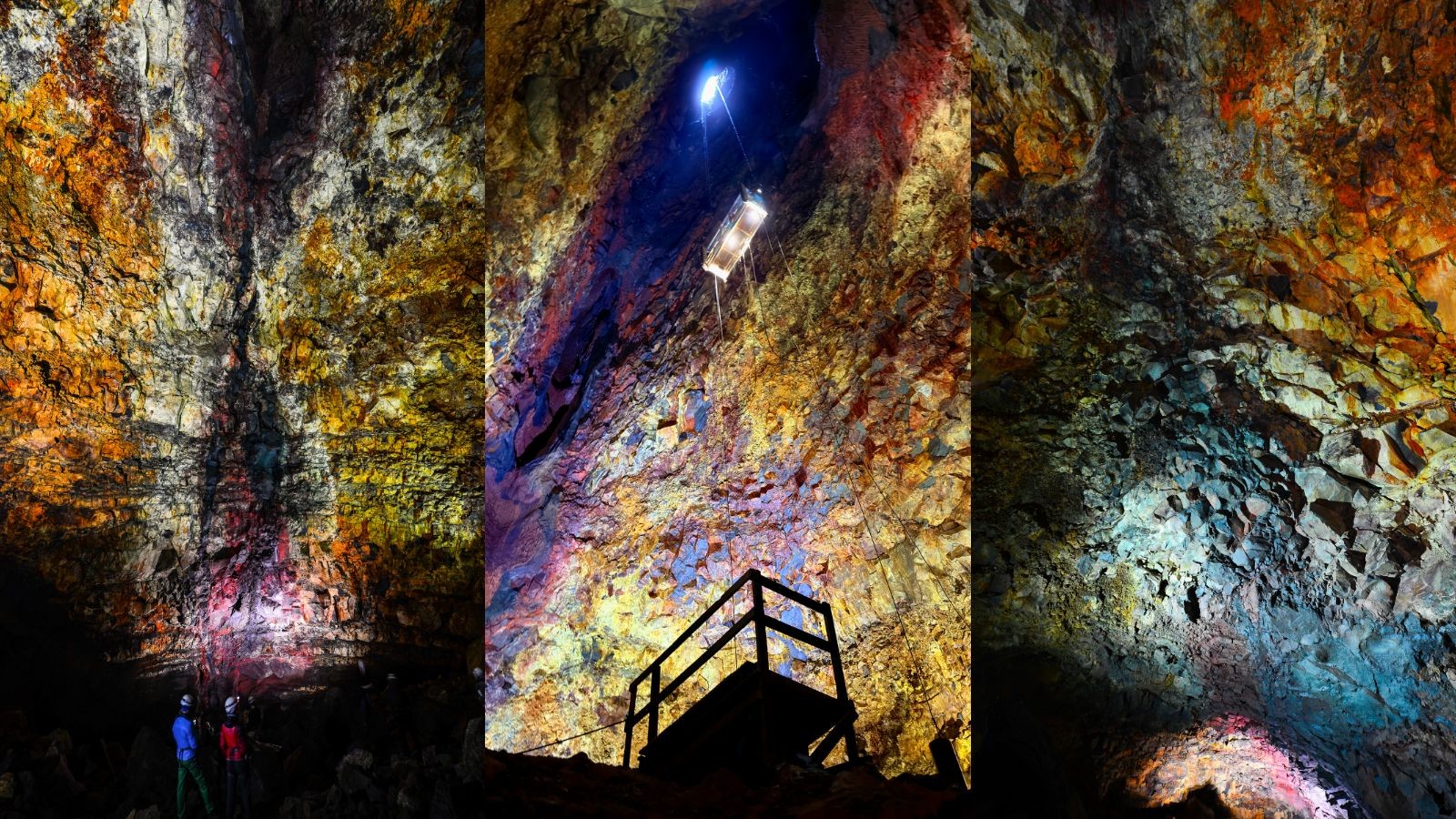
Most volcanic eruptions end with a chamber filled with cooling, solidified rock. However, Iceland’s Thríhnúkagígur volcano is a geological anomaly: it contains a massive, hollow magma chamber that travelers can actually descend into.
Located near Reykjavík, this dormant volcano offers a rare glimpse into the “plumbing” of the Earth, allowing visitors to stand where molten rock once surged.
A Rare Geological Mystery
Typically, as an eruption winds down, the remaining magma solidifies and fills the underground cavity. Thríhnúkagígur defies this pattern. Instead of a solid mass, the chamber is an empty void roughly 210 meters (700 feet) deep —more than twice the height of the Statue of Liberty including its pedestal.
Geologists are still investigating why this chamber remained empty. One prevailing theory suggests that after the last eruption, the remaining magma was “sucked” back down into the Earth’s crust.
“It’s like somebody came and pulled the plug and all the magma ran down out of it,” explains Haraldur Sigurdsson, professor emeritus at the University of Rhode Island.
The Descent: From Surface to Subterranean Cavern
Since 2012, the volcano has been accessible to the public via a specialized cable elevator. Originally installed in 2010 for scientific research, the elevator lowers visitors in a metal cage to the floor of a 3,120-square-meter (33,600-square-foot) cavern.
The interior is a visual marvel, characterized by striking bronze and indigo hues. While the exact cause of these colors remains a subject of study, researchers believe:
– Microbes: Tiny organisms living in the cave may contribute to the coloration.
– Sulfur: Sulfur-rich gases have likely stained parts of the walls yellow and orange.
– Mineral Deposits: Indigo and blue patches are thought to be the result of rocks and minerals falling from the ceiling.
Note for visitors: While occasional puffs of steam may be seen rising from the corners, these are not signs of volcanic activity; they are simply water dripping onto the cave’s lighting systems.
A History Written in Three Peaks
The name Thríhnúkagígur translates to “Three Peaks Crater,” referring to the three distinct summits that line the surface. These peaks represent different eras of Iceland’s violent geological history:
- The Oldest Peak (50,000 years ago): Formed when Iceland was covered in thick ice sheets. It is composed of hyaloclastite, a glassy volcanic rock created when lava meets ice or water.
- The Middle Peak (5,000 years ago): A secondary stage of the volcano’s development.
- The Youngest Peak (4,500 years ago): The most recent eruption, which left the chamber hollow and created the entrance used by tourists today.
Is it Safe?
Thríhnúkagígur sits atop the Mid-Atlantic Ridge, the tectonic boundary where the North American and Eurasian plates are pulling apart. While this makes the region geologically active, there is no immediate indication that the volcano will erupt again soon.
Conclusion
Thríhnúkagígur stands as a unique geological exception, providing a rare opportunity to explore the hollowed-out interior of a volcano. It remains a vital site for both tourism and scientific curiosity, offering a window into the complex processes that shape our planet.