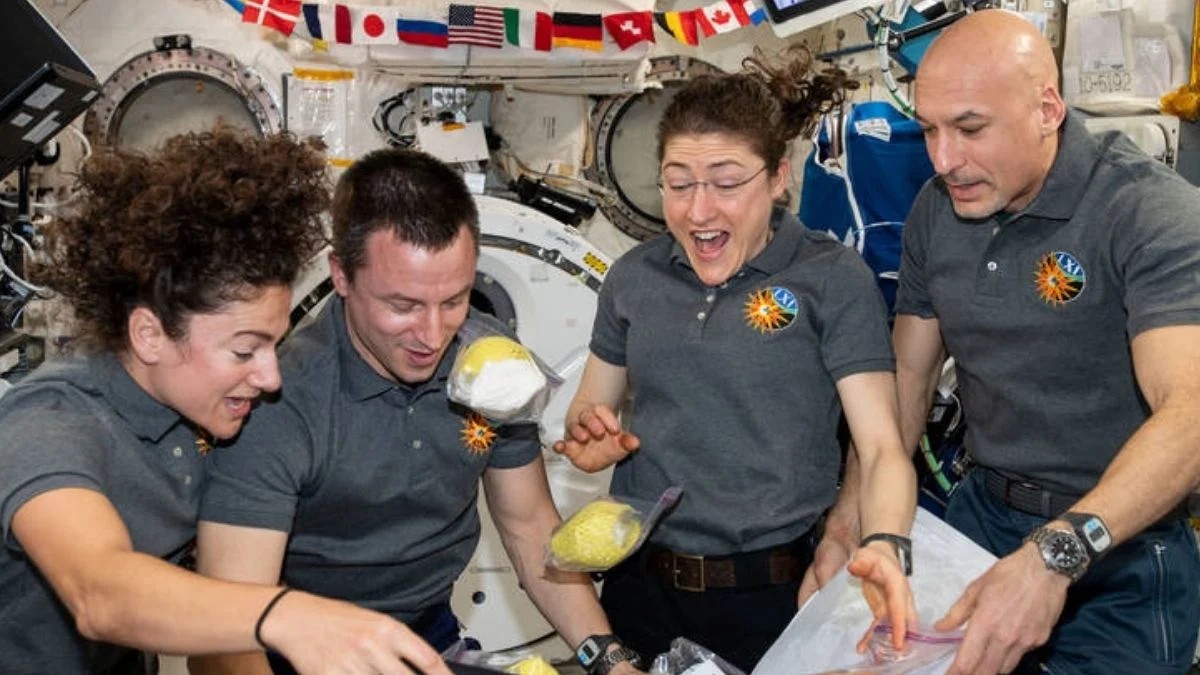
When astronauts return to Earth after months in orbit, they don’t just face physical fatigue; they face a profound sensory disconnect. A recent study, the culmination of nearly two decades of research, reveals that the human brain struggles to “reprogram” its understanding of weight and movement when transitioning between gravity and microgravity.
The Science of Muscle Memory
Researchers from the Catholic University of Louvain in Belgium and the Basque Foundation for Science in Spain conducted a longitudinal study to understand how spaceflight alters motor skills. The study tracked 11 astronauts (two women and nine men) who had spent at least five months aboard the International Space Station (ISS).
The core of the research focused on how humans manipulate objects. On Earth, our grip is primarily driven by a single necessity: preventing objects from falling. In the microgravity of the ISS, this necessity disappears. Objects don’t fall; they simply drift. Consequently, the purpose of a grip shifts from holding something up to moving something through space.
How the Study Was Conducted
To measure these subtle shifts in perception, astronauts performed specific tasks before, during, and after their missions:
- Rhythmic Movement: Holding an object between the thumb and forefinger while moving the arm up and down, either following a metronome or moving freely.
- Friction and Slip Control: Sliding their grasp up and down a fixed object to determine the minimum force required to prevent slipping.
The Findings: A Brain Caught Between Worlds
The data revealed a fascinating discrepancy between how the body moves and how the brain predicts movement.
In Microgravity: Overcompensating for a Ghost
Even after months of weightlessness, astronauts did not fully adapt to the lack of gravity. They continued to apply a significantly higher grip force than was actually necessary. Their brains were essentially “anticipating” a fight against gravity that wasn’t there, applying a level of muscle tension used to combat Earth’s pull.
On Earth: The Weight Discrepancy
The most striking results occurred upon reentry. When astronauts returned to Earth, they experienced a “predictive error.”
- Perceived Weight: Many astronauts reported that objects felt much heavier than expected.
- Movement Symmetry: On Earth, we naturally use more force to lift an object than to lower it (asymmetry). In space, movements become more symmetrical because “up” and “down” require similar effort. Upon returning to Earth, it took time for this natural asymmetry to return.
“The robust grip-load force coupling acquired through years of learning on Earth can thus be disrupted after sufficient time spent in weightlessness.”
Why This Matters: The Predictive Brain
This research highlights a fundamental aspect of human biology: our movements are not just reactions; they are predictions.
The human nervous system is constantly building models of the world to anticipate how much force is needed to complete a task. When an astronaut spends months in space, that internal model is updated to reflect a weightless environment. However, because these neural processes are so deeply ingrained through years of Earth-based living, the “reprogramming” is gradual and imperfect.
The brain essentially experiences a period of “sensory lag,” where it tries to apply the rules of space to the reality of Earth, leading to clumsiness and unexpected physical sensations.
Conclusion: The study demonstrates that long-term spaceflight fundamentally alters the brain’s predictive models of physics, requiring a significant period of neurological recalibration for astronauts to safely and accurately navigate Earth’s gravity again.