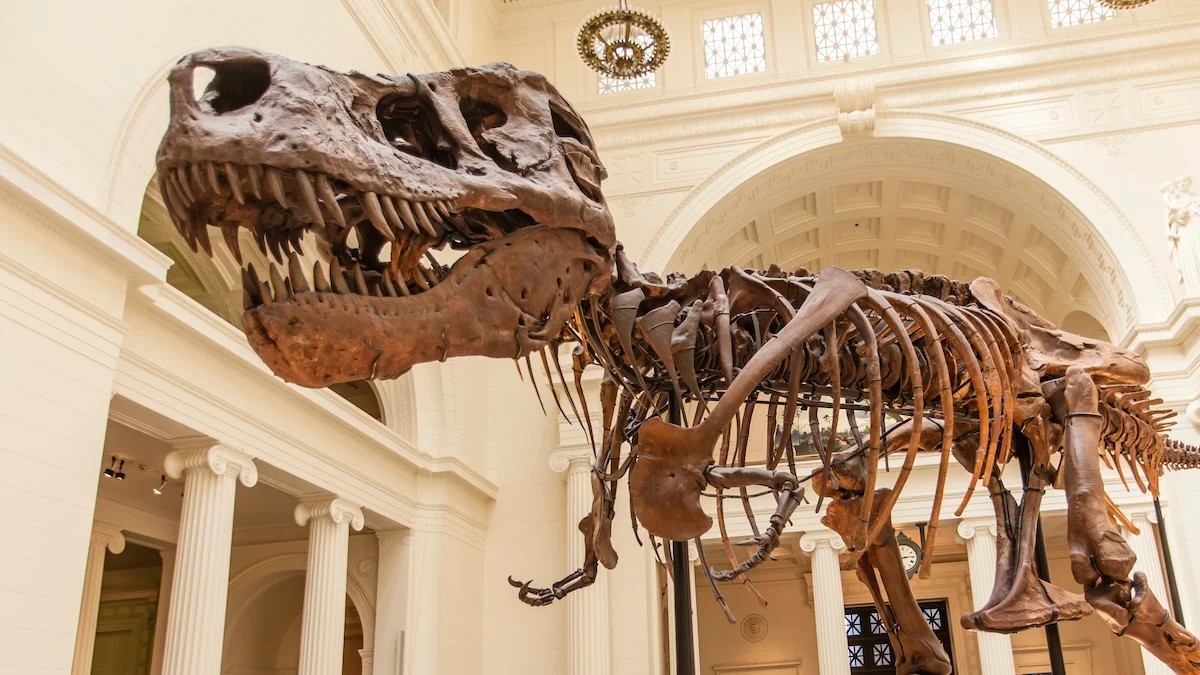
Look at a T. rex skeleton. Really look. What stands out first? Probably the comical stubs hanging from the shoulder. We make fun of them. Giggles, memes, the whole bit.
But new research offers an explanation. It’s not just funny. It’s functional. Or rather, it’s about what became unnecessary.
The study links shrinking arms directly to the evolution of massive, crushing heads. As prey got bigger, tyrannosaurs stopped needing their hands for hunting. The jaw took over.
Use it or lose it. The arms just atrophied.
“The head took over from the arms as method of attack… It’s a case of use it or lose it,” says Charlie Roger Scherer.
Scherer is a paleontologist at University College伦敦 (London). He and his team wanted to know why the limbs vanished. The answer lies in competition. And scale.
The Weight of the World
T. rex wasn’t just growing. The prey was growing too.
Sauropods were ballooning into monsters. Three hundred meters of meat and bone. You can’t wrangle that with forelimbs. Even beefy biceps are useless against a hundred-foot target.
Claws slip. Jaws hold.
The bite force evolved to be the strongest ever recorded in land animals. Why use weak hands when your face can snap steel beams?
“It would not be ideal to pull a sauropod with claws,” Scherer notes. “Holding on with jaws was more effective.”
So the predators pivoted. Hard.
This pattern isn’t unique to T. rex. It spans multiple lineages. Abelisaurids, carcharontosaurs, megalosaurids. Five families showed the same trend: bigger skull means smaller arms.
Sixty-one species studied. The correlation held strong.
Body size alone didn’t dictate it. Some small theropods had the combo too. But the link was undeniable. Forelimbs shortened as the head became a hydraulic press.
Not Just Vestiges
Are those arms useless?
Not exactly.
Don’t underestimate the curl. A muzzled T. rex could still lift over 200 pounds (100 kg) with a single arm. You don’t want to arm wrestle it. Just ask a human who thinks it looks weak.
It wasn’t enough to stop a fleeing dinosaur. But it was enough for something.
Scientists have proposed several uses:
- Lifting the body off the ground after resting
- Gripping a partner during mating
- Viciously slashing at vulnerable prey
Some even joke they stayed short to avoid accidental beheading at the dinner table. Evolution is messy.
But here’s the kicker. Which came first? The big head or the small arms?
Logic suggests the weapon evolved before the backup system was dropped. You wouldn’t lose your attack mechanism without a replacement ready to go.
“It would not make evolutionary sense to occur the other way round,” Scherer argues. “Predators need a backup.”
Big heads. Tiny arms. A survival trade-off.
We laugh from 65 million years away. We should probably just be grateful we didn’t share their lunch table.