“So, he’s the Beyoncé of this event?” A girl behind me leans in.
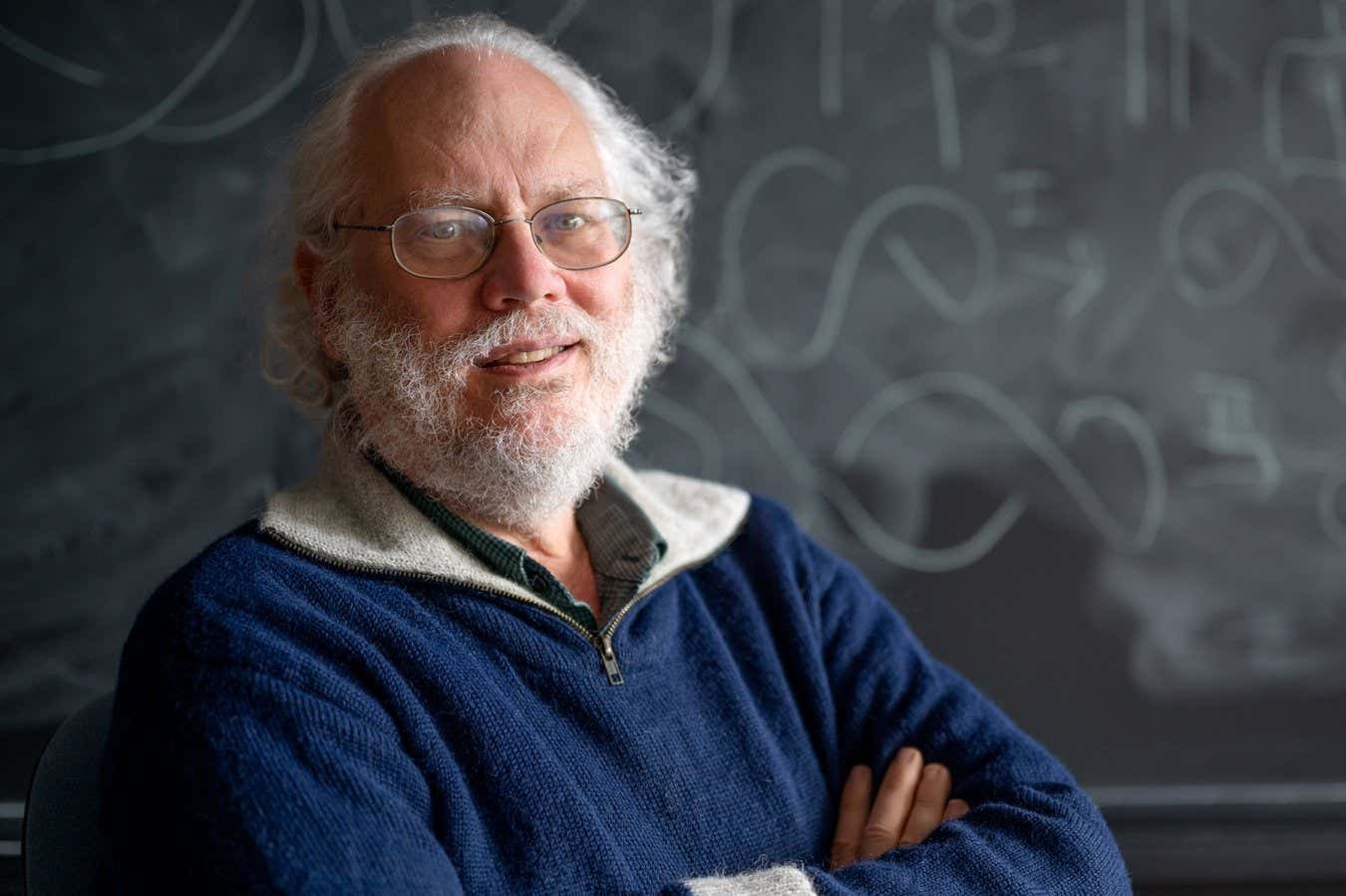
We’re stuck behind a wall of people staring at the back of Peter Shor. Bearded guy. Orange sweater. Seeing him feels like fighting through paparazzi for the Mona Lisa—brief glimpses, selfies, the whole chaotic shebang.
“My algorithm will break everything,” someone tells me.
It’s true. It’s also true that Peter Shor is barely reacting. He’s the reason quantum computing got real funding, all thanks to a math trick he cooked up in 1994. Back then, quantum computers were niche science fiction. He was at Bell Labs. Heard a talk by Umesh Vazirani about some obscure quantum advantage. It didn’t click immediately. The example was too theoretical.
So he waited six months. Then boom.
He realized quantum computers could factor massive numbers faster than classical machines ever could. Shor’s Algorithm was born overnight. Suddenly, the world had an urgent, terrifying reason to build these machines.
Why do we care about factoring numbers? Because it’s the lock on the digital door. Email, banks, medical records—they all rely on the assumption that classical computers suck at factoring. They do. It takes forever. But a powerful quantum computer? It snaps that lock off like a dry twig.
Shor knows this. I managed to catch him in a speakers lounge away from the mob. Quiet finally.
He’s not sweating it.
“We have post-quantum methods,” he says. “We just need to implement them.”
Pause.
“That’s going to be incredibly hard.”
He’s right. We know the new encryption standards exist. NIST has already flagged the quantum-proof options. The problem isn’t theory. It’s logistics. It’s money. It’s time.
Imagine you run a bank or a hospital. You don’t just swap code today. You have to audit every single communication channel, every device, every line of legacy software. That’s years of work. Maybe longer.
And the deadline is closing in.
Current quantum computers? Still toys. Too noisy. Not powerful enough. But they’re evolving fast. Hardware is improving. Error correction is getting smarter.
Google is aiming to migrate to post-quantum crypto by 2029. Trump just signed an executive order pushing all high-impact US government systems to do the same by 2030… wait, 2031. Let’s check. Yeah, 2031 🗓️.
“Quantum computers are still toys. They’ll stop being toys very soon.”
Shor is impressed by the raw power increases, sure. But he’s quick to shut down the hype machine. Think quantum computers will predict the stock market? Nope.
People misunderstand the tech. It’s not just “faster computers.” It’s a different beast entirely. Useful for specific things. Like simulating molecules for medicine or chemistry. Maybe some optimization puzzles. Shor actually thinks his colleagues dismissed optimization too fast.
Here’s the rub.
Why haven’t we seen another breakthrough since Shor in ‘94? No one’s cracked a new algorithm nearly that impactful yet.
Why?
Maybe we’re just not smart enough. Or maybe quantum computers aren’t actually that versatile after all.
I ask him how we get smarter. How we bridge that gap.
Play with them. Use the real hardware. Try weird things. But you need to master two dense fields—quantum mechanics and computer science—at once. That’s a tall order.
Shor doesn’t promise easy answers. Just hard work.