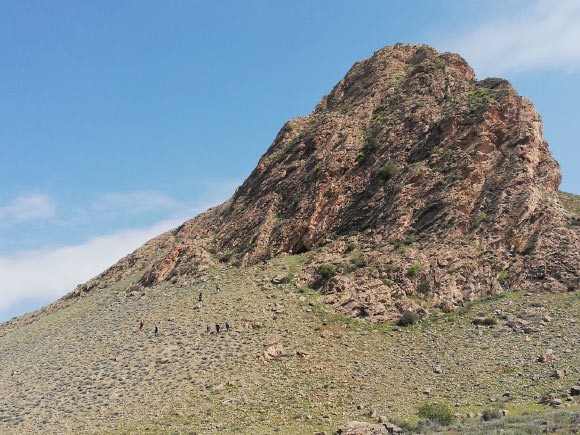
The Ararat-1 cave isn’t much to look at. A modest limestone hole on the eastern flank of the Ararat Depression. Sitting 1,034 meters up. Central Armenia. Yet this little nook holds a massive contradiction about how humans survived 50,000 years ago.
The Caucasus isn’t just mountains. It’s a biological and geographical maze. Complex. Diverse. A challenge for any species trying to eke out an existence. Dr. David Nora from the Hebrew University notes that the region boasts over 450 known Paleolithic sites. Middle Paleolithic dominates them—about 60%. Caves. Rock shelters. Open-air spots scattered across river canyons, lava domes, and plateaus.
They weren’t random. They were strategic.
But here is where things get messy. A new study of 1,770 stone artifacts from Ararat-1 exposes a split personality in ancient behavior. The site suggests stone tools from Armenian cave were used in two radically different ways at the same time.
The Obsidian vs. Chert Divide
The tools date between 52,000 and 35,000 BP. Late Middle Paleolithic. The archaeologists found a tale told by two rocks: obsidian and chert.
Obsidian won. It was the dominant resource. But it behaved like a traveler. The pieces showed heavy signs of retouching. Reshaping. Repair. People were carrying these volcanic glass tools long distances—sometimes nearly 200 kilometers from their source—and nursing them back to life. This is “curated” technology. Durable. Multipurpose. Expensive to replace. It usually means high mobility. You move fast. You carry everything you need because you don’t know when you’ll get more.
Then there was chert.
Chert told a different story. It was worked from scratch. Locally gathered. Used until it snapped and tossed aside. No repairs. No curation. This is “expedient” technology. It suggests low mobility. Or at least, long stays. Why haul heavy rocks for miles if you can just pick up a rock down the street?
So we have a paradox. Within the exact same sedimentary layers. High mobility signals from obsidian. Low mobility signals from chert.
Which does it mean? Are these people moving constantly? Or staying put?
The Flakes Don’t Lie
Dr. Nora and his colleagues faced a classic archaeological conundrum. How do you reconcile the contradictory signatures?
They stopped looking at the big tools and started looking at the trash. Specifically, tiny waste flakes. Most of them smaller than 2 cm. Debris from sharpening and rejuvenating edges. Because the assemblage is drowning in these microscopic bits, the team built a five-category tracking system.
This debris is direct evidence of maintenance. It shows work being done on-site.
When they layered the flake analysis against the obsidian travel distances, the picture sharpened. Ararat-1 wasn’t a long-term base camp. It wasn’t a permanent home. It was a way station. A pit stop.
Groups arrived. They paused. They repaired their precious, portable obsidian kits. They used locally available chert for the immediate, throwaway tasks. Then they moved on.
“Ararat-1 leaves us with a conundrum… we observe two distinct interpretive scenarios for Mobility.”
This hybrid strategy explains the contradiction. They didn’t abandon one mindset for the other. They ran both simultaneously.
Strategic Flexibility in a Harsh Landscape
Why bother with this complexity? Why not just stick to one way of doing things?
Because flexibility saves lives.
Dr. Ariel Malinsky-Buller from the Hebrew University Institute of Archaeology argues that these ancient hunter-gatherers were sophisticated strategists. They balanced long-distance, curated toolkits with immediate, local resources. Caves like Ararat-1 were critical hubs. You rest here. You fix your gear here. You plan your next move here.
It wasn’t a single way of life. It was a calculated mix.
This finding reshapes how we view Middle Paleolithic decision-making. These weren’t mindless repeaters of tradition. They were adaptive. They understood that carrying a durable obsidian axe across 100 kilometers was worth the effort for future tasks, while grabbing local chert was smart for today’s fire-starting.
They treated the landscape not as an obstacle, but as a toolkit of varying utilities.
The study, published in Quaternary Science Reviews, highlights a nuanced reality. Survival 50,00 years ago wasn’t about brute strength or rigid routine. It was about reading the terrain and knowing exactly when to haul, when to hunt, and when to stop at a cave to sharpen a blade.
The rock doesn’t just speak of movement. It speaks of calculation.
Ararat-1 stands as proof that even in the deep past, humans were already mastering the art of doing two things at once.
Reference:
David Nora et al. 205. The role of lithic technologyin shaping mobilityand decision-making: The case of Ararat-1. Quaternary Science Reviews 366: 109524. doi: 10.101/j.quascirev.22025.09524