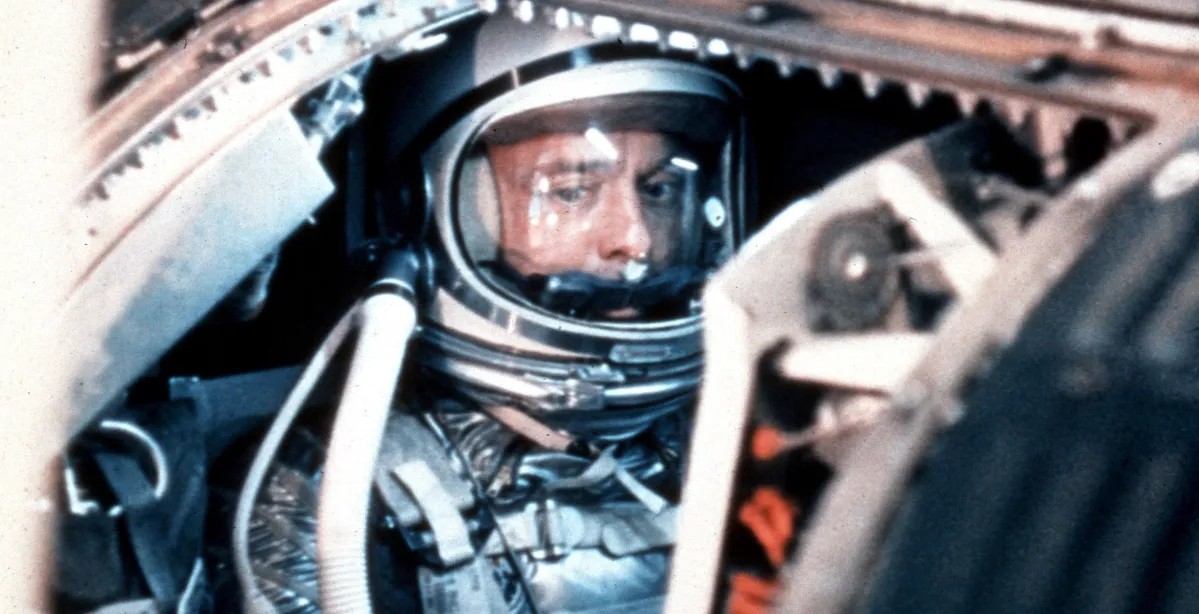
On May 5, 1961, American history changed in just 15 minutes. Alan Shepard, a 37-year-old naval aviator, launched aboard the Freedom 7 rocket, becoming the first American to break through the atmosphere. While his breakfast of filet mignon, bacon, and scrambled eggs might seem like a mundane detail, it underscored the very human nature of a mission that was anything but ordinary.
Shepard’s suborbital flight was more than a technical achievement; it was a psychological victory. Just days earlier, Soviet cosmonaut Yuri Gagarin had become the first human in space, dealing a blow to American prestige during the height of the Cold War. Shepard’s successful launch and splashdown proved that the United States remained a formidable competitor in the space race. More importantly, it demonstrated that humans could survive the rigors of spaceflight and return safely, laying the critical groundwork for the nation’s future human spaceflight programs.
The Evolution of Ambition: From Mercury to Artemis
Sixty-five years later, the goalposts have shifted dramatically. Where Project Mercury sought to prove survival, the current Artemis program aims to prove sustainability. The recent Artemis II mission marked a significant milestone, sending a crew farther from Earth than anyone in history. This is not merely about exploration; it is about establishing a permanent human presence beyond our planet.
The transition from short-duration test flights to long-term lunar infrastructure represents a fundamental change in strategy. The early days were about answering the question, “Can we go?” Today, the focus is on “Can we stay?” and “What can we build?” This shift reflects a broader understanding that space is not just a destination, but a potential environment for long-term human expansion.
The Reality Check: Politics, Finance, and Purpose
Despite these technological leaps, the journey has never been linear. The history of American spaceflight is punctuated by mission delays, budget cuts, and political maneuvering. Space exploration remains deeply tethered to terrestrial realities. While commercial space companies have emerged, their primary drivers are often satellite deployment, tourism, and data services rather than the grand, government-led exploration missions of the past.
This creates a tension in public perception. As citizens face rising costs and economic pressures, the justification for massive spending on rocket launches becomes increasingly scrutinized. The era where national pride alone could fuel the space program is over. Today, there is a pressing need to articulate clear, tangible benefits for continued investment in human spaceflight.
Why We Keep Going
So, why do we keep returning to space? The answer lies in inspiration and innovation. Human spaceflight serves as a powerful catalyst for education, particularly in STEM (Science, Technology, Engineering, and Mathematics) fields. It challenges engineers and scientists to solve complex problems, driving technological advancements that often have applications on Earth.
Ultimately, space exploration is driven by an innate human desire to explore the unknown. It pushes the boundaries of what is possible and inspires new generations to look upward.
The images from Alan Shepard’s historic flight serve as a reminder of this enduring instinct. While the technology has evolved, the core motivation remains the same: the pursuit of knowledge and the courage to venture into the void.
Conclusion
From Shepard’s brief 15-minute flight to the ambitious Artemis missions, American spaceflight has evolved from a Cold War necessity to a complex endeavor of exploration and infrastructure. While political and financial challenges persist, the drive to understand our place in the universe continues to propel humanity forward.