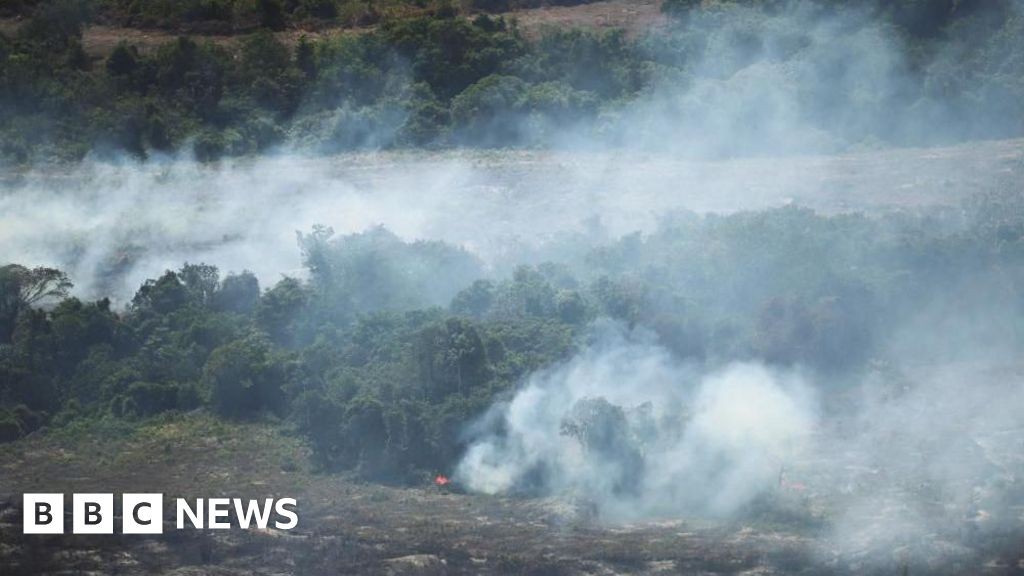
New satellite data reveals a glimmer of hope for the planet’s ecosystems: global tropical forest loss slowed significantly in 2025. According to analysis from the World Resources Institute and the University of Maryland, the rate of deforestation dropped by 36% compared to the record-breaking losses seen in 2024.
Despite this progress, the situation remains critical. While the decline is a positive trend, tropical forests are still vanishing much faster than they were a decade ago.
The Drivers of Progress
The reduction in forest loss is attributed to two primary factors: shifting weather patterns and decisive political action.
- Favorable Weather Patterns: The transition from the warming El Niño to the cooler La Niña conditions helped mitigate the unprecedented wildfire activity that ravaged forests in 2024.
- Political Will and Enforcement: Increased environmental protections and stricter law enforcement in key nations—specifically Brazil, Colombia, and Malaysia —have played a vital role.
In Brazil, the impact is particularly visible. Excluding areas lost to fire, the country saw only about 5,700 sq km of old-growth tropical forest disappear last year—the lowest figure recorded since 2002. This suggests that when governments prioritize conservation, measurable results follow.
A Fragile Recovery: The El Niño Threat
While the data is encouraging, scientists warn that this progress is fragile. The global community faces a “two-pronged attack” from human-driven climate change and the cyclical arrival of El Niño.
The warming El Niño weather pattern, expected to influence conditions later this year, could increase the frequency and intensity of forest fires. This creates a dangerous feedback loop:
1. Climate change creates drier, hotter conditions.
2. Land clearing removes natural barriers.
3. Intense fires then spread more easily, potentially pushing ecosystems past the point of no return.
“Climate change and land clearing have shortened the fuse on global forest fires,” warns Professor Matthew Hansen of the University of Maryland.
The Broader Climate Context
The struggle to protect forests is part of a larger, more systemic climate crisis. A separate report from the EU’s Copernicus climate service highlights how extreme heat is becoming the new norm. Last year, 95% of Europe experienced above-average temperatures, fueling wildfires that burned over 10,000 sq km—an area larger than Cyprus.
From melting Alpine glaciers to record temperatures in the Arctic Circle, the warming trend is global. For tropical forests, which act as essential “carbon sinks” by absorbing CO2, the stakes are incredibly high. If these forests fail, the planet’s ability to regulate its temperature diminishes rapidly.
Conclusion
While increased political enforcement in countries like Brazil has successfully slowed the rate of deforestation, the looming threat of El Niño and rising global temperatures poses a severe risk to these gains. To meet the 2030 goal of halting forest loss, global efforts must shift toward making these ecosystems more resilient against an increasingly volatile climate.