It looked like junk. Just a dirty, tarnished scrap.
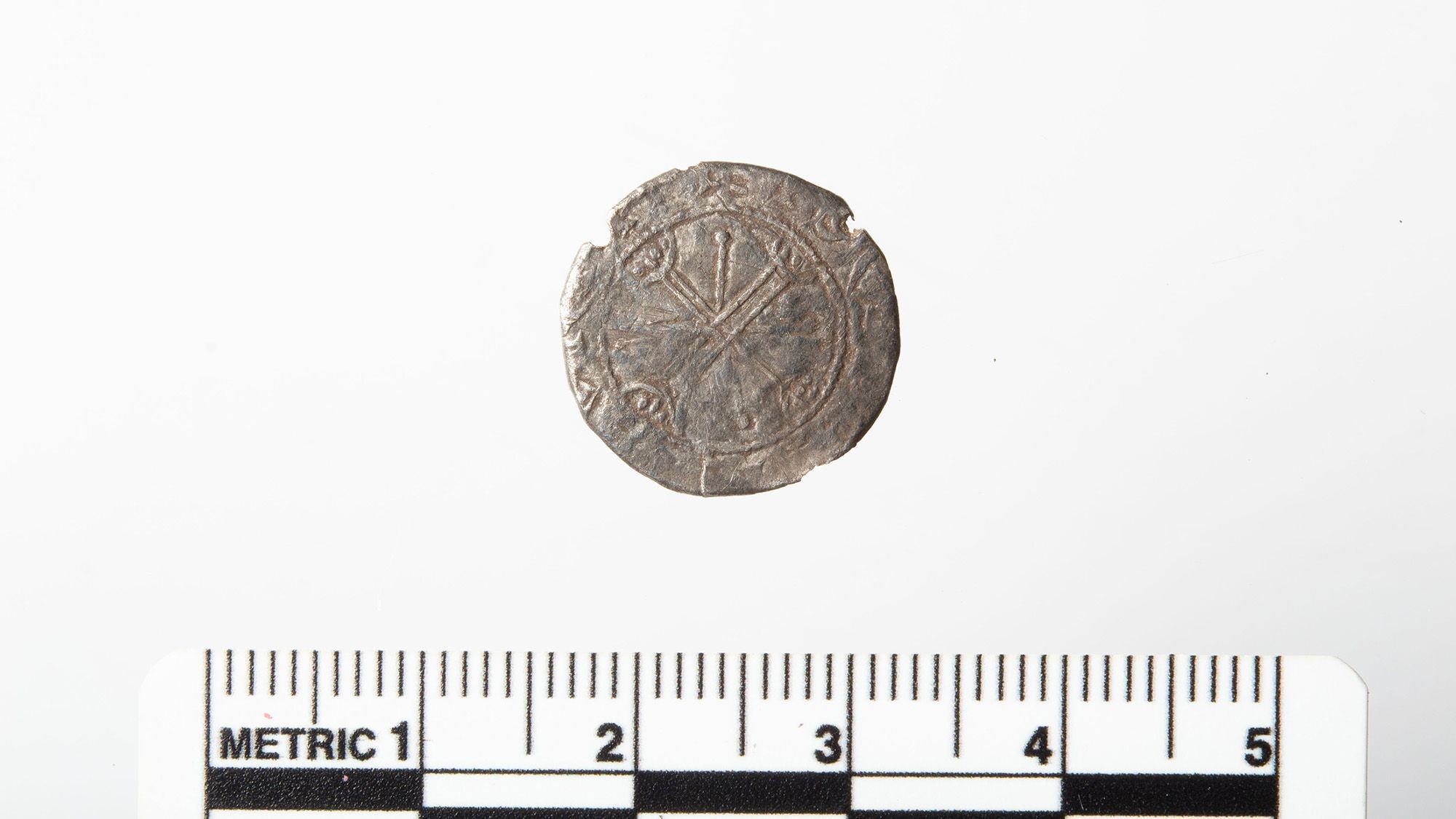
Morten Eek found it in a field near Utstein Monastyery in April 2025, buried shallow in the dirt about 6 inches down. He poked at it, saw the silver flash on one side, noted the copper grime on the other, and decided: Button. He tossed it into a drawer with his collection of old fasteners and broken modern change.
Months went by.
Then he showed off his hoard to other detectorists. They leaned in. They squinted. The silver side? That wasn’t just metal. It looked medieval. It looked exactly like a plate from an 1865 book titled “Norge’s Coins from the Middle Ages” by C.I. Schive
The group contacted the University of Stavanger’s archaeologists. Experts got their hands on the thing and immediately realized they had a problem. It wasn’t just a coin. It was a coin that had been murdered.
Altered Art
The coin belonged to Magnus Barefoot. King of Norway. 1093–1103. A warrior who built a reputation on war rather than peace.
But this specific disc? It was one of only four ever found. Period.
Researchers didn’t pull the copper plating off. Why ruin history for the sake of a peek? They X-rayed it instead. What showed up through the lead-lined film changed everything.
A griffin. Mythical beast, lion body, bird head. Sometimes called the lion of St. Mark? Sure, if you want to argue theology. In medieval Christian art, it meant Christ. Dual nature. Human and divine wrapped into one strange animal.
On the visible side, there was a “cross-over-cross.” Double lines, little bowl shapes at the tips. Pair that griffin with that cross, and you have something extremely rare.
“Two-sided coins with this combination are only known from four copies.”
One from the Faroes, three from Denmark. None, until now, from Norway.
Think about that.
This object was turned into a pendant. Someone folded the coin’s edges over the copper back. Two little notches remained on the rim—evidence that it hung from a chain, likely around someone’s neck as jewelry, not in their purse as currency. It had a second life. It survived as adornment after it failed as money.
Why do people treat money as trash one day and treasure the next?
The Barefoot Legend
Magnus wasn’t known for subtlety. Nor was he known for a long life. He died at thirty in Ireland, ambushed in the woods, fulfilling a quote associated with kings meant for “honor and glory, not longevity.”
His father, Olav, had peaceful years. Magnus wanted action. He campaigned in Ireland, the Isle of Man, the British coast. He expanded power across the sea routes. But he did one other thing that mattered for numismatics: he fixed the silver standard. Previous rulers had debased their coins, mixing in dross. Magnus restored the silver to nearly 90%. Pure.
This coin proves he did it.
So what was a Danish-type coin doing in Norway?
Maybe it was lost near Utstein while Magnus was still breathing. Maybe it passed hand-to-hand for decades, a lucky charm for someone’s grandson or a noblewoman’s trinket.
It’s impossible to say. The field swallowed the story. All we have left is a tiny piece of silver, covered in copper, that nobody wanted.