Violence writes history.
The James Webb Space Telescope just gave us a peek at a galaxy’s hidden trauma.
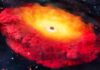
It’s called Centaurus A.
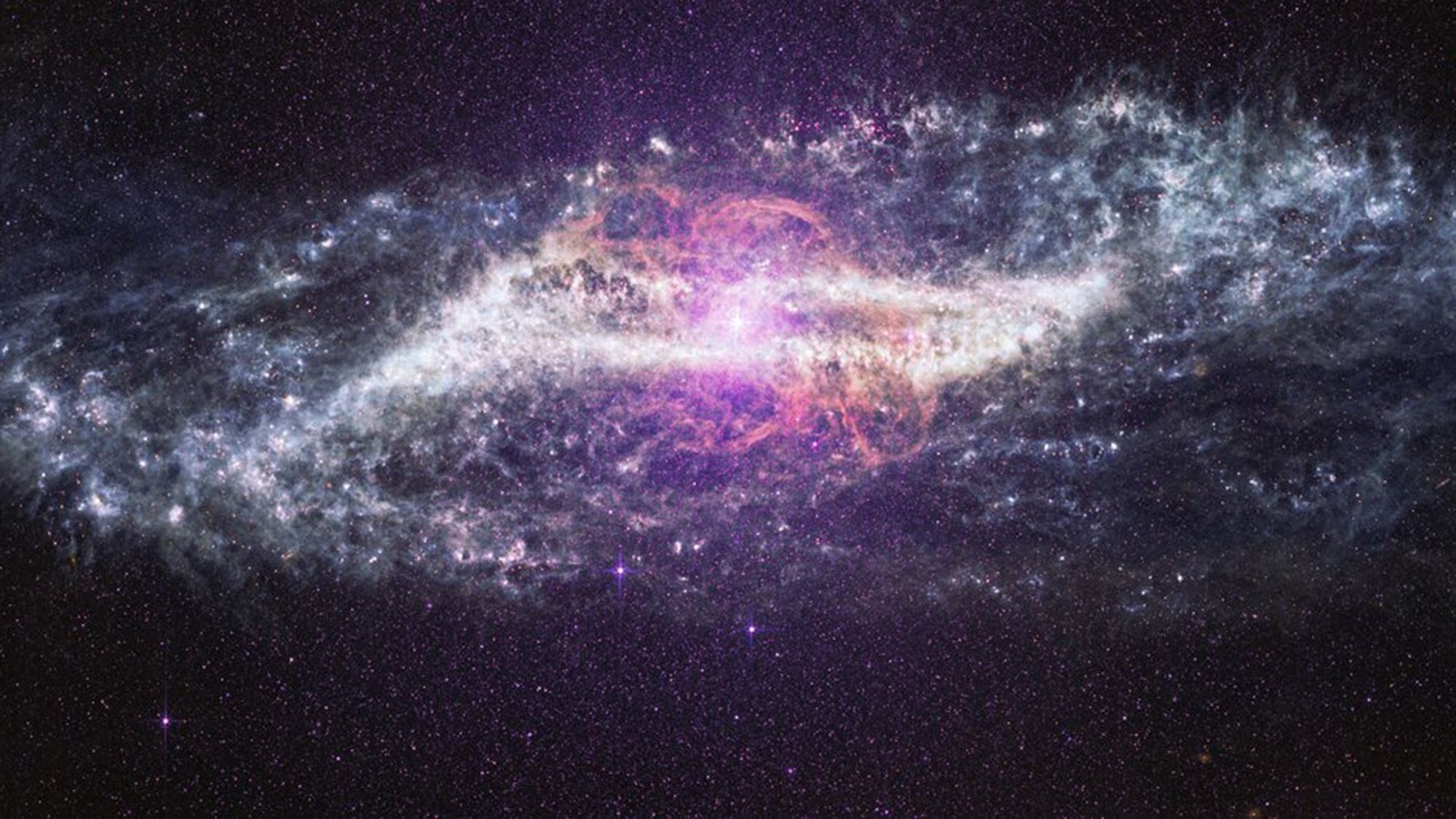
Right now, it looks peaceful, almost elegant. White filaments. Pale pink clouds. But look closer. It is a ruin. A beautiful, glowing wreck.
We couldn’t see this before. Not really.
The Dust Lie
Older telescopes? They were playing through a fog.
The Hubble. Spitzer. Even ground-based giants in Chile like the Very Large Telescope. They saw what we see with our eyes. Thick lanes of dark dust. Opaque walls. The center was blocked. Hidden. We guessed what was behind it.
JWST doesn’t care about visible light. It hunts in the infrared.
“Infrared light can pass through that dust,” scientists note, effectively peeling back the curtain.
So when JWST’s Mid-Infrared Instrument pointed its eye at Centaurus A, the fog cleared.
Suddenly, the center glows. Bright. Active. Violent.
You can see the loops. The strands of warm dust stretching across the frame like nerves in a brain. Or cracks in concrete.
Two Billion Years of Collisions
It wasn’t always like this.
About two billion years ago, Centaurus A had a friend. Another galaxy.
They didn’t hold hands.
They crashed.
It was a messy, slow-motion merger that tore structures apart and pulled them back together into weird shapes. JWST caught the evidence. Look at that warped gray-and-white structure cutting straight through the middle? A parallelogram of debris. Look up and down? Pink ribbons curving in an S-shape.
Scars.
All of it traces back to that single, catastrophic event. It reshaped everything. Star formation got triggered, then limited. Gas got stirred. Gravity won the long game, but it left fingerprints everywhere.
The Monster in the Middle
Why does it matter?
Because at the heart of this mess sits a supermassive black hole. An eater of worlds. An active feeder.
As it gorges on infalling matter, it doesn’t just sit there. It spits out energy. Huge amounts of it. Powerful jets blast out from the center, sculpting the gas around them.
It fuels the star birth. But it also chokes it. A tightrope walk for the galaxy. One side building. One side destroying.
Who gets to live in this chaos?
Not the Last Look
This photo comes from the end of Webb’s fourth year on the job.
It launched on December 25, 2001? No. 2021. Christmas Day.
Now it’s humming along, expected to keep working for about 20 years total. That means plenty more hidden stories are out there, waiting for infrared eyes to find them.
We think we know space. We probably don’t.