Handheld firearms, known collectively as small arms, have undergone a radical transformation since the flintlock musket arrived in the 17th century. The driving force behind every major design shift has been simple but conflicting: make the weapon lighter while packing in more firepower. Engineers and armament designers have chased this dual goal by tweaking projectiles and refining chemical propellants for centuries. Yet, they remain bound by an unyielding physical law. You cannot separate the recoil of a gunpowder weapon from the mass and velocity of its bullet. To lighten a rifle, you must reduce its recoil energy. But dampen that recoil too much, and the bullet loses its stopping power.
We may have hit a wall. Given these constraints, it is unlikely that military small arms can achieve significantly higher performance by simply improving existing gunpowder technology, at least not without breaking reasonable economic limits. The history of the shoulder weapon is a history of balancing these competing demands.
The Weight Problem of Early Muskets
Practical shoulder-fired arms only became viable after the flintlock ignition system was perfected in the mid-17th century. Before that, earlier mechanisms like the matchlock and the wheel lock were largely impractical for general infantry use. They were too heavy, too unreliable, or too expensive to produce in the numbers required for large armies.
Consider the Spanish mosquetes of the 16th century. These early muskets weighed up to 25 pounds (10 kg). That is not a manageable weight for a soldier moving across a battlefield. To fire them accurately from the shoulder, a man needed a forked staff as a rest. Even with that support, handling them was a laborious task.
So why endure the weight? Because they were armor-piercing. At the time, mobile soldiers wore heavy plate armor that could deflect lighter projectiles. The heavy musket could punch through the best steel plating available. This capability changed the nature of war almost overnight. By the end of the 16th century, fully armoured soldiers had nearly vanished from European battlefields. Once armor was no longer the primary concern, there was no need for such heavy, cumbersome guns. Muskets could be scaled down. Shoulder weapons fired without rests became the standard.
Coexistence of Technology
It is important to note that new technology did not immediately erase the old. Innovation in firearms rarely follows a straight line of replacement. Instead, different ignition systems existed side by side for long periods. Wheel locks and matchlocks persisted well into the 18th century, even after the flintlock had established its dominance in both Europe and America. Variations of these older systems continued to be manufactured and used, proving that practicality often trumps theoretical superiority in military logistics.
The Birth of Industrial Warfare
The shift from handcrafted tools to mass production didn’t just change how we built cars or textiles. It started with guns. Flintlock small arms were among the very first industries to embrace the factory model. As ground armies grew in size during the early Industrial Revolution, military leaders needed a way to equip thousands of soldiers quickly. Craftsmanship was too slow. They needed volume.
By the 1600s, European militaries were tired of chaos. Mixed inventories of nonstandard weapons were a logistical nightmare. England began the push toward uniformity. For years, the army bought completed muskets from a fragmented network of English, Irish, and Dutch gunmakers. These artisans subcontracted parts and handled final assembly. It worked, but it wasn’t standard.
Sealed Patterns and the Tower of London
Everything changed in the early 1700s. Ordnance officials at the Tower of London decided to break the process down. They didn’t just buy guns. They bought components. Locks. Stocks. Barrels. Ramrods. Furniture. Each part was sourced from different subcontractors.
This fragmentation required strict oversight. You can’t assemble a functional weapon if every barrel is a different length. So, the Tower established “Sealed Patterns.” These were exact sample firearms. Gunmakers had to match them precisely. If your lock didn’t fit the sealed pattern, you didn’t get paid. This was early quality control. It was the beginning of interchangeable parts, even if true interchangeability was still decades away.
The Brown Bess Evolution
An Ordnance Office decree in 1722 codified this new system. The result was the “Long Land” musket. A 46-inch barrel (.75-inch caliber) became the standard. In America, this weapon went on to be known as the first model Brown Bess. It was heavy. It was long. It was designed for line infantry tactics where volume of fire mattered more than individual precision.
But war on the North American frontier told a different story. The Seven Years’ War, known in the colonies as the French and Indian War (1756–63), exposed the limitations of the Long Land. Fighting in dense wilderness required lighter, shorter weapons. Maneuverability was key.
In 1768, the army responded. The Short Land musket entered service. With a 42-inch barrel, it became the second model Brown Bess. This was the rifle that defined the American Revolution (1775–83). It was the standard issue for many colonial and Continental forces.
Mass Production at Scale
The Short Land didn’t last forever. In 1797, it was replaced by the “India Pattern.” The barrel shrank further to 39 inches. This design proved robust enough to withstand the brutal demands of the Napoleonic Wars (1804–1815).
The scale of production became staggering. More than 1.6 million India Pattern muskets were assembled in Birmingham alone. Nearly 2.7 million muskets of all types were “fitted up” in London and at the Lewisham Royal Armoury Mills. This wasn’t just manufacturing. This was industrial logistics on a military scale.
By 1816, the work was centralized further. Assembly was split between London and a new Royal Small Arms Factory at Enfield Lock, Middlesex. The infrastructure was in place. The methods were refined. The age of the standardized firearm was fully upon them.
France didn’t have a standardized musket until 1717. Before that, it was a mess. The government finally drew a line in the sand, specifying a 47-inch barrel and a .69-inch calibre. That calibre stuck around for two centuries. It wasn’t until after the Seven Years’ War that the French army updated the standard, introducing the Modèle 1763. They shortened the barrel to 45 inches and beefed up the lock. That 45-inch length became the benchmark for the rest of the century.
Then came the Modèle 1777. This was the turning point. The French didn’t just tweak the design; they overhauled production. They implemented rigorous patterns and gauges, aiming for parts that were nearly interchangeable. The goal was simple: cheaper muskets that were easier to mass-produce and repair. But there was a bottleneck. Workers resisted the new methods. Large-scale manufacturing of interchangeable parts stalled until the early 1800s. If France had pushed through sooner, they might have been better prepared for the Napoleonic Wars. They weren’t. By the time they scaled up, provincial arms factories in Charleville, Maubeuge, Saint-Étienne, and Tulle had produced fewer than two million small arms. Not nearly enough.
The American System of Manufacture
The United States took a different path. The federal government established national armouries at Springfield, Massachusetts, and Harpers Ferry, Virginia, in 1794. Springfield started work in 1795. Harpers Ferry began production in 1801. Both facilities built an Americanized version of the French Modèle 1777, which Washington called the Model 1795. These government arsenals, along with private competitors, became the incubators for technological innovation.
The real shift happened with the adoption of the .69-inch Model 1842. For the first time, the U.S. military was assembling weapons on a large scale using uniform, interchangeable parts. This “American System” of manufacture didn’t stay contained. By the mid-1850s, arms makers across the globe were copying it. This system laid the groundwork for the modern military small arm, especially once percussion ignition and rifled barrels entered the picture.
How Percussion Ignition Changed Everything
The Model 1842 was essentially a Model 1840 flintlock with a new heart. It switched to percussion ignition. This system relied on the explosive properties of potassium chlorate and fulminate of mercury. Hit these compounds with a sharp blow from a striker, and they detonate.
German scientists had been experimenting with detonating fulminates in the late 17th century. The French joined in during the 18th. But the breakthrough came from an unlikely source: Alexander John Forsyth, a Scottish clergyman. In 1805, he figured out how to marry priming powders to firearm ignition. He secured a patent in April 1807.
Forsyth’s invention was bizarre. He called it the “scent bottle” lock. Why? Because it looked like a perfume bottle. A tapered steel plug rotated at the location of a flintlock’s touchhole. The plug held a container filled with powder. Turning the bottle upside down released a bit of detonator powder into a cavity at the top of the plug. Turning it back reset the mechanism. The hammer—replacing the flintlock’s cock and jaws—was now free to strike. Pull the trigger, the hammer fell, and boom.
Later inventors simplified this. They stopped using the fancy rotating bottle. Instead, they used loose or pellet detonating powder. By 1830, the percussion cap was the standard. Joshua Shaw, a Philadelphian, is credited with inventing the cap in 1815.
A percussion cap was a small, truncated cone of metal, usually copper. Inside the crown was a tiny amount of fulminate of mercury, sealed behind foil and shellac. You fit this cap onto a steel nipple mounted at the weapon’s breech. A small channel in the nipple carried the flash from the cap to the main powder charge. In the final version, a hollow-nosed percussion hammer struck the cap from above. This eliminated the danger of copper shards flying everywhere when the powder detonated.
Best of all? You could adapt percussion cap ignition to existing flintlock muskets and pistols. It was an upgrade that didn’t require buying a whole new army.
Rifled Muzzle-Loaders
Smoothbore muskets were brutal, effective tools for close-quarters carnage, but they were ballistic disasters at range. A heavy lead ball could shatter bone and tear muscle, but beyond 75 yards, hitting a specific target was nearly impossible for even the most drilled soldier. Against massed formations, volleys remained effective out to 200 yards. At 300 yards? The projectile lost most of its lethal punch.
Rate of fire offered little comfort. While individual soldiers could theoretically load and fire five times a minute, the chaos of volley fire dropped the collective output to just two or three shots per minute.
The problem wasn’t the gunpowder. It was physics. For a soldier to ram a round down the barrel quickly, the ball had to fit loosely. This gap meant the projectile wobbled erratically as it traveled, throwing off accuracy the moment it left the muzzle. Rifling—spiral grooves cut into the barrel—solved this by spinning the ball, stabilizing its flight. But spinning a ball required it to grip the rifling. That meant a tight fit. A tight fit meant slow loading. Rifles were accurate; they were also painfully slow.
Expanding the Projectile
In the 18th century, breech-loading mechanisms were proposed constantly. The technology existed, but the manufacturing infrastructure did not. Mass production was a dream. European and American special forces used rifled muzzle-loaders like the British Baker rifle for long-range harassment, but the infantry line remained stuck with smoothbores.
Inventors focused on making rifled muzzle-loaders faster.
In 1826, French officer Henri-Gustave Delvigne found a compromise. He created a narrow powder chamber at the breech end of the barrel. The loose lead ball rested against it. When the soldier rammed the round home, the blow expanded the soft lead at the mouth of the chamber. Once fired, the expanded lead gripped the rifling tightly.
It worked. But it wasn’t perfect.
Fourteen years later, Louis-Étienne de Thouvenin improved on the concept. His carabine à tige used a fixed post or pillar at the breech. The bullet was forced against this pillar during loading, deforming it enough to catch the rifling upon firing. Better expansion. Better accuracy. But the mechanism added complexity, and the deformed bullets still flew with inconsistent precision.
The Minié Ball Design
Captain Claude-Étienne Minié took these ideas and streamlined them. Inspired by Delvigne’s work with cylindrical bullets, Minié designed a longer, smaller-diameter projectile. It weighed the same as a traditional round ball but possessed greater cross-sectional density. Higher density meant it retained velocity better. It didn’t slow down as quickly.
More importantly, the shape mattered. The flat base of Minié’s bullet deformed against the pillar (as in Thouvenin’s design), engaging the rifling. The rest of the bullet? It stayed true. It maintained its aerodynamic shape. Accuracy improved dramatically.
The French army adopted these changes in the Carabine Modèle 1846 à tige and the Fusil d’Infanterie Modèle 1848 à tige.
But Minié saw another flaw. Muzzle-loaders choked up as powder residue built up in the barrel. Cleaning was a daily, tedious necessity. Soldiers were slow to clean, and dirty barrels made loading difficult. Accuracy suffered.
Eliminating the Pillar
Minié’s solution was elegant in its simplicity. He removed the pillar.
In its place, he used a hollow-based bullet with an iron expander plug at the base. The bullet was easy to load. It didn’t deform until it hit the trigger. When the explosion occurred, gas pressure forced the base outward, driving the iron plug into the rifling grooves. The bullet expanded only at the moment of firing.
No pillar to clean. No pre-firing deformation. The projectile engaged the rifling cleanly. It was faster to load. It was easier to maintain. It was more accurate.
The muzzle-loading rifle was no longer a niche weapon for sharpshooters. It was now practical for the entire infantry line. The gap between the muzzle and the target closed. And with it, the nature of combat shifted from massed volleys to individual marksmanship.
The lead ball had become a guided missile.
The British and American military brass didn’t just notice the Minié ball; they seized on it. By 1851, the Royal Small Arms Factory at Enfield was already churning out the .702-inch Pattern 1851 Minié rifle. The results on the battlefield were less about tactical maneuvering and more about biological attrition.
During the Crimean War, Russian infantryman armed with obsolete smoothbore muskets stood no chance. The British volleys from their P/51 rifles tore through massed formations, cavalry, and artillery alike with terrifying ease. A correspondent for The Times of London captured the grim reality: “The Minié is king of weapons…the volleys of the Minié cleft [Russian soldiers] like the hand of the Destroying Angel.”
It wasn’t just about raw power, though. Swiss experiments revealed a simpler path. If you made the bullet’s side walls thin enough, you didn’t need an expander plug at all. The British took this lesson and shrunk the caliber down to .577 inches. The result was a weapon firing “cylindro-conoidal” projectiles—basically a lead cylinder with a conical nose. These became known as Pattern 1853 rifles, or simply “Enfields.”
Tests showed that shaving six inches off the barrel didn’t sacrifice accuracy. A 33-inch barrel performed just as well as the original 39-inch version. When the P/53 Short Rifles hit the troops, it marked the beginning of a century-long obsession with shorter, more manageable weapons.
The American Adaptation
Across the Atlantic, the U.S. was running its own parallel experiments in the late 1840s. They settled on a .58-inch Minié-type bullet and built a whole family of arms around it. The Model 1855 rifled musket, featuring a 40-inch barrel, pushed the projectile out at 950 feet per second. That’s fast enough to make a grown man rethink his position.
But the Model 1855 had a fatal flaw. It used a mechanically operated tape priming system designed to save soldiers the trouble of manually placing percussion caps on the nipple. In theory, it was efficient. In practice, it was fragile. The mechanism broke down under field conditions, so it was scrapped.
Enter the Model 1861 rifled musket. It was simpler, cheaper, and far more reliable. By the time the American Civil War erupted in 1861, the Union government was buying Model 1861 and Model 1863 rifles as its standard infantry weapon. The Confederacy, lacking the industrial base to produce enough guns, supplemented its troops with domestic copies and purchased Enfield P/53s and other European arms.
The End of the Parade Ground
The Civil War didn’t just use these new rifles; it exposed how obsolete traditional tactics had become. Commanders on both sides were slow to grasp the implications. For years, they continued to order men to advance in neat, colorful ranks across open fields.
But the rifled musket didn’t care about uniforms or formation. An individual soldier could hit an opponent accurately out to 250 yards. Frontal assaults became suicide. The era of standing in a line and trading fire like gentlemen ended abruptly.
By 1862, both Union and Confederate forces started digging. Field entrenchments and barricades sprang up everywhere, providing cover from the new reality of rifle and artillery fire. The battlefield changed from an open stage to a landscape of trenches and hidden kill zones.
Breechloaders
The mechanics of the bolt action
The American Civil War didn’t just change tactics. It exposed the fatal flaw of muzzle-loading rifles. For over a century, soldiers had chewed off paper cartridges, poured powder, and rammed balls down the barrel. Early breech-loaders tried to speed this up. They used nitrate-soaked paper or linen tubes. Sparks from a flashpan ignited the case. Later, metal cases with flammable ends appeared. Percussion caps helped. But the results were messy. Misfires were common. Gas and flame leaked from the breech. These weapons were dangerous to the user and unreliable on the battlefield.
Real utility arrived only when the primer and propellant lived in one sealed case. The breech had to seal tight. The bolt action made this possible.
Rimfire cartridges were the first to see combat. A ring of detonating fulminate sat in the hollow rim of a thin copper case. An external hammer crushed the rim to fire the round. It seemed simple. It wasn’t safe. Fulminate compounds were unpredictable. Misfires turned into premature explosions. The soft copper cases also couldn’t handle the heavy powder charges needed for infantry rifles. So, rimfire stayed in pistols or small repeating carbines like the Spencer and Henry.
Europe took a different path. Johann Nikolaus Dreyse, a Prussian gunsmith, changed the game in 1838. His Zündnadelgewehr (needle gun) used a paper cartridge. A priming pellet sat at the base of a solid bullet. A long, needle-like firing pin, driven by a spring, pierced the paper and powder to hit the primer. The pin lived inside a steel cylinder called the bolt. This bolt slid forward. It locked against the cartridge in the chamber.
Firing was just the start. To reload, a soldier released a thumb latch. He grabbed a knob on the bolt handle. He twisted it to disengage locking lugs. Then he slid the bolt back. The chamber opened. He could reload. It was simple. It required precision machining. It was revolutionary.
Prussia adopted the rifle in 1843. They used it in 1849 and 1864. Then came Königgrätz in 1866. During the Seven Weeks’ War, Prussian troops lay prone. They fired six shots from their 15.43-mm Dreyse rifles for every one shot by Austrian muzzle-loaders.
The result was stark. European armies took notes. France introduced the Chassepot rifle in 1866. It featured an 11-mm cartridge with a detonating cap at the base. A shorter, sturdier firing pin was sufficient. France produced over one million of these weapons. By 1870, they faced 1.15 million Dreyse rifles in the Franco-German War. Machine production with interchangeable parts had won the day.
At battles like Mars-la-Tour and Gravelotte, the Chassepot devastated enemy formations. Close-order tactics vanished. The cavalry charge became obsolete.
But the needle guns had weaknesses. Paper cartridges didn’t seal well. Long firing pins warped or broke under stress. The solution was the center-fire cartridge. The percussion cap moved to the center of the base in a hard brass or copper case. The new firing pin was short and sturdy. The metal case withstood heavy powder charges and sealed the breech perfectly.
France updated its arsenal with the Gras rifle, named after designer Basile Gras. Germany turned to Peter Paul Mauser. The Mauser Modell 1871 came first. Then came the Modell 1871/84 Infanterie-Repetier-Gewehr. It was a ten-shot repeater. Pulling the bolt back ejected the spent case. Pushing it forward fed a fresh round from a tubular magazine under the barrel. The era of the single-shot rifle was over.
The rush to adopt cartridge breech-loading rifles was not a quiet evolution. It was a frantic scramble across Europe and beyond. Most nations didn’t start from scratch. They patched up what they had. Then, once the ink dried on peace treaties, they bought what they couldn’t fix.
Take Britain. By 1866, they were modifying P/53 Enfield muskets. The fix was crude but effective. They hinged the top of the breech. Open it sideways. Pull out the spent case. Drop in a fresh cartridge. It wasn’t pretty. It worked.
Then came 1871. The Martini-Henry arrived. Caliber dropped to .45-inch. The mechanism? A lever on the trigger guard. Push down. The entire breechblock sank. Exposed the chamber. Pull back. The block rose. Locked it home. Simple. Mechanical. Deadly efficient.
Pushing down a lever lowered the breechblock. It was a direct, tangible connection between soldier and weapon.
Russia wasn’t far behind. Or rather, they were ahead of their time, or lagging behind it, depending on who you ask. They adopted two new 10-mm breechloaders. The Model 1868 Berdan No. 1 came first. Then the bolt-action Model 1870 Berdan No. 2. Both were largely the brainchild of Hiram Berdan. An American Civil War officer. Working for the Tsar. His designs prioritized rate of fire. And reliability.
The Remington Rolling Block Rifle changed the game globally. The breechblock cocked back on a hinge. Like a hammer. It was bought by countries all over the map. Why? Because it was robust. Cheap. Easy to maintain.
The United States didn’t just watch. It built. Specifically, it adopted a series of single-shot rifles. They used a hinged-breech mechanism. Called the “trap-door” design. Developed by Erskine S. Allin at the Springfield Armory. The top of the breech flipped forward along the barrel.
The timeline matters here. The first Model 1866 was a converted .58-inch musket. A stopgap. The second Model 1866 was new. .50-inch caliber. Subsequent versions shrank down to .45-inch. All of these weapons were born from postwar budget starvation. Congress had cut the purse strings. So they kept using components from the Model 1855 muzzle-loaders. Old bones in new suits.
Why Breech-Loaders Dominated
The shift from muzzle-loaders to breech-loading rifle systems wasn’t just about convenience. It was about speed. A soldier could reload while prone. Behind cover. No need to stand up. No need to stick a ramrod up the barrel from the front. The enemy was watching.
But which system proved superior? The hinged top? The side-hinge? The lever-action? It varied. Britain stuck with the Martini-Henry for years. The US clung to the trap-door long after better options existed. Russia trusted Berdan. Everyone trusted what they could afford. And what they could mass-produ
The shift away from black powder wasn’t just a cleanup crew for the battlefield. It was a physics revolution. Before the 1880s, every breechloader relied on the messy, explosive combustion of black powder. It choked barrels with solid residue and filled the air with thick, obscuring clouds. Then came nitrocellulose. It burned cleaner, mostly into gas, and released three times the energy of its predecessor. You could control the burn rate. You could push a projectile harder, faster, and straighter.
This energy density forced a redesign of the bullet itself. Lead was too soft to survive the new velocities without deforming. So, manufacturers sheathed it in harder metal. In 1881, Swiss officer Eduard Alexander Rubin perfected the full-length copper-jacketed bullet. It was a small change in material, but it enabled a leap in ballistics. Bore diameters shrank. Calibers settled around .30 inches, or 7.5 to 8 mm. Muzzle velocities jumped to 2,000–2,800 feet per second. Accurate range extended past 1,000 yards. The era of the short, blunt projectile was over.
The Box Magazine Standard
France moved first, issuing the Modèle 1886 Lebel rifle. It was the first small-bore, high-velocity repeating rifle to see widespread service, firing an 8-mm smokeless round. But its tubular magazine, which stored cartridges in the stock, was already becoming obsolete. It was clumsy. It limited the type of bullet you could load (pointed bullets could detonate the primer of the round in front of it).
The solution came from Austria. In 1885, Ferdinand Mannlicher introduced a box magazine fitted directly into the rifle, just in front of the trigger guard. It changed everything. Loading was no longer a slow, manual affair of inserting rounds one by one. Mannlicher used a clip—a light, openwork metal frame holding five cartridges. A spring pushed them up into the chamber as each spent case ejected.
Other manufacturers took different approaches. The Mauser used a charger, a flat strip of metal with curled edges that hooked onto the cartridge rims. A soldier would rack the bolt, slip the charger into the receiver, and push the rounds down into the spring-loaded magazine. The efficiency was undeniable. The box magazine paired perfectly with the bolt-action mechanism. Every major European state converted.
The results were immediate and varied.
* Germany adopted the 8-mm Model 1888 Commission rifle.
* Belgium went with the 7.65-mm Model 1889 Mauser.
* Turkey picked the Model 1890 Mauser.
* Russia chose the 7.62-mm Model 1891 Mosin-Nagant.
* Britain abandoned its movable-block action for the bolt-action .303-inch Lee-Metford in 1892.
* The United States purchased the .30-inch Model 1892 Krag-Jørgensen, a Danish design.
* Japan adopted the 6.5-mm Year 38 Arisaka in 1906.
By World War I, the standard was set. Smokeless powder. Bolt-action. Magazine-fed. Some armies had even moved to a second generation of these rifles. Austria issued the Modell 1895 Mannlicher, firing an 8-mm round. German troops carried the 7.92-mm Modell 1898, designed by Mauser.
The 1898 Mauser is often cited as the peak of bolt-action military rifle design. It was durable. It was safe. It was efficient. It was sold and copied globally. The United States barely altered it, issuing the .30-inch M1903 Springfield instead.
Aerodynamics also evolved. Following Germany’s lead, armies replaced blunt-nosed projectiles with Spitzgeschossen —pointed bullets. They cut through the air better, retaining velocity further downrange. Barrel lengths shrank, too. The new propellants were efficient enough that long barrels weren’t strictly necessary, and shorter barrels were easier to handle in trenches and trenches alike. The British SMLE had a 25-inch barrel. The Springfield M1903 measured just over 23.75 inches.
The scale of production during the Great War was staggering. British factories churned out over 3.9 million rifles. German sources produced about 5 million. Russian factories built more than 9 million. Yet, shortages persisted. The demand outpaced the supply. American factories stepped in, producing 1.24 million rifles for the British and 280,000 for the Russians. For their own forces, U.S. plants turned out 2.4 million rifles between May 1917 and December 1918 alone. The rifle had become a commodity of industrial warfare.
The Rise of the Automatic
But the bolt-action rifle, for all its precision and reliability, had a fundamental limitation. It required the shooter to manually cycle the action after every shot. In a firefight, that manual effort became a bottleneck. As smokeless powder provided more consistent, powerful propellants, engineers looked for a way to automate that cycle. If the gas pressure from the cartridge could be harnessed not just to push the bullet, but to extract the spent case and load the next one, the rate of fire would increase dramatically.
The transition wasn’t instantaneous. Early attempts were unreliable, prone to jamming, or too complex for mass production. The mechanics of extracting a hot, expanded brass casing from a tight chamber under high pressure were tricky. Early designs often relied on recoil, which worked well for handguns but was difficult to stabilize in a rifle. Gas operation became the more promising path, tapping a portion of the propellant gas through a port in the barrel to drive a piston.
The first practical automatic rifles began to emerge in the late 19th and early 20th centuries. Devices like the Maxim gun proved that machine guns could sustain fire, but they were heavy, water-cooled, and required a team to operate. The goal was a light, portable weapon that a single soldier could use. The challenge lay in balancing weight with the heat generated by continuous firing. Metal fatigue set in quickly. Overheating caused misfires.
Several nations experimented with different mechanisms. The French Lebel M1886 had a tube magazine that made automatic feeding difficult, which is partly why they didn’t pursue it fully. The Germans, with their precise engineering, began looking at how to integrate automatic features into their existing bolt-action platforms. The Russians, desperate for firepower, poured resources into developing their own solutions, leading to the creation of the first practical automatic rifles in the 1910s, which would see limited but impactful use in the trenches
The mechanical shift to self-loading
By 1914, a trained British rifleman could put 15 aimed shots downrange every minute. Elite shooters pushed past 30. But manual operation was a hard ceiling. Designers like Mannlicher and Hiram Maxim wanted to break it. They created experimental semiautomatic rifles. These weapons used the energy of a fired round to load the next one.
Only a handful were adopted. Major armies ignored them. Their focus stayed on heavier infantry-support weapons. Machine guns took precedence over personal semiauto rifles.
How the Garand rifle works
After the war, every nation with an arms industry tried to make a semiautomatic rifle. The United States was the only one that succeeded. The result was the U.S. Rifle, Caliber .30 M1. Adopted in 1936. Designed by John C. Garand. It was a technological tour de force.
The mechanism is deceptively simple. A small gas port sits on the underside of the barrel near the muzzle. When fired, propellant gases enter a small cylinder. There, they push a piston. The piston is connected to the bolt.
Gas pressure forces the piston and bolt backward. The empty cartridge case ejects. The hammer cocks. Then a spring drives the bolt forward. As it moves, the bolt strips the top cartridge from an eight-round, clip-loaded magazine. It seats the round in the chamber. Ready to fire.
Gas pressure performed automatically the reloading task formerly done by hand.
Why the M1 mattered in combat
The M1 was the only semiautomatic rifle to become standard issue for infantry. It was durable. Reliable in combat. Between 1937 and 1945, Springfield Armory and Winchester Repeating Arms Company produced 4.04 million of these rifles.
Most other belligerents in World War II stuck with bolt-action rifles. These were often designs from the World War I era. The M1 stood alone in its class.
Why infantry needed closer firepower
The old rules of engagement didn’t fit the mud of the trenches. Infantry rifles were built for long-range sniping, a relic of when soldiers still worried about cavalry charges. But by World War I, the battlefield had changed. It was a nightmare of shell craters and miles of barbed wire. Machine guns owned the open ground between lines, making long-range rifle fire largely useless against entrenched enemies. Rifles were too heavy for close-quarters assaults and too weak to stop artillery.
By the time World War II arrived, tactics shifted again. Troops moved with armored vehicles, requiring weapons that were light, portable, and deadly up close. The answer wasn’t bigger guns. It was smaller, faster ones.
The birth of the submachine gun
This need drove the creation of the submachine gun, a weapon that bridged the gap between a pistol and a full-sized rifle. Early models fired pistol-caliber bullets at lower velocities—around 1,000 feet per second. They were essentially automatic pistols attached to shoulder stocks. This design offered better accuracy than a handgun and a higher rate of fire than a bolt-action rifle.
The first successful entry into this space was the German Maschinen Pistole 1918 (MP18). Designed by Hugo Schmeisser, it appeared in the final months of WWI. It fired 9-mm rounds, the same ammo used in Luger pistols. Its barrel was short, under eight inches.
The mechanism was simple: blowback. When fired, expanding gases pushed the cartridge case backward. This force shoved the bolt back against a spring, ejecting the empty case. The spring then slammed the bolt forward, feeding a new round. If you held the trigger, it kept firing until the ammo ran out or you let go.
To prevent the gun from shooting itself apart, the bolt had to be heavy or slowed down by retarders. The MP18 used a heavy bolt and spring to cap its fire rate at roughly 400 rounds per minute. It was manageable. It was effective.
Evolution and adaptation
After the war, engineers took these ideas and ran with them. Soviet designer Vasily Degtyarev incorporated Schmeisser’s principles into the PPD-40. It fired 7.62-mm cartridges from a massive drum magazine holding 71 rounds. The problem? It fired at 900 rounds per minute. That was too fast for most men to control, rendering much of the ammo useless.
In the US, John T. Thompson created a different beast. The Thompson submachine gun, or “tommy gun,” used a .45-inch Colt cartridge. Adopted by the army in 1928, it was powerful but complex. Early versions had a retarding mechanism that was eventually scrapped in favor of simpler blowback designs. The drum magazine was also swapped for a box magazine, which was lighter and easier to handle.
Mass production in World War II
World War II changed everything. Nations needed millions of these weapons, not thousands. This led to a second generation of submachine guns designed for cheap, mass production. Sheet-metal stamping allowed factories to churn out weapons almost anywhere, at very low cost.
The Germans led this charge with the MP38 and MP40. Allied soldiers nicknamed them “burp guns” due to their distinctive sound. They fired at a more reasonable 450 to 550 rounds per minute. They used box magazines, which jammed less often than drums. Their wire stocks could fold, making them easy to carry in vehicles or for paratroopers.
The Soviets responded with the PPSh-41 and the PPS-43. The PPSh was a volume weapon, while the PPS-43 was more compact, closely resembling the new German designs. The US gave its troops the M3, nicknamed the “grease gun” because it looked like a mechanic’s oil dispenser.
Then there was the British Sten gun. It was incredibly simple. Inexpensive. Effective. Issued to paratroops and commandos in 1941, it became a symbol of resistance, smuggled into occupied Europe to help partisans fight back. It wasn’t pretty. It wasn’t precise. But in the right hands, it worked.
The submachine gun did not die after World War II; it just got smaller and more specialized. Manufacturers like Sterling in the UK and Heckler & Koch in West Germany doubled down on the 9mm cartridge. They made these weapons tighter, sharper, and easier to handle. The secret was the telescoping bolt. Václav Holek, a Czechoslovak designer, figured it out in 1948 with his Model 23.
Here’s the trick. The bolt isn’t a solid block. It’s hollow. When you chamber a round, the bolt slides partway over the barrel. This shrinks the overall length of the weapon without sacrificing the length of the barrel itself. Shorter guns are easier to carry in tight spaces. The Israeli Uzi took this concept and ran with it. Designed by Uziel Gal, the Uzi was a beast of compact engineering. With its stock extended, it measured just 25 inches. It became the go-to choice for police and counterterror units worldwide.
But there was a problem. The submachine gun was losing its military relevance. Its effective range hovered around 200 yards. That’s it. Pistol rounds didn’t punch hard enough at distance. Rifle rounds were too powerful, too heavy, and too hard to control in automatic fire. Soldiers were stuck in the middle. They needed something in between.
Filling the Gap
The solution wasn’t a new gun. It was a new bullet. Military planners realized they didn’t need full-power rifle cartridges for every situation. They needed something lighter. Something that could be fired accurately in bursts. This led to the development of intermediate cartridges. These rounds sat in the sweet spot between pistol and rifle ammo. They offered enough power to stop a threat at 300 yards but were light enough for soldiers to carry hundreds of them.
This shift changed everything. It allowed for the creation of a new class of firearm. The assault rifle. It wasn’t just a submachine gun with a different caliber. It was a fundamentally different approach to infantry combat. The weapon could switch between semi-automatic and fully automatic fire. It was accurate. It was controllable. And it was deadly.
The StG 44 and the Legacy
The Germans tried this first. The Sturmgewehr 44, or StG 44, was born from the same need to fill the gap. It used a shortened 7.92mm cartridge. It was heavy. It was complex. But it worked. The Soviets noticed. They studied the StG 44. They realized the future of infantry warfare wasn’t about the most powerful rifle. It was about the most practical one.
This realization sparked a global arms race. Not for bigger guns. For smarter ones. Countries scrambled to develop their own intermediate cartridges and the rifles that fired them. The AK-47 emerged from this chaos. The M16 followed later. Both relied on the same principle. Fire a lighter bullet, faster, with more control.
The submachine gun didn’t disappear. It just moved to the shadows. Special forces still used them for close-quarters combat. But for the average infantryman on the front lines, the assault rifle became the standard. It filled the void. It covered the range that pistols couldn’t reach and rifles couldn
The post-war landscape of infantry combat shifted dramatically. Bolt-action rifles and semiautomatics were pushed aside by the assault rifle, a weapon that became the backbone of modern armies. These firearms, typically firing 5.56-mm or 7.62-mm rounds, are defined by their ability to switch between automatic and semiautomatic fire. They remain accurate up to 500 meters, a range that suits the chaotic, close-quarters reality of jungle or urban warfare. Soldiers crammed into helicopters or personnel carriers need weapons that are lightweight and easy to handle. Guerrilla fighters in dense foliage have the same needs.
How Assault Rifles Work
The mechanism inside an assault rifle is a cycle of controlled violence. When a round is fired, propellant gases or blowback forces push the bolt backward. This action extracts the spent casing and cocks the firing mechanism. A spring then drives the bolt forward, feeding a fresh cartridge from the magazine into the chamber. The cycle repeats as long as the trigger is held.
Magazines vary in shape and capacity. Straight magazines or curved “banana” styles hold up to 30 rounds. Drum magazines can carry as many as 100 rounds. The modular nature of these weapons allows for attachments. Grenade launchers, sniper scopes, and bayonets can be added depending on the mission profile.
Civilian Restrictions and Famous Models
In countries where civilians can purchase these weapons, laws often strip away their military capabilities. Automatic fire is usually banned. High-performance military ammunition is restricted. The goal is to prevent these versatile tools from being used in their most lethal configurations.
Despite these restrictions, certain models have achieved legendary status. The United States developed the M16. The Soviet Union, and later Russia, produced the Kalashnikov, specifically the AK-47 and its modernized successors. Belgium contributed the FN FAL and FNC. Austria gave us the Steyr AUG. Germany engineered the Heckler & Koch G36. These names are not just brand identifiers; they are historical markers of Cold War politics and military doctrine.
The Search for Firepower
The desire for greater firepower did not stop at shoulder-fired weapons. Infantry support weapons, classified as machine guns, underwent intense experimentation. The goal was simple: deliver more bullets faster to suppress enemy movement.
Early Manual Weapons
During the flintlock era, heavy guns existed that could fire bullets serially or in volley. They were cumbersome and ineffective for tactical use. The mid-19th century changed everything. Centre-fire cartridge ammunition became available. Manufacturing techniques improved, allowing for precision and reliability.
Two weapons stand out from this period. The Gatling gun, invented by American Richard J. Gatling, used a hand-cranked mechanism to fire multiple barrels. The mitrailleuse, produced by the Belgian firm Christophe & Montigny, resembled a large volley gun. It held multiple cartridges in a tray and fired them rapidly. These were the precursors to the fully automatic machine guns that would dominate the trenches of World War I and beyond.
The Gatling Gun
The Gatling gun was a mechanical beast. It required an operator to turn a crank, which rotated the barrels and cycled the firing mechanism. This design allowed for a high rate of fire without the heat buildup that would melt a single barrel. It was a shift from manual reloading to mechanical efficiency. The military took notice. The ability to lay down a wall of lead changed how infantry tactics were planned.
Gatling guns were built around a central axle with multiple barrels, typically six or ten, spinning via a hand crank. The mechanics were brutal but efficient. A barrel fired a round, then cycled through unlocking, extracting, ejecting, reloading, and relocking before the next shot. In the best models, a feed device allowed stacks of rounds to flow in, enabling sustained fire for extended periods. These weapons were versatile, handling calibers up to a full inch. U.S. forces deployed them in Cuba during the Spanish-American War in 1898 and in various smaller conflicts around the globe.
The French mitrailleuse
The French mitrailleuse was also multibarreled, but its design diverged sharply from the Gatling. It used a loading plate holding one cartridge per barrel across its 25 tubes. Unlike the spinning Gatling, the barrels and the loading plate remained stationary. A crank-operated mechanism struck the firing pins, either simultaneously or in rapid succession. The French army issued these weapons firing 11-mm Chassepot rifle ammunition.
The weight was staggering. At over 2,000 pounds (900 kg), the mitrailleuse required a wheeled carriage to move. It was designed for volley fire, dumping all barrels at once. During the Franco-German War, French commanders tried to use it like traditional artillery. It failed. The mitrailleuse could not compete with breech-loading cannons that fired explosive shells. The technology was simply outpaced by the next generation of artillery.
Heavy machine guns
Self-actuated machine guns changed the game after nitrocellulose propellants became standard. These new powders burned at a controlled rate, unlike older black powder. They generated pressure that built up over a longer duration. This shift created the energy needed for automatic cycling. The first weapons to exploit this were heavy guns firing high-velocity rifle cartridges. The stability of the propellant allowed for reliable, rapid fire without the erratic bursts of black powder.
Recoil
The introduction of recoil systems was the final piece of the puzzle. Early automatic weapons struggled to manage the energy of the fired round. Without a controlled way to absorb and redirect that force, the mechanism would jam or break. Recoil operation used the energy of the discharge to cycle the action. This meant the gun could fire continuously as long as ammunition was supplied. It removed the need for manual cranking or external power sources. The result was a weapon that could sustain fire indefinitely.
The recoil-driven machine gun wasn’t just an invention. It was a mechanical translation of violence. Hiram Stevens Maxim, an American expat in Europe, figured it out around 1884. His design was elegant in its brutality. It used the energy of the bullet’s recoil to do the heavy lifting. That energy unlocked the breech. It extracted the spent casing. It compressed the main spring. And then, spring-loaded, it pushed the bolt forward to pick up a fresh round, chamber it, and lock the piece.
The barrel and the breechblock moved back together for a short distance. Then the barrel stopped. The block continued rearward alone. Hold the trigger, and the cycle repeated until the ammo ran out. Belts fed the rounds. They could be clipped together for endless fire. Overheating? A metal jacket circled the barrel. Water from a separate container cooled the heat.
Calibers and Configurations
Maxim’s salesmen were pragmatic. They gave armies whatever caliber they already used for rifles. In Britain, the early guns took the .45-inch Martini-Henry. By 1891, they switched to the .303-inch smokeless powder round from the Lee-Metford rifle.
Look at the Russo-Japanese War (1904–05). The Russians deployed English-made Maxims. They fired the 7.62-mm Mosin-Nagant round. The Model 1910 weighed about 160 pounds (70 kg). That included the mount, the water-cooling rig, and a steel shield for the operator.
The Germans went lighter. Their Model 1908 used the 7.92-mm Mauser cartridge. With its sled mount, it tipped the scales at just 100 pounds (50 kg). That weight drop was possible because the cartridge itself provided the power. This allowed special infantry units to move them.
The Siege of the Western Front
The destructive power was unprecedented. In the 1890s, British infantry units used Maxims made by Vickers Sons. They cut through poorly armed rebels in Africa and Afghanistan with terrifying ease.
Then came World War I. A few of these weapons could inflict thousands of casualties. The defensive fire was so dominant that it neutered infantry offense. The Western Front, stretching from the Swiss border to the English Channel, turned into one massive siege.
Gas operation
Not every heavy machine gun relied on recoil. Gas operation was another path. Here, a piston sat in a cylinder below the barrel. Gas diverted from the barrel through a port drove the piston backward. That motion unlocked the breechblock. It sent the bolt back against the main spring. On the forward stroke, a new round was picked up, moved into the chamber, and fired.
The most famous example was the Hotchkiss. Introduced in France in 1892, it went through several modifications. The definitive version arrived in 1914. It was air-cooled. The barrel was heavy. Metal fins increased heat radiation. Feeding ammo via short strips instead of long belts helped prevent overheating.
The Japanese used Hotchkiss guns against Russia in 1904–05. They fired the 6.5-mm round. During the defense of Verdun in World War I, two French Hotchkiss guns firing 8-mm Lebel cartridges reportedly fired 75,000 rounds each. They remained serviceable. That is endurance.
“The defensive fire so limited the offensive power of infantry that the entire Western Front… became one vast siege operation.”
Blowback
A third principle emerged. It was called blowback. In this system, the action and barrel never locked rigidly together. The barrel stayed still. There was no gas cylinder. No piston.
To keep the breech from opening too early—before the bullet left and pressure dropped—the block was heavy. The main spring was strong. A linkage of parts sat slightly off-center. This delay ensured the breech didn’t open while propellant gases were still expanding. The barrel was also shorter than usual. This let the bullet and gases exit quickly.
The Austrian Schwarzlose, introduced around 1907/12, used this delayed blowback method. It fired 8-mm Mannlicher rounds. It proved entirely satisfactory in combat during World War I. No complex locking lugs. Just mass and timing.
Light machine guns
Heavy machine guns worked well when you were stuck in a trench, but they were unwieldy hogs to lug around. Soldiers needed mobility. So, starting in 1915, armies began fielding lighter alternatives. The industry called them machine rifles, automatic rifles, or light machine guns. It didn’t matter what you called them; they changed the game.
The British Lewis gun appeared first. Ironically, an American invented it, but the British manufactured it and made it better. The French had the Chauchat. The Germans fielded several designs. The U.S. introduced the M1918 Browning Automatic Rifle, or BAR. Most of these weapons used gas operation. Almost all were air-cooled.
Why magazines instead of belts? Detachable magazines were easier to carry. They were less cumbersome in the field. These new guns weighed as little as 15 pounds (7 kg). One man could carry them. He could fire them like a rifle. Or he could lie prone. The flexibility was immediate.
After the Great War, light machine guns took over. They largely replaced their heavier cousins. The big water-cooled guns didn’t vanish overnight, though. They stayed in service through World War II and for decades after. But the shift was undeniable. The era of the portable squad automatic weapon had begun.
The German Innovation
Germany faced a unique constraint. The Treaty of Versailles forbade heavy, water-cooled Maxim-type guns. So, they built something new. The Maschinengewehr 1934 and 1942 emerged from this restriction. These were recoil-operated. They fed 7.92-mm rifle ammunition on belts.
They worked from bipods. They worked on tripods for sustained fire. That versatility was key. They fired at insane speeds. Up to 1,000 rounds per minute.
High speed creates heat. Heat destroys barrels. The MG34 solved this with a quick-change barrel mechanism. You could swap the barrel in seconds. The MG42 took this further. It was built from stamped sheet-metal parts. Welded. Riveted. This allowed factories to make them cheaply. Fast. Even car manufacturing plants could produce them.
Global Standardization
The Soviet Union issued the Degtyarev Pekhotny (DP) in 1933. They supplied them to loyalist forces during the Spanish Civil War. By 1944, it was modified into the DPM.
British infantry units fought with the Bren. It was a .303-inch version of a weapon designed by Czech maker Václav Holek. American troops relied on the BAR.
These weapons shared DNA. They were gas-operated. Magazine-fed. They weighed between 20 and 30 pounds (10–15 kg) when loaded. Not as light as the 15-pound designs, but manageable.
They fired slower than the German belts. 350 to 600 rounds per minute. This rate allowed for accuracy. Soldiers could deliver controlled bursts. From bipods. From cover. The battlefield had changed. The squad now had its own organic firepower.
The Rise of the General-Purpose Machine Gun
The end of World War II didn’t just bring peace; it brought a shift in ballistic philosophy. As assault-rifle cartridges became the standard, the old classifications for automatic fire—automatic rifle, light machine gun, medium machine gun—started to feel clunky. They were replaced by two distinct categories that still define infantry support today: the general-purpose machine gun (GPMG) and the squad automatic weapon (SAW).
The distinction came down to caliber. Most GPMGs were chambered for the intermediate 7.62-mm round, the dominant NATO and Soviet standard. SAWs, designed for the foot soldier to carry into the breach, fired smaller, high-velocity rounds. Think 5.56-mm NATO or the 5.45-mm Kalashnikov. The goal was lighter weight, easier handling, and enough punch to suppress enemy infantry without the bulk of a full-power battle rifle.
If you look at the heavy hitters of the GPMG class, the list reads like a who’s who of Cold War engineering. There was the West German MG3, which was basically a modernized, belt-fed upgrade to the terrifying MG42 from the war. Then there was the Belgian Fabrique Nationale Mitrailleuse d’Appui Général (MAG), a robust workhorse. The United States brought the M60, and the Soviet Union relied on the Pulemyot Kalashnikova (PK). Each had quirks, but all served the same purpose: providing sustained fire that could switch from a light role to a heavy one depending on the mount.
For the SAWs, the Minimi from FN Belgium stood out, capable of firing from both belts and magazines. The Soviets countered with the Ruchnoy Pulemyot Kalashnikova (RPK), a magazine-fed adaptation of their iconic assault rifle. These weapons changed how squads moved. You didn’t need a dedicated gunner with a separate, heavy weapon anymore. The firepower was integrated into the small unit.
Heavy Metal: Why .50 Caliber Matters
When water-cooled machine guns faded into history, the term “heavy” was reassigned. It didn’t mean water-cooled anymore. It meant firing cartridges several times larger than standard rifle ammunition. Usually, that meant .50 inch, or 12.7 millimeters.
This wasn’t just about killing power for the sake of it. Before World War I, fully automatic weapons firing super-heavy ammo existed, but there was no real need for them on the infantry level. Then came tanks. Foot soldiers needed a way to punch through steel that a standard rifle bullet couldn’t scratch.
By the 1930s, armies started adopting these high-powered weapons, but only two truly stuck. The first was the American M2 Heavy Barrel Browning. It was essentially a .50-inch version of the .30-inch M1917 Browning. The M1917 was a Maxim-type gun that missed much of WWI action due to production delays. The M2, however, lasted decades. Even long after WWII, it was still widely used across the noncommunist world.
Why did it last so long? The cartridge. It delivered bullets of various weights and types at high muzzle velocities, packing five to seven times the energy of a full rifle-power round. It was recoil-operated and air-cooled, firing at about 450 rounds per minute. Reliable. Destructive.
The Soviets had their answer in the Degtyarov-Shpagin Krupnokaliberny 1938 (DShK-38). It was similar in role but gas-operated rather than recoil-operated. It saw wide use in Soviet-supplied countries and became a staple in conflicts around the globe. Both the M2 and the DShK-38, along with their successors like the Soviet NSV, were mounted on infantry tripods or wheeled carriages. But they weren’t just infantry weapons. They were mounted on tanks, providing defensive fire against enemy ground vehicles and aircraft. If you saw a .50 cal on a vehicle, you paid attention.
The Superheavies and the Vietnam Sky
After 1945, the scale jumped again. Several superheavy machine guns, firing cartridges larger than .50 inch, were developed. Most were designed for anti-aircraft roles. The single most important of these was a 14.5-mm weapon introduced by the Soviets for armored vehicles.
It was a beast. Recoil-operated, belt-fed, with a barrel that could be changed quickly in the field. Later, it was fielded on various wheeled carriages, known collectively as the Zenitnaya Protivovozdushnaya Ustanovka (ZPU). The ZPU-4 was particularly notorious. It was a four-barreled version towed on a trailer.
Did it work? In the Vietnam War (1965–73), the ZPU-4 shot down many U.S. aircraft. It was effective, cheap, and mobile. The weapon remained in service throughout the Third World long after the war ended. It’s a reminder that in asymmetric warfare, a simple, rugged machine gun can still dictate the rules of engagement in the sky.
The Pistol Problem
Since the 16th century, soldiers have carried handguns to supplement their shoulder weapons. But let’s be honest: they have never been satisfactory military weapons.
The physics work against them. To keep a pistol manageable in weight, you have to limit its firepower. And because of that short barrel and low power, only highly skilled soldiers can shoot them accurately beyond 10 yards. In a firefight, 10 yards is often too far.
By World War II, pistols were issued principally to officers. They were a badge
By the mid-1840s, the pistol was essentially a single-shot muzzle-loader. You loaded it from the front, using wheel locks, flintlocks, or early percussion systems. It was slow. It was clunky. Then Samuel Colt changed the game in 1835.
He didn’t just improve the pistol; he invented the percussion revolver. The key was the cylinder. A metal frame held a rotating cylinder with five or six chambers. You loaded powder and ball (or combustible paper cartridges) into each one from the front. Behind each chamber sat a hollow nipple. You placed a percussion cap over it. When the hammer struck, the flame shot through the nipple, igniting the powder. This became known as the “cap-and-ball” system.
Earlier revolvers were a two-step dance. You had to line up a chamber with the barrel, then cock the hammer. It took time. Time you often didn’t have. Colt’s genius was a single-action mechanical linkage. Pull the trigger, and the mechanism did the work. It rotated the cylinder and cocked the hammer in one smooth motion. You just pulled the trigger with your thumb. Simple. Deadly effective.
Colt held a monopoly on this technology until his U.S. patent expired in 1857. That gap closed quickly. Horace Smith and Daniel B. Wesson stepped in with the first cartridge revolver. They bought the rights to a design from Rollin White. Their weapon used rim-fire copper cartridges. No more percussion caps. No more messing with nipples. You loaded it from the rear, quickly and cleanly.
The Double-Action Leap
The Smith & Wesson patent expired in 1872, and the floodgates opened. Suddenly, everyone from the United States to Europe was designing their own revolvers. The innovations came fast. Two changes mattered most.
First, quick ejection of spent cartridges. Second, double-action cocking.
Double action linked the trigger to the hammer and the cylinder rotation. You didn’t have to cock the hammer manually. A simple pull of the trigger fired the gun. This wasn’t entirely new. The English Beaumont-Adams revolver of 1855 had introduced it on a cap-and-ball model, but cartridge revolvers made it practical for rapid fire.
Ejecting spent casings was equally critical. In the 1870s, Smith & Wesson used a hinged frame. “Break open” the gun, tipping the barrel and cylinder away from the grip. An ejector rod, centered in the cylinder with a star-shaped head, pushed all cartridges out at once. It was efficient. Clean.
By the 1890s, Colt offered a different solution. Solid frame. Cylinder swung out to the side. Push the ejector rod, and the casings fell out.
These designs defined the revolver. By the end of the 19th century, it was the definitive military handgun. British officers carried the .45-inch Webley and the .38-inch Enfield. Both used that hinged-frame design. The U.S. military stuck to Colts and Smith & Wessons in .38 or .45 caliber until 1911. Then they switched to autoloading pistols. The revolver’s era was ending.
Enter the Self-Loader
Close-quarters defense demanded a higher rate of fire. Single shots were too slow. Shoulder arms and handguns alike needed automatic loading. Hiram Maxim had experimented with self-loading machine guns earlier. His work paved the way for pistols.
In 1893, Ludwig Loewe & Company released the first commercially viable self-loading pistol. The designer was American, Hugo Borchardt. The weapon fired a 7.63-mm cartridge and operated on recoil.
Here’s how the mechanism worked. When fired, the barrel and breechblock locked together by a “toggle-link” mechanism slid back along the top of the frame. The toggle was a two-piece arm, hinged in the middle, lying flat behind the breechblock. It recoiled with the barrel for a short distance. Then, the hinge buckled upward. This action unlocked the breechblock from the barrel.
The breechblock slid back on its own. It extracted the spent case. It ejected it. It cocked the hammer. And it compressed a coiled spring at the rear of the gun. The spring then pushed the breechblock forward. It stripped a fresh cartridge from a magazine housed in the handgrip. The toggle locked the breechblock against the barrel again. Ready to fire.
It was complex. But it worked.
Georg Luger, a German engineer, improved Borchardt’s toggle and spring systems. He created the 7.65-mm Parabellum pistol, later chambered in 9-mm. The German army adopted it in 1908. It was lighter. Faster. The future of the handgun had arrived.
The End of the 1911 Era
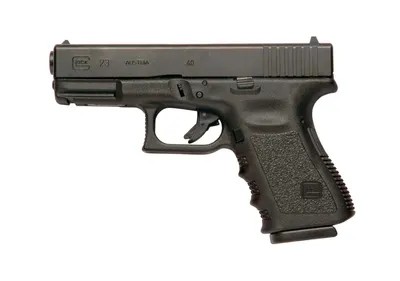
The dominance of John M. Browning’s designs in the United States and Europe lasted well into the mid-20th century. His .45-inch pistol, manufactured by Colt, became the standard for the U.S. military in 1911. The mechanism was elegant in its simplicity. The barrel and breechblock were locked together inside a housing known as the slide. When fired, recoil pushed the slide back. The barrel moved a short distance, disengaging from the locking mechanism, before a spring pushed it forward again. The slide continued rearward, ejecting the spent casing and cocking the hammer. A spring then drove the assembly forward, stripping a fresh cartridge from the seven-round magazine in the grip.
This configuration remained unchanged until 1987. The replacement was not a new Browning design, but a 9-mm Beretta from Italy, designated the M9 by NATO. It reflected a shift in military doctrine after 1970. The new standard prioritized capacity and versatility. The Beretta held 15 rounds, more than double the M1911’s magazine. It featured a double-action trigger, allowing the hammer to be snapped without manual cocking. Ambidextrous safety levers addressed concerns about left-handed shooters. The M1911 was no longer the gold standard. It was simply outdated.
Extending the Reach
Soldiers have always preferred the explosive power of grenades. The problem is physical limitation. A hand-thrown grenade rarely travels further than 30 to 40 yards. To strike targets beyond that radius, infantry needs a launcher.
During World War I, armies attached devices to standard rifles to fire “rifle grenades.” The range improved. The accuracy did not. Aiming a rifle while accounting for the added weight and aerodynamics of an explosive projectile proved difficult. The solution arrived in the 1950s from the Springfield Armory.
The M79 Break-Open Launcher
The M79 grenade launcher resembled a sawed-off shotgun. It was a single-shot, break-open weapon. It fired a 40-mm, 6-ounce high-explosive fragmentation grenade. The muzzle velocity reached 250 feet per second. The effective range extended to 400 yards. This filled a critical tactical gap. Hand grenades stopped at 40 yards. 60-mm mortars began their arc around 300 yards. The M79 covered the middle ground.
The weapon used a “high-low pressure system” originally developed by Germany during World War II. An aluminum cartridge case contained a sealed propellant chamber in front of the primer. This chamber had carefully sized holes leading to a separate expansion chamber. Firing the weapon created high pressure in the propellant section. Gas flowed through the holes into the expansion chamber. The resulting moderated pressure created a low impulse. This launched the grenade with adequate velocity while keeping recoil manageable.
Production ran from 1961 to 1971. The M79 saw heavy use in Vietnam. It was eventually retired in favor of a launcher attachment for the M16 rifle. The standalone shoulder-fired design was deemed less efficient than the integrated system.
Automatic Grenade Fire
Vietnam also saw the rise of automatic grenade launchers. These weapons fired higher-velocity cartridges than the single-shot M79. The projectiles were not thin-walled. They were built to handle greater stress.
Initially, these machine guns were mounted on helicopters. Later, they appeared on tripods and armored vehicles. The U.S. Mark 19 and the Soviet AGS-17 became common fixtures. The Mark 19 fired 40-mm rounds. The AGS-17 shot 30-mm projectiles. These weapons often replaced or supplemented .50-inch heavy machine guns. They provided sustained area denial in ways that single-shot launchers could not. The battlefield evolved to demand continuous pressure, not just occasional bursts of explosive force.
The Death of the Direct-Hit Rifle
Tanks changed everything in World War I. Infantrymen looked up from the mud and saw metal beasts they couldn’t stop. The German response was blunt: the 13-mm Tankgewehr. It was a massive, single-shot Mauser bolt-action rifle. Not exactly a portable weapon. Britain followed suit with the .55-inch Boys antitank rifle in the late 1930s. This one had a magazine and a bolt. The Soviets went further, rolling out 14.5-mm bolt-action and self-loading variants during WWII.
It didn’t last. Armor got thicker. Kinetic energy simply couldn’t do the job anymore. To punch through modern steel, you needed too much recoil for a human shoulder to handle. The era of the antitank rifle ended before it truly began.
The Munroe Principle
The solution came from an accident in the 1880s. American inventor Charles E. Munroe noticed something strange about explosives. If you create a hollow cone of explosive material and set it off just inches from a metal plate, it doesn’t just push the metal back. It punches through.
A jet of white-hot gas and molten steel tears into the armor. This is the Munroe principle. It is the foundation of the shaped-charge projectile.
World War II saw this technology hit the battlefield. Low-velocity, shoulder-held rocket launchers like the bazooka. Recoilless devices like the German Panzerfaust. Literally “Tank Fist.”
The Panzerfaust was issued in the latter half of the war. It was a 30-inch-long tube. 1.75 inches in diameter. Inside sat a gunpowder charge. You inserted a six-inch bomb on a stick with collapsible fins into the front. No complex sights. No aiming down the barrel. You held it over your shoulder or under your arm. A simple firing pin and percussion cap on the outside did the rest.
The propellant gases blew a cap off the rear of the tube. This canceled the recoil. The bomb could be lobbed 30 to 100 yards. The charge—a mix of RDX and TNT—could penetrate any tank armor on the field. It was crude. It was effective. It was deadly.
The RPG Evolution
The Soviets took the Panzerfaust concept and refined it. They perfected the recoilless launch mechanism. The result was the Ruchnoy Protivotankovy Granatomet 2, or RPG-2. A “Light Antitank Grenade Launcher.”
Unlike the disposable German tube, the RPG-2 launcher was reusable. It lobbed an 82-mm shaped-charge warhead over 150 yards. Simple. Reliable.
Then came 1962. The RPG-7.
The Soviets combined the recoilless launch with a rocket sustainer. This added range and power. The warhead weighed 5 pounds (2 kg). It could hit targets beyond 500 yards.
This changed asymmetric warfare. Guerrillas found a weapon that could match conventionally armed, heavily armored forces. The RPG-7 became the poor man’s tank destroyer.
The Viet Cong used them to destroy U.S. armored vehicles in Vietnam. Militiamen in the Middle East used them in protracted conflicts. The logic was simple. You didn’t need to outgun the tank. You just needed to hit it where it hurt.
The shaped charge remained the answer to the armor problem. But technology never sleeps. New alloys. New reactive armor. The race continued.
Nations around the globe didn’t just copy existing designs. They built their own shoulder-fired recoilless launchers. These weapons used shaped-charge warheads to punch through armor. The goal was simple. Give infantry a way to kill tanks without needing a crew-served system.
One standout example is the American AT4. It changed the game by being preloaded. Soldiers didn’t need to assemble components in the field. They took it out of the box. Aimed. Fired. Then they threw the tube away.
This disposable design had massive implications. Logistics simplified. A soldier didn’t have to return empty tubes to base for reloading. No maintenance. No cleaning. Just fire and forget. It made anti-tank capability accessible to every foot soldier. Not just specialists.
Other countries followed suit. They developed similar single-use systems. The trend favored convenience over reusability. In modern combat, speed and simplicity often win out. You don’t have time to reload a complex launcher when a tank is approaching.
The AT4’s preloaded, discard-after-use model became the standard for portable anti-tank warfare.
This approach shifted the balance on the battlefield. Infantry were no longer helpless against armored vehicles. They carried significant firepower in a package that weighed less than 20 pounds. The trade-off was clear. One shot. One use. But that one shot could be decisive.
The design influenced countless other systems. Many nations adopted variations of this concept. The result was a proliferation of lightweight, lethal tools in the hands of regular troops. It wasn’t just about killing tanks. It was about giving every soldier equal footing.