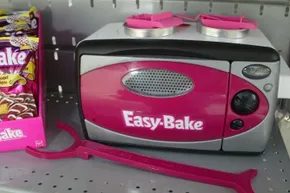
Some toys vanish as quickly as they appear. But the Easy-Bake Oven didn’t just survive; it thrived. It’s not about the bells and whistles. It’s about the heat. Specifically, the glow of a 100-watt incandescent bulb nestled inside a plastic box. This simple mechanism created a cultural phenomenon that has outlasted trends, recessions, and even the decline of Kenner Products.
A Light Bulb Moment in Cincinnati
The story starts in Cincinnati, Ohio, in the early 1960s. Victor M. Miller, an engineer at Kenner Products, was tinkering with ideas for a toy that mimicked real cooking. He needed a heat source that was safe, consistent, and easy to replace. A light bulb was the answer. It was cheap. It was readily available. And it got hot.
Kenner launched the original Easy-Bake Oven in 1963. It was modest. A small, beige unit with a red handle. But it offered something magical: autonomy. For the first time, children could bake something edible without adult supervision or complex kitchen safety risks. The results were immediate. By the end of the decade, it was a bestseller.
More Than Just Cookies
Kids didn’t just make cookies. They made pizzas. Candy. Peanut brittle. Even fudge. The appeal wasn’t just the food—it was the power. A child could create something tangible from a mix. That sense of agency is hard to replicate in other toys. The Easy-Bake Oven gave it to them.
The formula was simple. Add water to the powdered mix. Stir. Pour into a pan. Slide it into the oven. Wait ten minutes. The bulb heated the cavity. The batter cooked. You pulled it out. You ate it. Sometimes it tasted great. Sometimes it tasted like chalk and sugar. But it was your chalk and sugar.
From Kenner to Hasbro
Kenner’s success with the Easy-Bake Oven was no accident. The company was already known for high-quality toys, including the action figures that would later fuel the Star Wars boom. But the oven stood on its own. It didn’t need a movie tie-in. It didn’t need a cartoon. It just needed kids who wanted to cook.
In the 1990s, Hasbro acquired Kenner. They didn’t change the core concept. They refined it. New colors. New designs. More elaborate ovens with digital displays and even more recipes. But the heart remained the same: a light bulb, a pan, and a mix. By 2013, sales had crossed 30 million units. More than 150 million packets of food mix had been sold. That’s 150 million little experiments in chemistry and patience.
Why It Endures
Why do kids still love it? The answer isn’t in the tech. It’s in the ritual. There’s a satisfaction in seeing raw ingredients transform into something cooked. It’s a small victory. A tiny triumph. And for a child, that matters. The oven doesn’t judge. It doesn’t hurry. It just heats. And when the timer goes off, you have proof that you did something real.
The Easy-Bake Oven
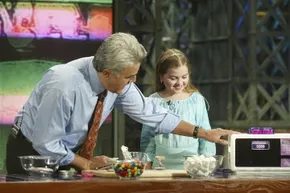
Kenner didn’t stumble upon the Easy-Bake Oven by accident. The concept was born on a street corner, not in a laboratory. Norman Shapiro, a salesman for the company, was on a business trip when he spotted something mundane but fascinating. Street vendors were cooking pretzels for pedestrians. They kept the dough warm using heat lamps. It was a simple, efficient system. Shapiro brought the idea back to Kenner headquarters and pitched it as a toy.
Kenner was different from other toy makers of the era. They didn’t just chase trends. They hunted for niches. The company held regular brainstorming sessions. They looked for toys that mimicked adult activities. Selling kids a chance to “cook” was a smart angle. Shapiro’s suggestion landed in the right hands.
Ronald Howes was the director of new product development and research at Kenner. He was already famous in the toy industry. Before the oven, he had created Spirograph and the Give-a-Show Projector. He didn’t dismiss the pretzel-lamp idea. He ran with it.
By 1963, Kenner had a prototype. The early models looked strange. They weren’t cute kitchen appliances. They resembled asymmetrical plastic robots. They came in yellow or blue. The design was functional first, pretty second.
Kids slid loaded pans into a slot. The pans went into a heating chamber. A tiny window let them watch their brownies bake. After a few minutes, the treats moved to a cooling chamber. Then they ate them. Or fed them to a sibling. Or the dog. No baking skills required.
But the real magic wasn’t in the pans. It was in the heat.
The Heat Source Mystery
How did a toy oven stay hot enough to bake without burning down a house? The answer lies in the light bulb.
The original Easy-Bake Oven used a standard incandescent light bulb. Specifically, a 100-watt bulb. It was housed inside the back of the unit. The heat from the bulb radiated into the cooking chamber. The aluminum baking pans absorbed that heat. The brownies baked. Simple physics.
The bulb was the heart of the operation. It got hot. Very hot. Kenner knew this. They designed the oven to contain that heat safely. The plastic shell wasn’t just for looks. It was insulation. The window was small to prevent heat loss and keep kids from touching the hot glass.
Was it safe? Mostly. But warnings were necessary. Kids shouldn’t touch the bulb. The oven shouldn’t be left on for hours. The instructions were clear. Keep the toy away from curtains. Keep it away from curious fingers.
The 100-watt bulb was a specific choice. Lower wattage wouldn’t bake properly. Higher wattage would melt the plastic or cause a fire. Kenner tested many options. The 100-watt incandescent hit the sweet spot. It provided consistent heat. It was cheap. It was widely available.
This design lasted for decades. The core mechanism didn’t change much. The plastic evolved. The colors changed. The recipes got fancier. But the bulb stayed the same. For a long time.
Why Incandescent?
Why use a light bulb instead of a heater? Cost. Simplicity. Safety.
Resistive heaters could get too hot too fast. They could also fail. A light bulb is durable. It’s a sealed unit. It doesn’t have moving parts. It just glows. And heats.
The incandescent bulb converts electricity into

Why Light Bulbs Were the Original Heating Element
You wouldn’t think a toy oven would need a PhD in thermodynamics, but the engineers at Kenner certainly did. Before the Easy-Bake Oven dominated playgrounds, kids played with metal ovens that burned wood pellets. Then came electric models. They were fun, sure. But they were also dangerous. Parents were right to worry about antsy little hands near hot metal coils.
Kenner’s solution? Light bulbs.
Specifically, twin 100-watt incandescent bulbs. One sat above the food tray. The other screwed in below. The logic was sound: heat from both sides meant faster, more even cooking. Skeptics might scoff at the idea of cooking dinner with light, but incandescent bulbs are basically inefficient heaters that happen to make light. Inside the cramped oven chamber, temperatures soared past 350 degrees Fahrenheit. It worked.
Later models streamlined the design, using just one bulb. Smarter engineering created a convection effect that mimicked professional kitchens. But the real genius wasn’t in the physics. It was in the marketing.
To parents, a light bulb felt harmless. A heating element felt dangerous.
Kenner was so obsessed with this perception they almost named the product the “Safety-Bake Oven.” Regulators shut that down immediately. You can’t call a product “safe” before you’ve even sold it. So they called it Easy-Bake. And it sold out instantly. The debut model cost $15.95. Kenner moved over half a million units in the first holiday season. The next year? Sales tripled.
The business model was as clever as the heating element. Kenner released 25 different mix kits. Kids wanted every flavor. When General Mills bought Kenner in 1967, they added Betty Crocker branding. Later, you could buy McDonald’s or Pizza Hut mixes. The temptation was irresistible. Eventually, kids realized they couldn’t bake a Big Mac, so they started making their own recipes.
There are no rules. It’s just an oven. Hasbro’s accountants might prefer you buy their proprietary powder, but the internet is full of DIY recipes. There’s even an Easy-Bake Oven Gourmet cookbook for adults, featuring capers and Grand Marnier. Kids made tiny treats. Adults made actual desserts.
The 2006 Redesign and the Recall Nightmare
The golden era ended with a flicker of legislation. The Energy Independence and Security Act of 2007 demanded more efficient light bulbs. By 2012, 100-watt bulbs had to be 25% more efficient. The old incandescent bulbs that powered the Easy-Bake were effectively obsolete.
Hasbro had to pivot. They couldn’t wait for the ban. In 2006, they introduced a redesign featuring a ceramic heating element. It was modern. It was safer, or so they thought. They also swapped the side-loading tray for a front-loading slot.
It seemed like a smart update. Until it wasn’t.
The new slot was just wide enough for the tray. And just wide enough for a child’s finger. When kids pushed the tray in, their fingers brushed the hot ceramic element. The result was a wave of injuries. Second-degree burns. Third-degree burns.
Hasbro issued a recall. They sold repair kits to fix the open slots. The kits failed. More than 200 kids were burned. One five-year-old girl lost part of a finger to amputation.
The fallout was severe. Hasbro recalled all 2006 models. Most companies would have killed the product. Hasbro doubled down. They went back to the drawing board. For a while, they returned to light bulbs. Then, in 2011, they debuted another ceramic heating element model. This time, the heat source was locked away, shielded from prying fingers. It worked. The toy survived.
An Oven for Everyone
The Easy-Bake Oven isn’t just a toy. It’s a cultural artifact. It survived safety scandals, regulatory bans, and changing consumer habits. Today, it’s available in various forms, but the core idea remains. Kids want to cook. They want to create.
The modern versions are safer. Smarter. But they still carry the weight of that history. The burns from 2006 are a dark footnote, but the oven persists. Why? Because the desire to make something from nothing is universal.
You can buy the mixes. Or you can ignore them. The oven doesn’t care. It just heats up. And waits. For the next generation of bakers to push the tray in, and hope their fingers stay safe.
The industry has changed. Ingredients are organic now. Designs are sleeker. But the fundamental magic is the same. A child. A box. And the promise of something warm coming out the other side.
It’s a small thing. A toy. But it’s lasted decades. Longer than most trends. Longer than most fads. Is that durability luck? Or is it something deeper?
We’ll never know for sure. But the ovens are still selling. And the kids are still baking.

Toys like Barbie and G.I. Joe do more than entertain. They signal what society thinks is appropriate for boys and girls. The Easy-Bake Oven sits right in that crossfire. It is more than a plastic appliance. It is a mirror reflecting changing gender roles.
Marketing to a Specific Audience
When the oven first hit shelves, most simulation toys were aimed at boys. The Easy-Bake offered something different. It let girls mimic adult domestic work.
The ads made the target audience clear. Commercials showed mothers and daughters baking together. The message was loud and unambiguous. This kitchen toy belonged to girls. Boys were not the primary demographic.
The Boy Version: Mud & Crud
Hasbro tried to fix the “gender gap” in 2002. They launched a version for boys. It was called the Qu Easy-Bake Oven. It came with a Mixerator.
The recipes were designed to appeal to young males. You would not find vanilla cupcakes here. Instead, the kit promoted gross-out treats. Try Mud & Crud Cakes. Or Larva Licious Cocoon Cookies.
The logic was simple. Boys could bake, but only if it was “gross.” Girls could bake, but they were expected to stick to traditional cookies. Even if a girl thought Crud Cakes sounded fun, the marketing implied she should choose the pink option. The gendered divide was intentional.
The Black Oven Incident
The color of the toy matters. In 2012, a 13-year-old named McKenna Pope noticed this. She saw the standard pink-and-flowers model. She wanted a different color. Her goal was not for herself. She wanted to please her younger brother.
He was hesitant about the pink design. Pope petitioned Hasbro for a change. Hasbro listened. They unveiled a glossy black model. It was a direct response to the demand for a gender-neutral toy option.
Design Shifts Over Decades
The physical oven has changed as much as the marketing. For 50 years, the design has evolved. It started as a miniature kitchen range. Then it looked like a petite microwave. By 2014, it resembled a squat toaster oven. Some said it looked like an alien with stubby arms.
The shape changes, but the popularity remains. The Easy-Bake Oven is a cultural staple. Generations of children list it as a favorite toy.
Hall of Fame Status
The toy’s impact goes beyond playrooms. It has earned formal recognition. In 2006, the National Toy Hall of Fame inducted it. It also appears constantly in pop culture. You see it referenced in TV shows. You hear it in song lyrics.
The fame is self-perpetuating. A simple cooking device has embedded itself in the collective memory of children.
Easy Bake Oven FAQ
When did the Easy Bake Oven come out?
It was first released in 1963.
Do Easy Bake Ovens still use light bulbs?
No. The lightbulb version was retired in 2007. Newer models use a built-in, lightbulb-free heating element.
What age is an Easy Bake Oven for?
The manufacturer recommends it for ages eight and up.
How much did an Easy-Bake Oven cost in 1963?
The original price tag was $15.95.
Is the Easy-Bake Oven discontinued?
The original lightbulb model was discontinued in 2007 due to safety laws. However, a revamped version called the Easy Bake Ultimate Oven is currently available.