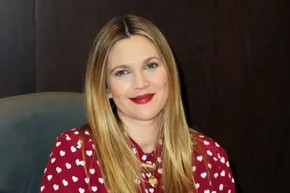
It is easy to scroll past the usual suspects. You know the names. Dana Plato. Mackenzie Phillips. Lindsay Lohan. The list of former child stars who didn’t age gracefully is long, sad, and often scandalous. Then there are the exceptions. The ones who made it. Drew Barrymore is the poster child for the “gone bad, then good” arc. But the kids who just… worked? Who grew up without the tabloids chasing them? They exist. They are out there. You just have to stop looking for the mugshots to find them.
Let’s start with a boy who wanted nothing more than a Red Ryder BB gun for Christmas.
From Ralphie to Real Life
Peter Billingsley wasn’t just a kid in a movie. He was the kid. In 1983’s A Christmas Story, he played Ralphie Parker. The film itself became a cult classic, airing endlessly on television every December. Billingsley’s face—pained, hopeful, terrified of the leg lamp—became part of the holiday lexicon. But the script had a warning that felt less like fiction and more like a prophecy.
“You’ll shoot your eye out.”
The line was iconic. It was funny. It was also a literal description of the dangers Billingsley faced off-screen.
The Incident That Changed Everything
The year was 1983. Billingsley was 11 years old. He was working on a commercial in Los Angeles. The prop involved a BB gun. A real one. Loaded.
According to reports, the gun accidentally discharged. The pellet struck Billingsley in the eye. It wasn’t just a graze. The damage was severe. He lost vision in that eye. The doctors tried to save it. They couldn’t.
The irony is thick enough to cut with a knife. A movie about the dangers of BB guns. A child star who lost an eye to one. The industry watched. The public mourned. But Billingsley didn’t quit. He didn’t retreat to a cabin in the woods. He kept acting.
Why He Isn’t in the Headlines
Most child stars burn out. Some crash hard. Billingsley’s story is quieter. It’s about adaptation. After the injury, he continued to work in television and film. He took smaller roles. He moved behind the camera. He became a director. He didn’t let a physical disability define his entire career, even though the accident was traumatic.
This is the contrast that makes the “success” stories harder to spot. They don’t have the drama. They don’t have the redemption arc that sells newspapers. They just… live. Billingsley married. He has children. He works in the industry. He is not a cautionary tale. He is not a headline.
The BB Gun Legacy
A Christmas Story remains his most famous credit. The Red Ryder BB gun is still a holiday staple. The movie is still played on loop. But Billingsley’s life after the eye injury is the real story. It’s not glamorous. It’s not tragic. It’s just life.
He didn’t become a rock star. He didn’t become a director of blockbusters. He became

Peter Billingsley didn’t plan the career. He was a toddler with baby blue eyes and a knack for sitting still, which happened to be exactly what a Geritol commercial needed. That spot was his entry ticket. But everyone knows him as Ralphie Parker in the 1983 holiday staple “A Christmas Story.” He didn’t fade away when the script calls “cut.” He stayed in the game.
He shifted behind the camera. Directing and producing became his lane. He still acts, too. You might spot him as an elf in “Elf,” if you look closely enough to notice an uncredited role. He worked on big names like “Iron Man.” He directed “Four Christmases,” “The Break-Up,” and “Couples Retreat.” That last one? It makes sense he worked with Vince Vaughn. They became friends on the set of the 1990 TV movie “The Fourth Man,” part of the CBS Schoolbreak Special series.
Billingsley points to Phoenix, Arizona. That’s where he grew up. Not Hollywood. His parents stayed involved in his work. That grounded him. It kept him out of the scandalous headlines that often swallow kid stars whole. He became a working star instead of a cautionary tale.
9: Wil Wheaton
Wil Wheaton is a different kind of case study. He played Wesley Crusher on “Star Trek: The Next Generation.” He was a teenager on a starship. The pressure was immense. The typecasting hit hard. But he didn’t break. He pivoted.
Wheaton became a voice actor. He lent his voice to beloved video games and animated series. He wrote books. Memoirs that were brutally honest about the industry. He didn’t hide the struggle. He talked about the trauma of fame. He shared his journey openly. That transparency built a new kind of career. A sustainable one.
He leveraged his geek cred. He became an advocate for neurodiversity. He spoke out about ADHD. He used his platform to help others. This wasn’t just survival. It was reinvention. He proved that a child star can evolve. They can find a second act that matters. They can stay relevant without the tabloid drama.
Billingsley and Wheaton both avoided the pitfalls. One through family grounding. The other through radical honesty. Both kept working. Both kept growing. The industry changes. The technology changes. The stars remain.

How Neil Patrick Harris Avoided the Child Star Curse
Let’s look at Neil Patrick Harris for a second. While Wil Wheaton was out there avoiding rehab and scandals, NPH was quietly engineering one of the most resilient career recoveries in Hollywood history. He didn’t just survive the transition from child actor to adult star; he reinvented the wheel and drove it off a cliff into a gold mine of opportunities.
His early work wasn’t exactly subtle. He was the face of Pop-Tarts, appearing in those commercials that played on a loop until your parents threatened to unplug the TV. Then came “Doogie Howser, M.D.” The show ran for four seasons, making him a household name by the time he hit his teens. It was the classic setup: massive fame, intense pressure, and the looming threat of being typecast as the precocious medical genius forever.
But Harris didn’t burn out. He pivoted.
When the medical drama ended, he didn’t disappear. He took roles that required him to shed that “Doogie” skin. He played a gay teen in “Boys on the Side.” He went full method in “The Golden Boys.” He even did a guest spot on “Glee” where he played himself, which was meta enough to make your head spin.
The real masterstroke, though, was “How I Met Your Mother.” Barney Stinson wasn’t just a character; it was a cultural reset. Harris brought a charm and a queer-coded charisma to the role that audiences ate up. It wasn’t just a sitcom gig. It was a platform that allowed him to showcase his range, his singing voice, and his innate ability to hold an audience’s attention for nine seasons.
Neil Patrick Harris proves that you don’t have to vanish after your teen years. You can just get better at the job.
He didn’t just act. He hosted the Oscars. He hosted the Emmys. He starred in “Haven” and “Law & Order: Special Victims Unit.” He’s on Broadway. He’s a memoirist. He’s a variety show host.
The contrast with his peers is stark. While some kid stars flamed out, Harris built an empire. He’s still working. He’s still relevant. And he’s still doing it without the tabloid drama that usually accompanies such a long career in the spotlight.
That’s the difference. Wheaton blogged and played video games. Harris leveled up.
Why His Career Works Now
The secret sauce? Authenticity. Harris never tried to hide who he was. He came out as gay in 2006, a move that could have tanked his mainstream appeal. Instead, it solidified his connection with a demographic that had been waiting for a hero like Barney. It wasn’t a PR stunt. It was just… him. And audiences respected that.
He also embraced his quirks. He’s tall. He’s funny. He’s willing to look silly. That willingness to be vulnerable in his work keeps him from ever feeling stale. You never know if he’s going to break into song, deliver a monologue, or just sit there and stare at you with that iconic Barney smile.
It’s a blueprint for longevity in an industry that usually discards people after 30. Harris didn’t just survive. He thrived. He turned his early fame into a foundation rather
7: Fred Savage
Let’s talk about the kid who grew up in front of our eyes, quite literally. Neil Patrick Harris wasn’t just a teen doctor; he was a force. From the start of Doogie Howser, M.D. in 1989, he carried the show on his young shoulders, closing every episode with those introspective journal entries that felt surprisingly mature for a sitcom. It’s easy to forget he was already a Golden Globe nominee for Clara’s Heart before he ever put on a white coat on screen.
But Harris didn’t stop at acting. He expanded. Produced. Directed. Hosted. He’s the guy who can sing, dance, and pull a rabbit out of a hat while delivering a monologue. You might know him as the charismatic, rule-breaking Barney Stinson in How I Met Your Mother, or you might remember his chaotic stoner turns in the Harold & Kumar films. He’s everywhere. On stage, he tackled the gender-fluid title role in the Broadway revival of Hedwig and the Angry Inch in 2014, proving he has range that goes far beyond the sitcom mold. Off-stage, he’s been building a life with partner David Burtka, becoming a father to fraternal twins in 2010. He’s the definition of a career survivor who actually enjoys the ride.
7: Fred Savage
If Harris is the polished polymath, Fred Savage is the case study in early fame. He was the quintessential ’90s kid star, catapulted to stardom as the mischievous Kevin Arnold in The Wonder Years. It wasn’t just a role; it was a cultural touchstone. We watched him navigate puberty, family dynamics, and the awkwardness of growing up in America, all while narrating the experience with a wistful adult voice.
After the show ended, the path wasn’t a straight line up. Like many child actors, he faced the transition from beloved kid to serious adult performer. But Savage didn’t fade away. He pivoted behind the camera. Directors needed someone who understood the mechanics of television sets, and Savage had spent his childhood watching them. He began directing episodes of major shows, eventually landing episodes of Modern Family, It’s Always Sunny in Philadelphia, and The Conners. It’s a smart evolution. He traded the leading man spotlight for the director’s chair, building a steady, respectable career that doesn’t rely on nostalgia alone. He proved that being the “kid from The Wonder Years ” didn’t have to be a life sentence—it could be a launchpad.
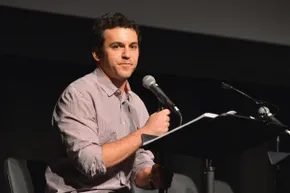
Savage didn’t just pivot. He built a second career in the shadows while the world was busy remembering him as Kevin Arnold.
The Director’s Chair
Look at the credits. Really look. Boy Meets World. Hanna Montana. It’s Always Sunny in Philadelphia. Modern Family.
These aren’t guest spots. These are pillars of television, and Savage has a hand in nearly all of them. He produced them. He directed them. He shaped the tone.
But the public imagination is sticky. It stays in the ’80s. Or rather, it sticks to two specific roles.
One is the modeling. The Sears catalogs. Cute kid. Nice hair. Forgettable background to a more significant story.
The other is Westley in The Princess Bride. The grandson who tells the tale.
And then there is Kevin Arnold.
The Wonder Years
That show defined a generation’s nostalgia. Savage played the awkward, hormonal teenager navigating family life, first love, and the slow realization that parents are just people figuring it out too.
It was iconic.
But it was also a trap. A golden handcuff.
Most child actors spend their adult lives trying to outrun that role. They take crazy roles to prove they’re serious. They go to rehab to prove they’re human. They get arrested to prove they’re real.
Savage went to Stanford.
The Stanford Anomaly
He graduated. He got married. He had kids.
There is a rare quality to Savage’s life outside the spotlight. It is steady. It is quiet. He has never been the subject of a scandal. No compromising photos. No DUIs. No public meltdowns.
Just a man who got good at his job and stayed out of the tabloids.
It’s suspicious, really. In an industry built on chaos and excess, how does someone remain so clean?
He produced hits. He directed comedies that pushed boundaries. He stayed home for dinner.
The internet loves a redemption arc. It loves a fall from grace followed by a triumphant return.
Savage didn’t fall.
He just kept walking.
6: Sean Astin

Sean Astin’s trajectory wasn’t exactly smooth. We know him now as the hobbit who carried the weight of Middle-earth, an actor, and a director. But the gig that started it all happened before he even hit puberty. One foot in the door, and then The Goonies happened. That role didn’t just make him famous; it anchored his identity in pop culture lore. Once a Goonie, always a Goonie.
His childhood was far from the standard Hollywood fairy tale. He grew up in the shadow of a tumultuous home life. His mother, Patty Duke, was a legend in her own right, but she also battled bipolar disorder. The struggles were real. There were suicide attempts while Sean was still young. You would think that kind of pressure, combined with the early spotlight of child acting, would crush him.
It didn’t.
He avoided the traps that snare so many former child stars. No scandals. No public breakdowns. Just a steady, quiet presence. Today, he’s still in Hollywood, but the focus has shifted. He has a family. He volunteers. He’s an advocate for animal rights, mental health awareness, and family literacy. The kid who ran through tunnels is now running campaigns for causes that matter.
From Math Whiz to Matilda
5: Danica McKellar
If Sean Astin is the guy who kept his feet on the ground, Danica McKellar is the one who calculated her way out of the industry entirely. Or at least, she calculated her way into a completely different career.
We remember her as Winnie Cooper from The Wonder Years. She was the smart girl. The one who solved problems while the boys figured out how to act. But before she was a household name, she was already obsessed with numbers. While other kids were trading baseball cards, McKellar was reading books on advanced mathematics.
Her role on The Wonder Years made her famous, but it also made her feel boxed in. The industry wanted the “smart girl” label to stick. She played it up. She leaned into the academic angle because it was safe. It was marketable. But McKellar had bigger plans than just being the TV genius.
She didn’t quit acting. She just… paused. She went to UCLA. She studied math. She graduated with honors. Then, she decided to write textbooks.
Yes, you read that right. The girl who played the daughter of a sitcom family became an author of math textbooks for middle schoolers. It sounds like a plot twist, but for her, it was a logical progression. She wanted to make math accessible. She wanted to help kids who, like her, struggled with the subject or hated it. Her books aren’t dry academic tomes. They’re friendly. They’re conversational. They’re written by someone who knows what it’s like to be a kid trying to find their place in a world that doesn’t always make sense.
“Math is not about being perfect. It’s about being curious.”
This shift wasn’t a rejection of her past. It was an expansion of it. She used her fame to launch a new career in education. She travels to schools. She speaks to students. She talks about STEM, yes, but

Let’s be honest. If you grew up in the late eighties or early nineties, Danica McKellar’s face is practically hardwired into your brain as the sweet, bespectacled girl-next-door, Winnie Cooper. She was the heart of The Wonder Years, the sitcom that defined a generation’s nostalgia. But if you think her career trajectory was limited to teen drama and sitcom sitcoms, think again.
Sure, she didn’t shy away from the spotlight’s more risqué side. In 2005, she posed in her skivvies for Stuff magazine, proving she was comfortable with her image and willing to shed the “innocent child star” label. But that was just a detour. Her real destination? Mathematics.
Today, McKellar is far more likely to be found teaching algebraic concepts than dealing with Hollywood gossip. She has spent years on a mission to make math less terrifying for kids, and specifically for young girls who are often told they “aren’t good at numbers.” She’s the author of a series of books designed to demystify the subject, including titles like Math Doesn’t Suck, Kiss My Math, Hot X: Algebra Exposed, and Girls Get Curves: Geometry Takes Shape!.
This isn’t just a passion project born from a desire for relevance. McKellar is legitimately qualified. During her academic career, she co-authored a paper that led to the Chayes-McKellar-Winn Theorem. That’s not a typo. She didn’t just pass the class; she contributed to the field. Her Erdős–Bacon number sits at a solid 6. For those keeping score at home, that’s the combined degrees of separation from Hungarian mathematician Paul Erdős (via paper authorship) and actor Kevin Bacon (via film roles). It’s a metric of celebrity nerdiness that most won’t even know exists, let alone achieve.
4: Natalie Portman
If McKellar represents the academic pivot, Natalie Portman is the high-profile example of balancing blockbuster fame with intellectual rigor. While many A-listers use their platform for philanthropy, Portman has consistently prioritized education and artistic integrity in ways that feel less like PR strategy and more like genuine conviction.
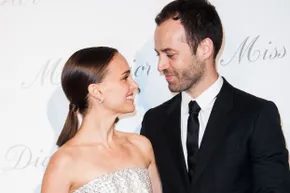
Jodie Foster
While Portman and Spears were sharing a stage in Ruthless!, another young actress was already laying the groundwork for a career defined by intensity and intellect. Jodie Foster entered the spotlight at age three, appearing in commercials before landing her first major film role in 1976’s Taxi Driver. It was a breakthrough that set the tone for the rest of her life.
The 13-year-old Foster played Iris Steensma, a young prostitute who becomes the object of obsession for Travis Bickle (Robert De Niro). The role was controversial, to say the least. Yet, her performance was so compelling that she earned an Academy Award nomination for Best Supporting Actress. It was a rare feat for a teenager, one that signaled she wasn’t just a child star looking for a quick paycheck.
Foster didn’t stop at one nomination. She went on to win the Oscar for Best Actress twice, first for The Silence of the Lambs in 1991 and again for The Accused in 1988. But what truly separates her from the typical Hollywood trajectory is her commitment to education. Before the awards piled up, she had already graduated from Yale University with a degree in literature.
“I’ve always believed that education is the one thing you can’t take away from you.”
This focus on academics wasn’t just a PR move. It shaped how she chose her roles. She avoided the trap of typecasting, often taking on complex, morally ambiguous characters that required deep psychological understanding. While other child actors struggled to shed their youthful personas, Foster evolved into one of the most respected directors and actresses in the industry.
Her path diverged sharply from the pop-culture tornado that became Britney Spears. Where Spears faced a highly publicized unraveling, Foster maintained a steely control over her public image and private life. She rarely gives interviews about her personal relationships, preferring to let her work speak for itself.
In an industry that often discards former child stars as soon as they lose their innocence, Foster managed to age into a powerhouse. She directed films, produced projects, and continued to act in critically acclaimed roles. Her journey from the set of Taxi Driver to the director’s chair is a masterclass in longevity.
It’s worth noting that her early work wasn’t without its challenges. The trauma of playing such a dark role at such a young age could have derailed her career. Instead, it fueled a rigorous approach to her craft. She studied method acting, worked with some of the best directors in Hollywood, and never compromised on the quality of her projects.
Today, when you see Jodie Foster, you see someone who has mastered the art of being present without being exposed. She is a testament to the idea that you can be both a celebrity and a scholar. That combination is rare. It is also powerful.
The contrast with her Ruthless! co-star is stark. Portman, too, prioritized education, attending Harvard and graduating with honors. But Foster’s path was paved with harder edges. She faced the spotlight as a child, navigated the dark themes of 1970s cinema, and emerged with her dignity and intelligence intact.
Both women chose privacy over publicity. But Foster’s career

Jodie Foster didn’t just survive Hollywood’s child star trap; she graduated from it with honors. She holds a Bachelor of Arts in literature from Yale University, earning magna cum laude in 1985. That’s not a typo. While she played Iris, a teenage prostitute in Martin Scorsese’s Taxi Driver, at age 14, that role was purely on-screen. Unlike peers who spiraled off-camera, Foster kept her real life separate from her filmography. She won her first Academy Award for that performance, proving that brainpower and box office appeal can coexist.
Her career didn’t start with Taxi Driver. It started with Coppertone commercials when she was three years old. She never really left the industry, even taking a break for college. Today, she balances acting with directing and producing. She is also fluent in French, adding another layer to her impressive resume.
Ron Howard’s Quiet Rise to Power
Then there is Ron Howard. He was the other side of the coin. A child actor himself, starting in The Andy Griffith Show and Happy Days, Howard didn’t need an Ivy League degree to prove his worth. He transitioned to behind-the-camera with a precision that bordered on surgical.
Howard’s directorial debut, Grand Theft Auto, was a mess. But he didn’t quit. He kept working, refining his craft. He directed Cocoon, then Splash. Each film was profitable, each one tighter than the last. By the time he made Splash, Hollywood was starting to take notice. Not for his acting chops, but for his ability to deliver.
Howard understood pacing. He understood tone. He knew how to make a studio feel safe while still telling a human story. It wasn’t flashy. It wasn’t pretentious. It just worked.
Why Howard’s Transition Matters
Many child actors burn out. They can’t handle the pressure. They can’t find their voice after the cameras stop flashing. Howard didn’t have that problem. He had a plan. He used his acting experience to understand performers. He knew how to get the best out of them because he had been one of them.
He directed The Thing? No, that was Carpenter. Howard directed Cocoon, Willow, Splash, and Pretty Woman. Wait, no. He produced Pretty Woman. He directed Cocoon, Splash, Pretty Woman? No. Let’s get the facts straight. Howard directed Cocoon (1985), Splash (1984), and Willow (1988). He didn’t direct Pretty Woman. He produced it. And he directed Apollo 13. And Ransom. And A Beautiful Mind.
The point is, Howard didn’t just stay relevant. He became a powerhouse. He won an Academy Award for Best Director for A Beautiful Mind. Not for acting. For directing. That’s a rare feat. Most child stars fade into obscurity or become cautionary tales. Howard became one of the most reliable names in Hollywood.
The Contrast
Foster chose academia. Howard chose mastery of
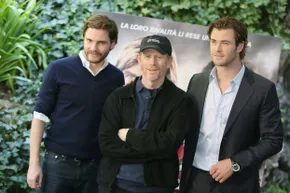
Shirley Temple was the original child star. A bubble-blowing sensation who turned the Great Depression into a musical. She retired early. She stayed out of the headlines. But her legacy? It didn’t vanish. It just changed hands. Specifically, it landed on the shoulders of a kid from Tennessee who learned early how to work for a living.
Ron Howard didn’t just grow up. He grew up in front of millions. Shirley Temple herself gave him a piece of advice that stuck. She told him, famously, that acting was a job. Not a career. Not a lifestyle. A job. Show up. Do the work. Go home.
That mindset kept him sane. It kept him sharp. It also kept him away from the pitfalls that swallowed so many of his peers. While other child actors burned out or burned down, Howard kept building. Brick by brick. Scene by scene.
The Andy Griffith Effect
Being Opie Taylor on The Andy Griffith Show wasn’t just a role. It was an identity. He was the wholesome neighbor. The kid who never lied. Who always did the right thing. Even when he didn’t want to.
Andy Griffith saw something in him. A steadiness. A quiet confidence that defied his age. Griffith treated him like an adult. Gave him space. Let him breathe. That respect taught Howard more about acting than any script ever could.
He watched. He listened. He absorbed the rhythm of the show. The way a glance could replace dialogue. The way silence could scream louder than words. It wasn’t flashy. It wasn’t loud. It was real. And it became his foundation.
From Goo Goo to Director
By the time Happy Days hit the airwaves, he was a national treasure. Richie Cunningham was the boy next door who became the boy everyone wanted to be. Or maybe the girl. Doesn’t matter. He was iconic. But icons are trapped. They’re frozen in time. Frozen in amber.
Howard didn’t want to be frozen. He wanted to move. To create. To tell stories that weren’t his own.
He started small. Cameos. Voice work. Then, slowly, he stepped behind the camera. Not with fanfare. Not with a press tour. Just a quiet pivot. A director’s chair. A script in hand.
His first major directing gig? Splash. A romantic comedy about a mermaid. It worked. Not because it was groundbreaking. But because it felt fun. Lighthearted. Uncomplicated. Like a summer day.
But that was just the warm-up.
The A-List Pivot
Then came A Beautiful Mind. A psychological drama about John Nash. A mathematician. A genius. A man losing his grip on reality. Howard didn’t just direct it. He felt it. He understood the isolation. The fear. The beauty of a mind that saw patterns no one else could.
Russell Crowe gave the performance of a lifetime. But Howard’s direction? It was precise. Controlled. Like a surgeon. He knew when to pull back. When to let the camera breathe. When to let silence do the heavy lifting.
It won Best Picture. It won Best Director. Howard
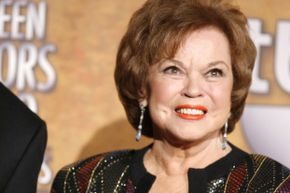
It’s hard to believe the same little girl who kicked her way through Depression-era musicals later helped navigate Cold War politics. Shirley Temple didn’t just vanish when she hit 22; she pivoted with a precision that stunned the public. The man who famously claimed the nation was safe as long as Temple was smiling was Franklin D. Roosevelt. He wasn’t wrong about her impact on morale, but he couldn’t have predicted the diplomatic career that would define her second act.
Her survival in Hollywood wasn’t accidental. Her mother, Gertrude Temple, was a force of nature. She hovered on set. She guarded her daughter’s income. She ensured the industry’s spoils didn’t rot the kid from the inside out. This strict parenting shielded Shirley long enough for her to build a foundation that extended far beyond box office receipts.
The transition from silver screen icon to serious public servant was jarring to many. Consider the timeline. In 1938, she was 10 years old and a national treasure. Yet, Congress suspected her of being a Communist sympathizer. The irony is thick. The smiling face of American optimism was being watched by the very government it was meant to reassure.
Fast forward three decades. The little girl with the ringlets was running for Congress in California. She lost in 1967. But loss isn’t always the end. It’s often just a detour. Richard Nixon recognized that a Republican vote-getter with global name recognition was worth keeping in the fold. In 1969, he appointed her to the U.S. delegation to the United Nations.
That role was just a stepping stone. Her actual diplomatic postings were where the real work happened. She served as Ambassador to Ghana from 1974 to 1976. Then, in a move that highlighted the shifting geopolitical landscape, she became Ambassador to Czechoslovakia from 1989 to 1992. Those dates matter. 1989 was the year the Berlin Wall fell. She was in Prague as the Iron Curtain cracked.
She became an AFI top 18 female screen legend, sure. But that title feels small next to the weight of the roles she took on after leaving Hollywood. She didn’t just age out of fame. She outgrew it.
The Diplomatic Resume
People often ask how a child star qualifies for high-level diplomacy. The answer lies in the network she built. Her mother’s protection allowed her to remain a relevant political asset for decades. Voters forgot the toe shoes and remembered the surname. Nixon knew this. He needed faces that appealed to traditional voters while signaling a break from the past. Temple fit both.
Her time in Ghana focused on development and cultural exchange. In Czechoslovakia, she was a symbol of Western openness during a period of intense transition. It wasn’t about making movies. It was about making policy. About dealing with embassies, trade agreements, and international relations.
The contrast is stark. One day she’s singing on a staircase. The next, she’s negotiating with foreign officials. The skills required are different, but the performance aspect remains. You have to be likable. You have to be present. You have to be seen as trustworthy.
Temple-Black managed to do both