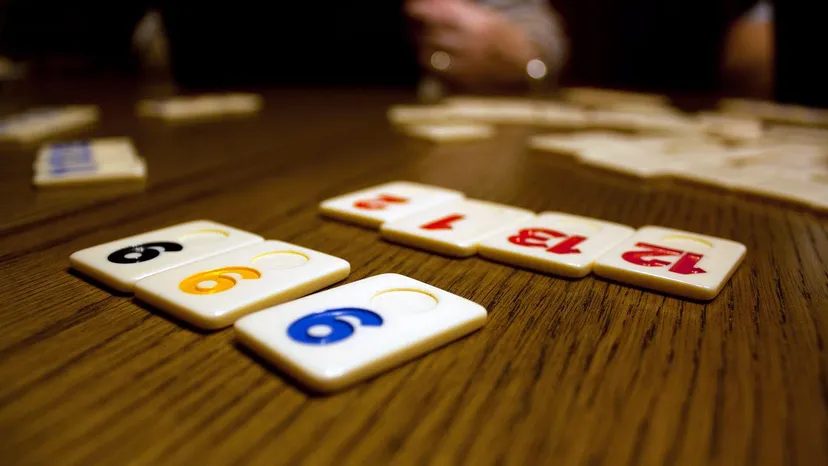
Let’s clear up that confusion right now. Depending on your location, it may be called Rummy Tile, Rummy-O or Rummy Chip. However, if you want to talk to someone who actually plays, you should say Rummikub. No, you can’t pronounce “”roomies” or “cubs”. This is a “Rummy Cube”. If you do this right, you can avoid awkward arguments at the dinner table.
The name was left unchanged because the logic is simple. It is based on the card game Rummy, but uses tiles instead of cards. The rectangular shape snaps into place and fits well in your hand. But this game is more than just a cardboard copy of the deck. A hybrid monster. We inherited the DNA of matching and running Mahjong. It borrows the blocking mechanism from dominoes. It also has a layer of strategic depth that mirrors Chess.
It was a universal hit. The numbers don’t lie. That means 50 million copies sold in 54 countries. The game took the United States by storm and became the best-selling board game of 1977. It also won the Game of the Year award in five countries.
Origin stories are geopolitical puzzles. This concept was invented in Romania in the 1930s. It was later created and popularized in Israel. But how did it cross the Atlantic? Surprisingly, it’s not run by board game enthusiasts. It was widely introduced to American audiences by a comedian. You know the type. His passion for the game is unknown. Perhaps he himself was not so excited. But his support paid off.
The physical boxes are on the shelves now, but it’s the digital version that young people play with. You can find it on Facebook, smartphones anywhere. Also, it’s not just for fun. Rummikub is a legal online gambling game in many jurisdictions as it is considered a game of skill rather than pure luck. Do you want to hustle some folks for money? The app store is your casino.
So are you ready to lay down the law? Let’s take a closer look at the mechanics.
Rummikub rules
To win in Rummikub you have to get rid of all your tiles. The board starts empty. The first player must create valid combinations on the table. Once you’ve taken the first step, others can add to your existing collection or create a new one.
Valid combinations include:
* Set: Three or four tiles with the same number but different colors.
* A Run: Arrange three or more tiles of the same color in consecutive numerical order.
You can create new runs or sets by splitting existing runs or sets. This is where strategy becomes important. It’s not just about holding tiles. You control the board. This is a powerful move if you can break up your opponent’s run and use the pieces yourself.
The game ends when the player empties their rack. They win. If the pool runs out and someone gets stuck, that player
Breaking Down the Mechanics
Most people overcomplicate Rummikub. The rules are not complicated. The real trap is memory. You fail not because you lack strategy, but because you forget your legal moves. It’s like gin rummy or solitaire. Distraction, not ignorance, will ruin your results.
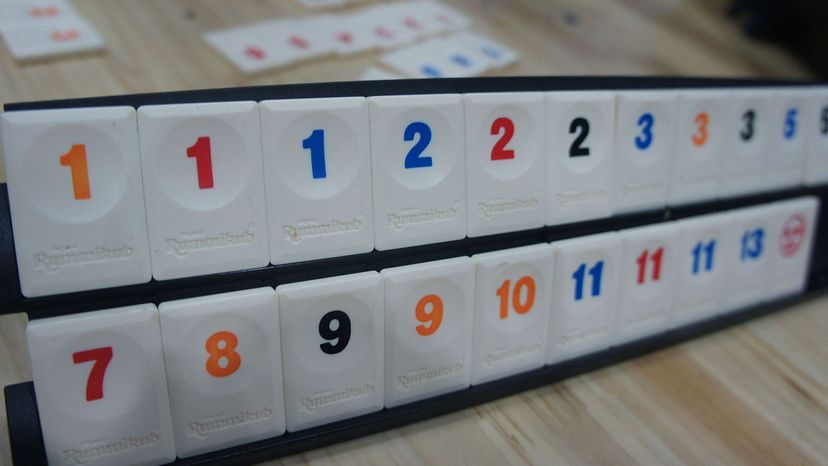
Start with 2-4 players. Dump the tiles face-down. Draw one to determine order. Highest number goes first. 1 is always the lowest value. Shuffle those back in. Each player picks up 14 tiles. Put them on your rack. The rest form a pool.
Your first turn is the hurdle. You must lay down a set worth at least 30 points. A set is a group or a run.
A group means three or four tiles of the same number. Each number has its own color. It’s like suits in a deck.
String means three or more consecutive numbers of the same color.
If your hand is garbage, draw from the pool. Use that tile to hit the 30-point mark. However, it cannot be played immediately. You have to wait until your next turn. This rule applies to all draws. every time.
Once you’re in the game, the goal is melding. You’re looking for gaps in existing sets.
- Add tiles to existing runs or groups.
- Steal a tile. Take the fourth tile from a run to complete your own set. Or add a fourth to the set and divide the rest into new sets.
- Split a run. A 4-5-6-7-8 is on the table. You have 6. Create a 4-5-6 run. The remaining 6-7-8 becomes its own set.
You win when the rack is empty. “Ramiku,” he shouts. The losers tally their remaining tiles. Those are negative points. The winner gets the sum of those negatives. Play several rounds. Highest positive score wins.
The Joker Trap
Jokers are wild cards. Use them as any tile you need. But they’re dangerous. If another player has a certain card that the joker wants to exchange, he can remove that card from the table.
Don’t use a joker at the end of the game. This corresponds to a reduction of 30 points. This has a significant impact on the whole.
How Rumikubu survived totalitarianism
Inventing games that make money is hard. It is even more difficult to find ways to cope with oppression. Ephraim Herzano does not want to retire by the warm sea. He wanted to escape the dictatorship.
In the 1930s and 1940s, Romania was under communist rule. Card games are prohibited. They are considered luxurious and bourgeois. Hertzano was a toothbrush manufacturer who needed an outlet. He can get plastic. He found a shop that recycles airplane cockpit canopies. he makes tiles
He started with friends. After World War II, Herzano’s family fled to Israel. Ephraim’s crafting game. He sold them door to door. He left a copy of the shipment with the merchant. Business has grown. His son Meeka attended business school in the United States. They saw an opportunity.
How did Rumiku expand to America? Don Rickles is joking. In 1977, Rickles mentioned a match against Israel to Johnny Carson. that’s it. Sales grew explosively. Rummkub became the world’s best-selling game in the same year.
The Hertzano family still owns Lemada Light Industries Ltd., whose global sales are handled by Pressman and Hasbro.
Global Stage
The Ramik World Championships are held every three years. The competition is tough. The winners come from Japan, Holland, Egypt and Brazil.
The awards are more than just trophies. This is a trip around the world. Two plane tickets.
You can’t win with charm alone. It takes skill. The next section looks at the techniques that professionals use to win matches.
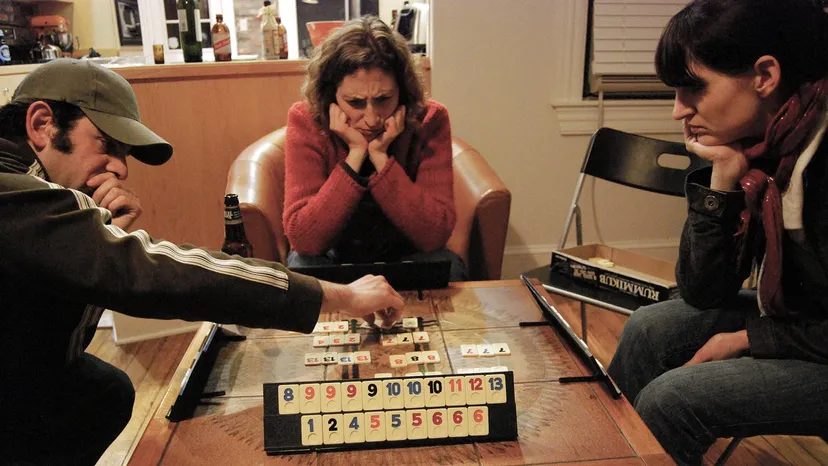
Rummikub may seem like a game of luck to small children, but relying on blind luck can quickly go wrong. If you want to be the first to win, you need tactics. The most important thing is not to draw the right tiles, but to control what to keep and what to show.
By retreating to gain an advantage
A solid starting point is to keep some tiles. It’s not just about hoarding. It’s a question of flexibility. By not leaving everything on the table right away, you can keep your options open when the state of the board changes.
Consider this. Do not place the fourth square in a run or group for the first few groups. Why? Saving an action allows you to choose a new card from the bank on your next turn instead of having to play the card you just laid down. That extra pick-up can save your life.
Another pro trick is to use your initial set to quickly remove valuable tiles. If someone shouts “Rummikub” early and ends up in a shelf full of 50-point tiles, there will be a severe penalty. Remove dangerous pieces from shelves as soon as possible.
Significance of observation
The most important strategy is not what you do, but what you notice. Gotta look at the bulletin board. Continue analyzing the tile rearrangement. In addition, track which numbers are played.
It happens to the best of us. You stare at that run for 15 minutes, planning the perfect addition, only to find that your opponent has already locked the tile you need. If you are not focused, you will waste your time trying to play a game that is mathematically impossible.
The rulebook is complicated
Here’s a dirty secret. There is no one “right” way to play. The standard instructions for most boxes follow the “Sabra version”, which is the most common agroup the world. But if you dig deeper, you’ll find other changes that completely change the game.
The following is the “American version”. It’s simpler. In this version, the tile marked ‘1’ is a wildcard for placing numbers. You can use this to complete a run like 12, 13, 1. This changes the way tiles with lower numbers are evaluated, making it more versatile than other rules.
The “Israeli” or “international” version is a different beast. It is very difficult. The initial meld must be worth 50 points, not the lower threshold of other versions. You also have to earn points just by arranging only tiles from your rack in whole runs and groups. This is a punishing casual game with a strategic maze.
Play anytime, anywhere
Do you want to be better? Practice. You don’t need physical set to hone your skills. There are several digital platforms available. Find free online games directly sponsored by the Rummikub brand and download apps to your smartphone or tablet. This is the easiest way to test these strategies against AI or real opponents without a table.
The Politics of a Tile
The game has a history doesn’t end in the living room. Tensions escalated in 2010 when Israel intercepted a flotilla transporting Palestinian activists and aid to Gaza. The incident sparked global protests and boycotts of Israeli products.
In Spain, this mood is sweeping the toy aisles. A major retail chain has decided to stop selling Rummikubu because of its Israeli origin. The boycott was part of a wider cultural response to the naval raid, turning a simple game of tiles into a political symbol. It’s a reminder that even board games don’t exist in a vacuum.