


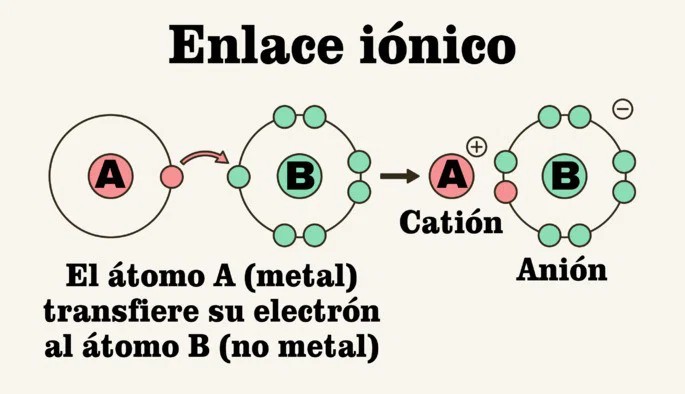
Think of an ionic bond not as a handshake, but as a theft. Or perhaps more accurately, a forced transaction. It is a chemical bond that forms when one atom transfers an electron to another, creating a state of stability that neither party could achieve on its own.
This specific type of connection, sometimes referred to as an electrovalent bond, is driven by a fundamental inequality. It happens between metals and nonmetals that differ significantly in electronegativity. Electronegativity is simply how badly an atom wants electrons. In this scenario, the metal atom is willing to give one up. The nonmetal atom is desperate to take it.
The result is an electrostatic attraction that holds the two together. But why does this matter? Understanding how ionic bonds form reveals the mechanics behind everything from table salt to biological nerve impulses. It is not just abstract chemistry. It is the glue of the inorganic world.
The Mechanics of Electron Transfer
To grasp this, you have to look at the players involved. Metals, typically found on the left side of the periodic table, have loose outer electrons. They hold them tentatively. Nonmetals, located on the right, are electron-hungry. They have space in their outer shells and the high electronegativity to pull electrons in tightly.
When these two collide in a chemical reaction, the transfer is often immediate.
- The metal loses an electron. It becomes a positively charged ion, known as a cation.
- The nonmetal gains that electron. It becomes a negatively charged ion, known as an anion.
Opposites attract. The positive cation and the negative anion snap together under the force of electrostatic attraction. This is the essence of the ionic bond. There is no sharing here. No covalent compromise. It is a complete exchange.
Why Electronegativity Dictates the Bond
You might wonder which elements form these bonds. The answer lies in the gap between their electronegativity values. If the difference is small, atoms might share electrons instead. If the difference is large, one will likely strip the electron from the other.
Generally, bonds between metals and nonmetals fit this large-difference criteria. Sodium is a metal. Chlorine is a nonmetal. Sodium wants to lose an electron to empty its outer shell. Chlorine wants to gain one to fill its outer shell. The electronegativity difference is stark. The transfer is inevitable.
An ionic bond is essentially a deal struck by instability: one atom gives, the other takes, and both end up stronger.
Real-World Implications of Ionic Structures
This isn’t just theory. The structure created by these bonds dictates physical properties we rely on daily. Because ionic bonds are strong and directional, they form crystalline lattices. This structure leads to high melting points. It explains why salts are solid at room temperature but melt only at extreme heat.
It also explains solubility. When you drop salt in water, the polar water molecules pull the ions apart. The crystal structure dissolves because the water molecules stabilize the individual cations and anions. This process is fundamental to biology, too. Nerve signals depend on the movement of ions like sodium and potassium across cell membranes.
La razón por la que llamamos enlaces iónicos a estas uniones tiene que ver con el resultado final del proceso: se producen iones. Cuando un átomo le pasa electrones a otro, el que los pierde se vuelve positivo (catión) y el que los gana se vuelve negativo (anión).
Estos enlaces son una de las tres formas principales en que los átomos se unen, junto con los covalentes y los metálicos. De hecho, los iónicos dominan la formación de compuestos inorgánicos. Piensa en la sal de mesa, el yeso o muchas sales minerales; todas comparten esta estructura básica.
Dónde ocurre y quiénes participan
No todos los elementos pueden formar este tipo de enlace. Para que funcione, necesitas una combinación específica. Generalmente, ocurre entre un metal y un no metal.
Los metales suelen estar en los grupos 1 y 2 de la tabla periódica. Son ávidos por perder electrones. Los no metales, en cambio, suelen estar en los grupos 15, 16 y 17. Tienen muchas ganas de ganar electrones para llenar su capa externa.
Cuando se unen, la diferencia de electronegatividad es la clave. Según la escala de Pauling, si la diferencia es mayor a 1,7, el enlace será iónico. Si es menor, probablemente sea covalente, donde los electrones se comparten en lugar de transferirse por completo.
Por qué son fuertes y rígidos
Al ser una transferencia total de electrones, el resultado es una atracción electrostática potente entre cargas opuestas. El catión positivo y el anión negativo se atraen con fuerza. Esto crea un enlace fuerte y rígido.
A diferencia de los enlaces covalentes que pueden formar dobles o triples uniones, los enlaces iónicos son simples. Pero su fuerza colectiva es lo que define las propiedades físicas de los compuestos resultantes.
Propiedades clave de los compuestos iónicos
Las características de estas sustancias no son arbitrarias; son consecuencia directa de la fuerte atracción entre los iones. Aquí están las más relevantes:
- Neutralidad en estado sólido : Aunque tienen cargas internas, un cristal iónico sólido es eléctricamente neutro en conjunto. Las cargas se equilibran perfectamente en la red.
- Estructura cristalina : Tienden a cristalizarse. La disposición tridimensional de los iones forma redes sólidas pero frágiles. Si aplicas mucha fuerza, la red puede romperse porque capas de igual carga se alinean y se repelen.
- Puntos de fusión y ebullición altos : Se necesitan temperaturas entre 300°C y 1000°C para romper los enlaces y cambiar de estado. La fuerza de atracción es demasiado grande para vencerla con calor moderado.
- Estado sólido a temperatura ambiente : Debido a esos puntos altos de fusión, casi todos los compuestos iónicos son sólidos entre 20°C y 30°C.
- Conductividad eléctrica : Esto es interesante. Son malos conductores cuando están sólidos, porque los iones están fijos en su lugar. Pero si los disuelves en agua o los fundes, los iones se liberan y se mueven libremente, convirtiéndolos en excelentes conductores.
Ejemplos comunes
No necesitas buscar lejos para ver enlaces iónicos en acción. El cloruro de sodio (NaCl) es el ejemplo clásico. El sodio (metal) le cede un electrón al cloro (no metal).
Otros ejemplos incluyen:
– Óxido de cobre II (CuO)
– Nitrato de plata (AgNO3)
– Carbonato de calcio (CaCO3)
– Cromato de hierro II (FeCrO4)
En todos estos casos, la transferencia de electrones crea una estructura estable, rígida y con propiedades físicas distintas a las de los materiales covalentes o metálicos. La química no es solo teoría de libros; es la razón por la que la sal se disuelve en el agua, por qué los minerales son duros y por qué ciertas sustancias conducen la electricidad solo bajo condiciones específicas.
The drive for electronic stability is the engine behind chemical bonding. When a metal and a nonmetal come into contact, they don’t just sit there. They adjust. The metal is ready to give up an electron from its outer shell. The nonmetal is ready to take it.
This isn’t a negotiation. It is a transfer dictated by electronegativity.
The Power of Electronegativity
Electronegativity measures how badly an atom wants electrons. Metals have low electronegativity. They don’t hang onto their outer electrons tightly. Nonmetals have high electronegativity. They pull hard.
Think of chlorine, fluorine, oxygen, or nitrogen. These elements have a strong pull. They want electrons to fill their outer shells. Metals, on the other hand, are loose with their valence electrons. They are happier without them.
The difference in this pull creates the force. The metal loses. The nonmetal wins.
From Atoms to Ions
The moment the electron moves, the chemistry changes. The metal atom loses a negative charge. It becomes positive. This is a cation.
The nonmetal atom gains a negative charge. It becomes negative. This is an anion.
One is positive. One is negative.
The Electrostatic Glue
Opposite charges attract. Always.
The positive cation and the negative anion feel an immediate force. They pull toward each other. This electrostatic attraction is the bond. It holds them together firmly.
This is an ionic bond. It is strong. It is direct. It is the result of simple physics applied to atomic structure.
Key Insight: Ionic bonds form because of the electrostatic attraction between oppositely charged ions created by electron transfer.
Why This Matters
You see this everywhere. Table salt is sodium chloride. Sodium gives an electron to chlorine. They stick. Without this transfer, the compound doesn’t exist. The structure depends on it.
The bond is rigid. It forms crystal lattices. It creates solids with high melting points. The strength comes from the constant pull between the ions.
It is not a sharing agreement. It is a transaction. One gives. One takes. They stick because they have to.
The stability they seek is real. The forces involved are fundamental. Once the electron moves, there is no going back. The ions are locked in place by their own charge.
This is how matter organizes itself when metals meet nonmetals. Simple. Direct. Unstoppable.
And yet, we still find new ways to manipulate these forces. New materials emerge from old rules. The basic principle remains. Charge creates connection.
Todo empieza con la electricidad. No la del enchufe, sino la que vive en los bordes de los átomos.
Sodio. Cloro. Dos elementos que, por sí solos, buscan estabilidad. El sodio tiene un electrón de valencia en su capa exterior. Sobra. Es pesado, inestable en ese estado. El cloro, en cambio, tiene siete. Está casi lleno, pero le falta uno para cerrar el círculo.
Cuando se acercan, la física hace su trabajo. No hay negociación. El sodio cede su electrón. Ahora tiene ocho en la capa interna, pero su núcleo lo ha dejado descubierto en términos de equilibrio de carga. Se vuelve positivo. Un catión.
El cloro recibe el regalo. Su capa exterior se llena. Tiene ocho electrones de valencia ahora. Pero al aceptar esa carga extra, se vuelve negativa. Un anión.
Positivo y negativo se atraen. Siempre lo hacen. Es la regla básica del electromagnetismo. Se unen con fuerza. Se forma el enlace iónico.
El resultado es familiar. Cloruro de sodio. NaCl. La sal de mesa.
De la teoría a tu botiquín y jardín
Los enlaces iónicos no son solo curiosidades de laboratorio. Están en la comida que comes, en la medicina que tomas y en los productos que usas para limpiar. La estructura cristalina resultante de este intercambio de electrones crea compuestos con propiedades específicas y útiles.
Aquí están algunos de los más comunes, y por qué importan:
- Bromuro de potasio (KBr): Más allá de la homeopatía, se usa como sedante y anticonvulsivo. Ayuda a calmar el sistema nervioso.
- Carbonato de calcio (CaCO3): Lo conoces como piedra caliza o tiza. En medicina, es un antiácido eficaz. Neutraliza el exceso de ácido estomacal.
- Cloruro de amonio (NH4Cl): Fundamental en la agricultura. Sirve como base para fertilizantes que aportan nitrógeno al suelo.
- Cloruro de magnesio (MgCl2): Ayuda a bajar el punto de congelación del agua. Lo encuentras en anticongelantes industriales.
- Cloruro de manganeso (MnCl2): Parte de la química detrás de las pinturas, barnices y desinfectantes fuertes.
- Dicromato de potasio (K2Cr2O7): Un oxidante potente. Se usa para fabricar pigmentos y tratar cuero y metales.
- Fluoruro de litio (LiF): Esencial en la fabricación de vidrios especiales, cristales y esmaltes cerámicos.
- Fosfato disódico (Na2HPO4): Un estabilizador. En la industria cárnica, ayuda a retener la humedad y mejorar la textura.
- Hidróxido de potasio (KOH): La base de los jabones blandos y líquidos. También aparece en detergentes y fertilizantes.
- Hidróxido de zinc (Zn(OH)2): Lo aplicas en la piel. Es componente de cremas y bronceadores por sus propiedades calmantes.
- Hipoclorito de sodio (NaClO): El blanqueador. Desinfecta el agua y mata bacterias.
- Yoduro de potasio (KI): Se añade a la sal para prevenir problemas de tiroides. Es la base de la sal yodada.
- Nitrato de calcio (Ca(NO3)2): Limpia el agua. Se emplea en el tratamiento de aguas residuales.
- Nitrato de plata (AgNO3): Detecta cloruros en soluciones. También se usa como cauterizante para tratar heridas o verrugas.
- Óxido de Calcio (CaO): La cal viva. Reacciona violentamente con el agua. Se usa en construcción y tratamiento de suelos.
- Óxido de hierro II (FeO): Pigmento. Base para tintes corporales y cosméticos oscuros.
- Óxido de magnesio (MgO): Conocido como leche de magnesia. Actúa como laxante y antiácido.
-
Sulfato de cobre (CuSO4): Mata hongos. Fungicida para cultivos, limpieza de piscinas y suplemento en alimentación animal.
Ionic vs Covalent Bonds: The Mechanics of Matter
Look at the left side of the chemical equation. Sodium (Na) is stripping an electron away from chlorine (Cl). They aren’t sharing. They’re trading. Sodium gives up its extra electron, becomes positively charged, and chlorine takes it, becoming negative. The electrostatic attraction snaps them together into common table salt (NaCl). This is the hallmark of an ionic bond.
Now shift your eyes to the right.
Oxygen sits between two hydrogen atoms. No one is leaving. No one is arriving. They are holding hands. Oxygen shares a pair of electrons with each hydrogen to stabilize itself. The result is water (H₂O). This is a covalent bond.
The distinction isn’t just semantic. It defines how matter behaves.
How electron transfer dictates structure
The fundamental difference lies in the movement of electrons. Ionic bonds involve a complete transfer. One atom takes, the other gives. It’s a transaction. Covalent bonds involve sharing. No transfer occurs. The electrons orbit both nuclei simultaneously. This sharing creates a mutual dependency that holds the molecule together without the formation of charged ions.
This mechanical difference leads to predictable patterns in the periodic table.
Ionic bonds typically form between metals and non-metals. Metals want to lose electrons. Non-metals want to gain them. The match is logical. Covalent bonds, however, occur exclusively between non-metals. Since both parties want to gain electrons, neither will give one up. So they compromise. They share.
Why this matters for organic and inorganic chemistry
These bonding rules dictate the type of compound you end up with.
Most inorganic compounds rely on ionic structures. Think of salts, minerals, and ceramics. They form crystal lattices. They are rigid. They often dissolve in water to conduct electricity.
Organic compounds, by contrast, are built entirely on covalent frameworks. Carbon, hydrogen, nitrogen, and oxygen are all non-metals. They bond by sharing. This allows for the complex, flexible structures necessary for life. DNA, proteins, plastics, fuels — they all exist because of covalent sharing. The ability to share electrons allows for chains, rings, and vast molecular diversity that ionic lattices simply cannot replicate.
Understanding this split helps explain why salt dissolves in water but oil (hydrocarbons) does not. Why metals conduct electricity while water only conducts when ions are present. It’s all in the sharing.
The boundary isn’t always clean. Some bonds fall somewhere in between. Polar covalent bonds, where electrons are shared unequally. But the core logic holds. Transfer creates ions. Sharing creates molecules.
Which one you encounter depends entirely on who is sitting at the table.


