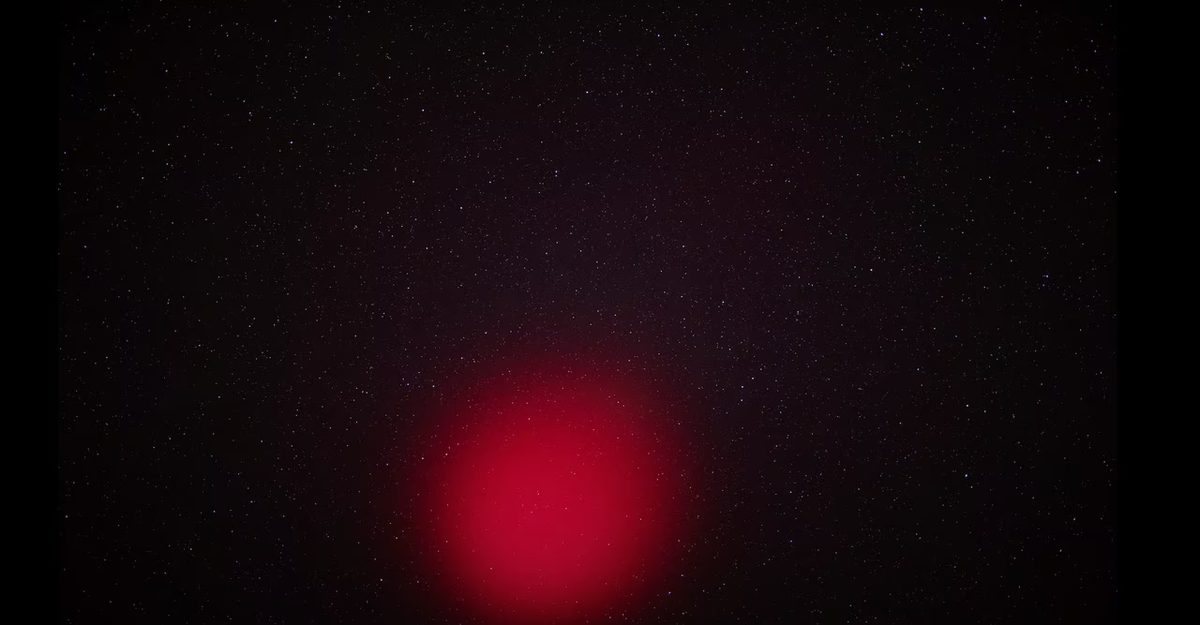
It is happening again. Look up.
If you’ve seen the sky lately, you might have noticed something odd. Not the usual sunset, not the moon. A strange, reddish glow. Sometimes it lingers for ten minutes. Sometimes it appears as a perfect sphere. It looks like an aurora, but without the green or the purple. Just red.
This isn’t a new natural phenomenon. It’s not a shift in the Earth’s magnetic field. It’s SpaceX.
The space company launches rockets several times a month—up to five times in some months. And each launch leaves a mark on the upper atmosphere. A temporary wound.
What creates these red auroras?
To understand the glow, you need to understand the ionosphere.
It is a layer of Earth’s atmosphere, roughly 60 to 1,000 kilometers up. It is filled with charged particles. Scientists call it ionized gas. It acts like a shield. It reflects radio waves. It protects us from solar radiation.
But rockets change things.
When a SpaceX rocket blasts off, it doesn’t just go up. It punches through. The exhaust and the shockwave disturb the ionosphere. They create gaps. Holes.
These holes are missing ions.
And when those ions are missing, the surrounding gas reacts. It emits light. Specifically, red light.
That’s it. That’s the whole mechanism.
“The spectacle, we are told by astronomers, is offered to us by SpaceX.”
The red color comes from oxygen atoms in the upper atmosphere. They are excited by the disturbance. They release energy as photons. Red photons.
It happens quickly. The rocket passes. The hole remains for a while. The red glow lingers. Then, the ions recombine. The sky goes dark again.
Why does this matter?
It’s not just pretty.
The ionosphere is fragile. It’s part of the space weather system. It affects communications. GPS signals bounce off it. If the ionosphere is disrupted, signals weaken. Navigation fails.
Spacex launches are frequent. They are changing the atmosphere. Regularly.
People on the ground see it. They think it’s rare. They think it’s new.
It’s neither.
It’s just a side effect of going to space. A visible side effect.
Next time you see a red sphere in the night sky, don’t reach for a telescope. Just look up. And think about the rocket that just left.
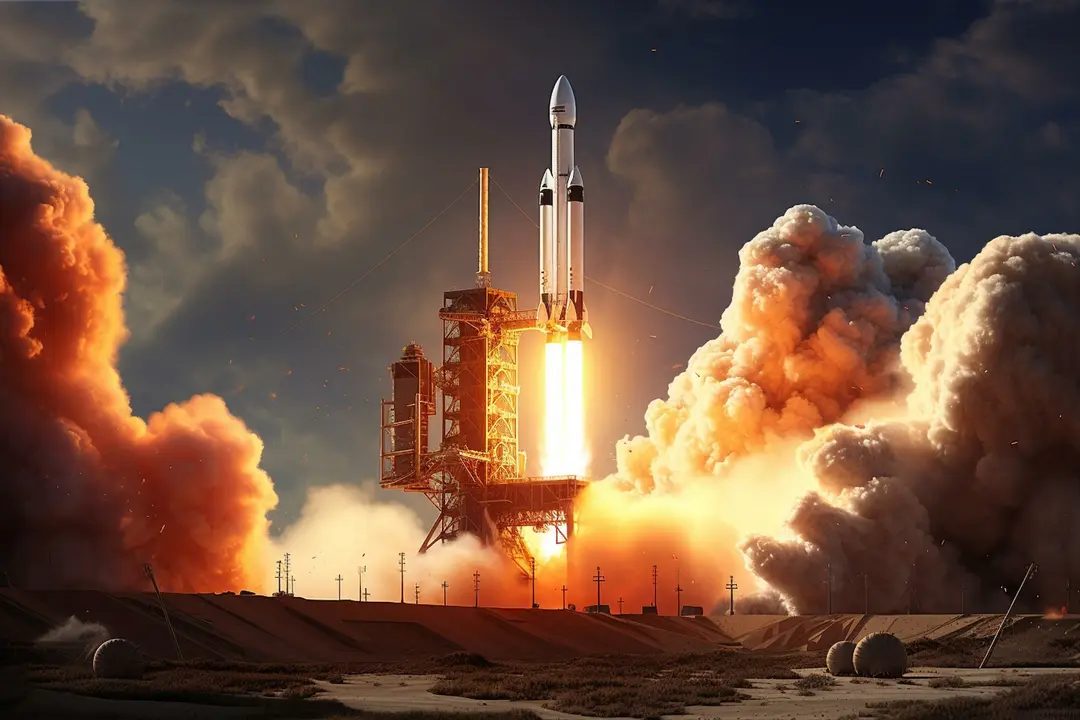

How SpaceX Rocket Exhaust Pierces the Ionosphere
The physics are almost too clean to be real.
A Falcon 9 booster, falling back toward the Pacific Ocean roughly 90 minutes after liftoff, fires its engines for a mere two seconds. That brief burn isn’t just about slowing down. It’s a chemical event that sends a plume of exhaust into the upper atmosphere.
We’re talking about roughly 180 kilograms of gas. Mostly water vapor and carbon dioxide. Released at an altitude of about 300 kilometers.
At that height, you are deep in the ionosphere. The layer is already thin, already fragile. When that concentrated cloud of CO2 and H2O hits it, the result is a localized disruption. A hole.
The gas cools rapidly. It changes the electron density of the surrounding plasma. The ionosphere literally develops a cavity. A temporary, artificial wound in the sky.
Why Astronomers Are Worried
For atmospheric scientists, this is a goldmine. It’s a controlled experiment happening in real-time. We finally have a way to study exactly how increased space traffic degrades our near-Earth environment. More launches mean more holes. More holes mean more data on how the ionosphere heals—and how much it changes over time.
But for astronomers, the picture is less benign.
These disturbances manifest as red auroras. Glowing patches of light that weren’t there before. They appear where the exhaust plume interacts with magnetic field lines and ambient particles.
“The ionosphere is the last layer of Earth’s protective shield before deep space. Disturbing it has ripple effects we are still trying to map.”
The problem isn’t just the visual clutter. It’s the interference.
Red auroras scatter light in ways that compromise observational quality. Telescopes, both ground-based and orbital, rely on clear lines of sight. Atmospheric disturbances introduce noise. They distort signals. They make faint objects harder to detect.
As launch frequency climbs, these artificial auroras will become more common. More frequent. The question isn’t if they will affect science. It’s how much they will degrade it.
We are trading cleaner skies for faster access to orbit. The cost is written in the ionosphere. In the red light. In the gaps left behind.


There is no article content provided to rewrite.