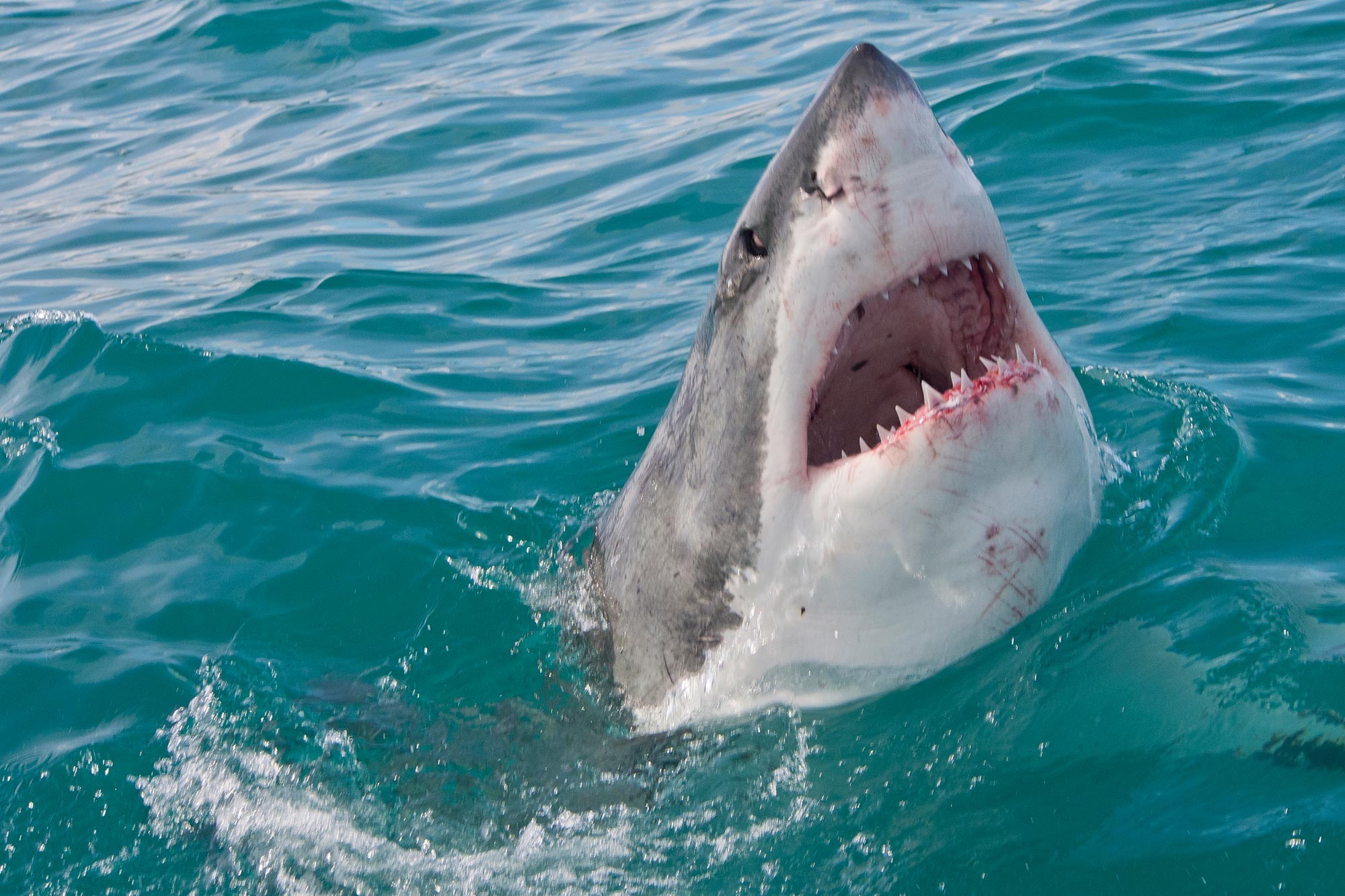
Ocean giants—including Great White sharks and Atlantic bluefin tuna—are facing a biological crisis. New research suggests that as ocean temperatures rise, these high-performance predators are running the risk of overheating, a phenomenon that could fundamentally reshape marine ecosystems.
Scientists are describing this crisis as “double jeopardy” : these animals are being squeezed by two opposing forces at once—rising environmental temperatures and an increased biological need for energy.
The Physics of High Performance
Most fish are “ectothermic,” or cold-blooded, meaning their body temperature matches the water around them. However, a rare group known as mesothermic fish—comprising less than 0.1% of all species—has evolved the ability to retain body heat. This allows them to swim faster, hunt more effectively, and migrate longer distances.
While this trait provides a massive evolutionary advantage, it comes with a heavy metabolic price tag. A study led by Trinity College Dublin and the University of Pretoria, published in the journal Science, reveals that:
- Extreme Energy Demands: Mesothermic fish burn nearly four times more energy than cold-blooded fish of a similar size.
- The Temperature Trap: A mere 10°C increase in body temperature can more than double a fish’s routine metabolic rate.
- The Scaling Problem: As these fish grow larger, they become even more efficient at retaining heat. Eventually, their bodies generate heat faster than they can physically shed it into the surrounding water.
Finding the “Heat-Balance Threshold”
To understand these limits, researchers developed a new method using biologging sensors to track real-time heat production in wild animals, including basking sharks weighing up to 3.5 tonnes. This allowed them to identify “heat-balance thresholds” —the specific water temperatures above which a fish can no longer stay cool.
For example, a 1-tonne warm-bodied shark may struggle to maintain a stable temperature in waters warmer than 17°C.
When these thresholds are crossed, the fish are forced to make difficult trade-offs to survive:
1. Slowing down: Reducing activity to lower heat production.
2. Altering blood flow: Changing how heat is distributed through the body.
3. Diving deeper: Moving to much colder, deeper waters.
“These strategies come at a cost,” warns lead author Dr. Nicholas Payne. “It might be harder to find food, or catch it, especially if your main weapon is speed and power.”
A Looming Ecological Shift
This research provides a scientific explanation for why many large marine predators are found in cooler, high-latitude waters or deep ocean zones. As the planet warms, their available “safe” habitats are shrinking.
The situation is further complicated by human activity. Many of these species are already struggling with overfishing, which depletes both the predators themselves and the prey they rely on. When food becomes scarce, these animals—already operating on a tight energy budget due to their high metabolism—have even less “fuel” to manage the stress of rising temperatures.
The study also draws a sobering parallel to the past. Fossil records suggest that ancient warm-bodied giants, such as the Megalodon, may have suffered disproportionately during previous periods of rapid climate change. With modern oceans warming at unprecedented speeds, scientists fear a similar pattern could emerge.
Conclusion
The study highlights that the ocean’s most powerful predators are also its most physiologically vulnerable. As climate change narrows their thermal windows, protecting these species will require more than just managing fishing quotas; it will require understanding the complex thermal limits that dictate where they can live and survive.