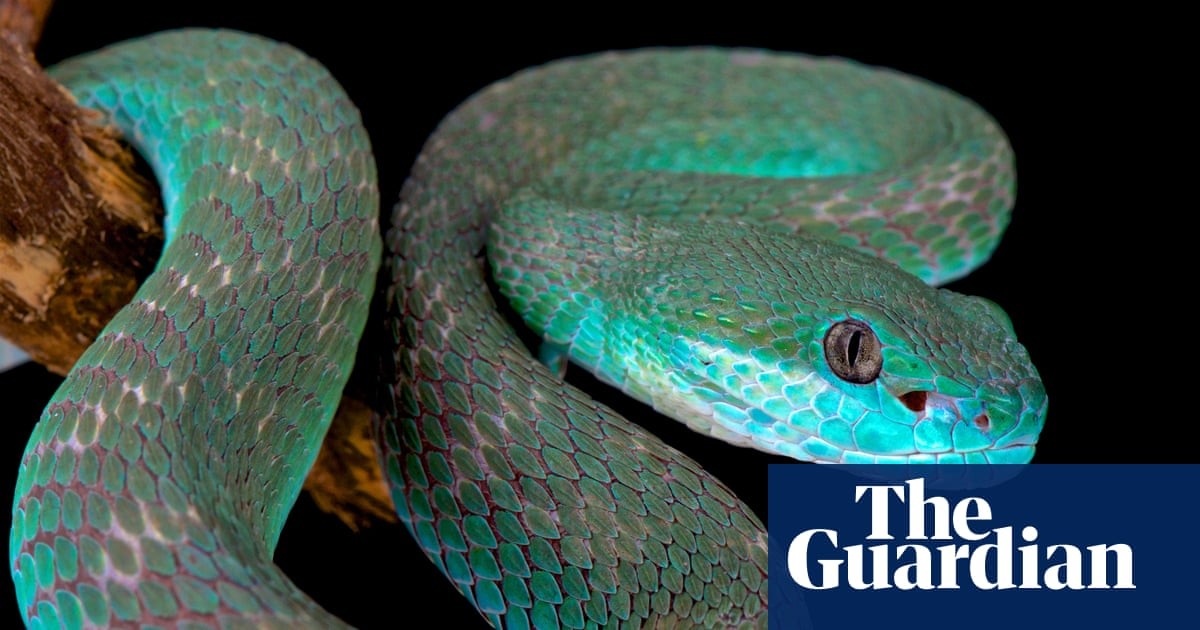
Can you outsmart a reptile? A classic logic puzzle involving two snakes and a single cage presents a fascinating challenge in spatial reasoning and geometry.
The Setup
Imagine two snakes trapped inside a single cage. While they share the same width (diameter), they differ significantly in length : one is long, and the other is short.
The goal is to design two distinct escape routes, Passage A and Passage B, leading from the bottom of the cage. To succeed, your design must satisfy these specific conditions:
- The Short Snake’s Escape: The short snake must be able to navigate through Passage A, while the long snake is physically unable to pass through it.
- The Long Snake’s Escape: The long snake must be able to navigate through Passage B, while the short snake is unable to pass through it.
The Constraints
This is not a puzzle about mechanical tricks or clever gadgets. To solve it, you must adhere to strict physical rules:
- No Moving Parts: You cannot use trapdoors, levers, or any mechanical assistance.
- Uniform Geometry: Both snakes have perfectly circular cross-sections, and their diameter remains constant from head to tail.
- Physical Limits: While the snakes can wiggle and bend, they cannot squeeze through any opening that is narrower than their own diameter.
Why This Matters
At first glance, this seems like a simple riddle, but it is actually a test of topological thinking. In mathematics and physics, understanding how an object moves through a space—especially when that object is long and flexible—requires more than just measuring width; it requires understanding the relationship between curvature, length, and path constraints.
The puzzle forces the brain to move beyond one-dimensional measurements (length and width) and consider how a continuous, winding shape interacts with a complexly shaped environment.
The Challenge: Can you design two passages that exploit the difference in length without using any mechanical help?
Think carefully before searching for answers—the goal is to solve the geometry yourself.