The standard treatment for dry eye has a problem.
It works, sure. It stops the itch. It calms the burning.
But keep it up long enough and you might go blind.
Or get cataracts.
That is the catch with steroids.
They are the go-to for inflammation in dry eye disease because they suppress the immune system’s attack on the eye’s surface.
But the price for that relief is steep. Glaucoma risk.
Optic nerve damage.
Now a team at Baylor College of Medicine and Okayava University in Japan is trying to change that equation.
They have an experimental eye drop.
Not just any drop.
One that seems to teach the eye to heal itself.
The Cell Shift
The research, published in Investigative Ophthalmology & Visual Science, looks at mice.
Always mice.
But the results there were distinct.
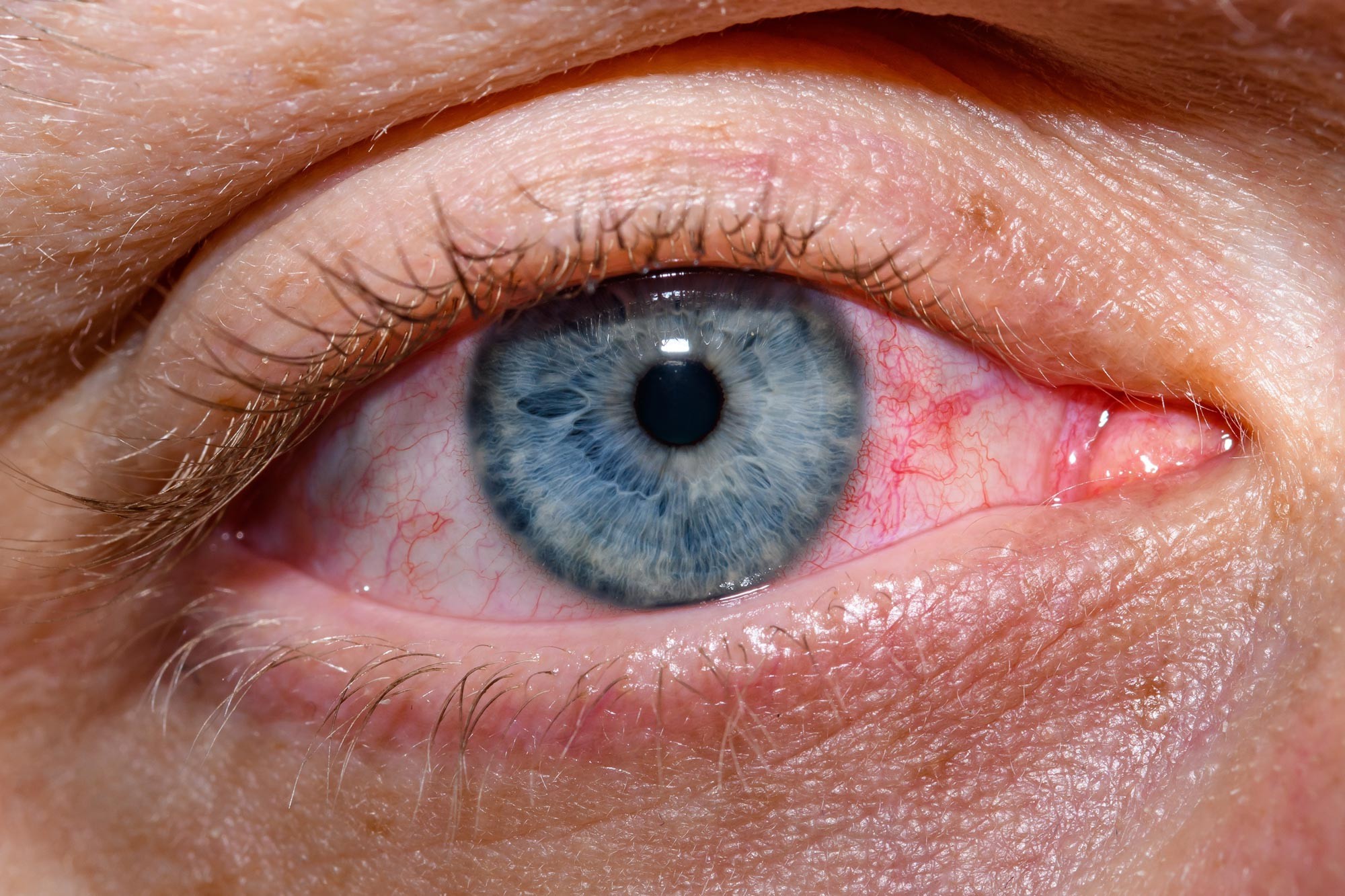
Dry eye isn’t just about moisture.
It’s an immune mess.
Normally, the eye has resident macrophages.
Think of them as the neighborhood watch. They clean up debris. They keep inflammation calm.
In dry eye, that watch gets replaced by circulating monocytes from the blood.
These guys are different. They promote inflammation.
They break down the corneal surface.
They kill goblet cells, which make the mucin needed to hold tears in place.
Dr. Stephen C. Pflugfelder of Baylor noted that dry eye is chronic.
“People with the condition tend to have it for the rest of their lives,” he said.
So why just patch it?
Why not fix the mechanism?
The team hypothesized that boosting those resident macrophages could reverse the damage.
They needed a molecule to do it.
Enter Dr. Hiroki Kakuta at Okayama.
His lab had been working on rexinoids.
Steroid alternatives.
A Soluble Compound
The specific compound, NEt-3IB, had a flaw for human use.
It wouldn’t dissolve in water.
Bad news for eye drops.
Eye drops need to be watery.
Kakuta’s team fixed it.
They modified the compound so it dissolved properly but kept the biological punch.
The drop shifted the macrophages.
From aggressive to protective.
They suppressed inflammatory compounds.
They stimulated healing molecules.
The mouse studies showed reduced corneal damage.
Preserved goblet cells.
Maintained the corneal barrier even under stress.
“We were interested in testing his compounds… in our mouse model of human dryEye,” Pflugfelder said, explaining the collaboration that led here.
Is It Worth Trying?
Safety is the real hurdle.
Steroids raise intraocular pressure.
High pressure damages nerves.
NEt-3IB did not do this nearly as much as the standard steroid dexamethasone in these trials.
It suggests a wider window for safe, long-term use.
Researchers still have to prove it over years though.
Most dry eye drugs fight fire with fire.
This approach fights fire by reminding the building it’s fireproof.
It is a subtle difference.
A huge difference if it scales.
The paper notes human studies are needed.
Warranted.
Millions of people suffer through blinking into sandpaper.
For now, they stick with steroids and tears.
But this rexinoid might offer an exit strategy that doesn’t require a blind eye to the side effects.
Wait.
Let the mice finish talking first. 🐁