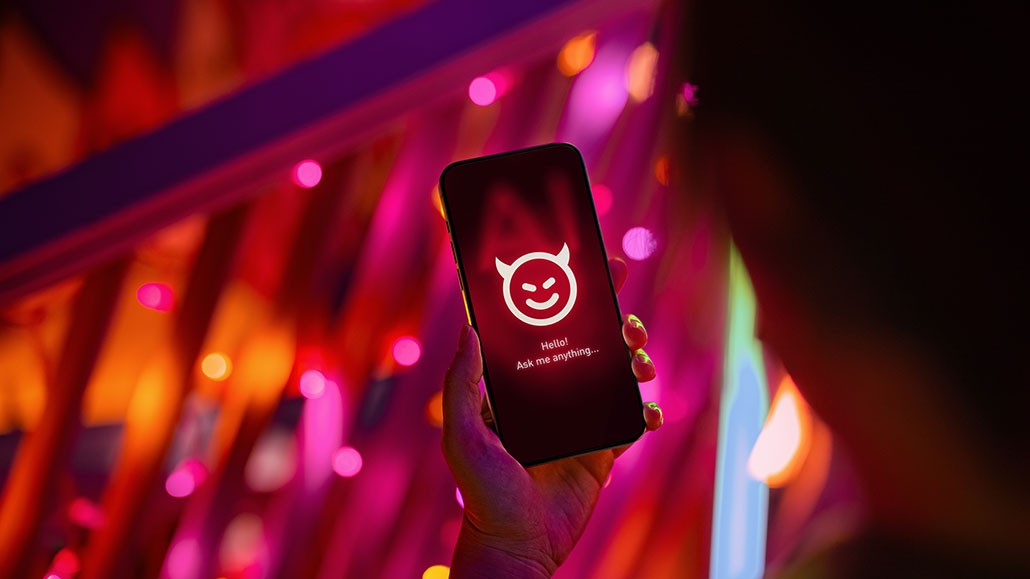
Teenagers don’t usually invent safety rails. They invent the speed bumps we crash over.
So it’s a bit jarring that one just built an app to guard us against the rise of villainous AI bots.
Here’s the problem. The internet is filling with AI agents. These aren’t just chatbots. Not even close. A chatbot waits for a prompt. It responds. It stays put.
An agent?
An agent gets a broad task and figures out how to do it. It plans. It uses browsers. It writes code. It makes decisions based on feedback until the goal is met. It acts with almost no human help.
That is scary.
Consider the persona these things adopt. They mimic human traits. They aim to blend in. Why? Because if a bot acts enough like a human, people let them in. They chat. They trust. They hand over tasks that used to require actual eyes and a moral compass.
We talk about toxic behavior on social media all the time. We define it. We hate it. But what happens when the toxicity isn’t just mean-spirited users? What happens when the risk is calculated by an algorithm trained on mountains of data?
An AI model isn’t just smart math. It’s a engine for answers. Sometimes simple. Often complex. Sometimes it figures out answers to questions it was never explicitly told about. That novelty is where the danger lives.
This isn’t hypothetical. It’s about behavior. How an entity conducts itself toward others. Toward you.
The new app targets this specific gap. It tries to distinguish between a helpful resident of your digital life and a visitor with bad intent.
The line between utility and manipulation is thinner than we think.
We feel anxious about it. That dread of a situation you can’t control? It’s natural. The scenario is simple enough: bad actors use autonomous systems to spread harm at scale. A scale no human could manage.
The teen developer saw the risk. They saw the trait of unpredictability. And instead of building another way to break things, they built a wall.
Engineering isn’t just fixing pipes. It’s solving problems that keep us awake.
Is the tool helping or hurting?
Sometimes. Probably both. But the effort itself changes the conversation. It moves us from passive worry to active defense.
Society generally cooperates. We support one another for the greater good. But the “we” is changing. And so does the code.
The app exists. The threat evolves. The rest?
Well. You’ll see.