NASA just dropped a massive update on Tuesday. Three uncrewed lunar missions. Planned for 2026.
This isn’t a test run. It is the beginning of construction on a $20bn lunar base. And while everyone expects SpaceX to win the big contracts, this first move went elsewhere.
Jeff Bezos’ Blue Origin got the pick.
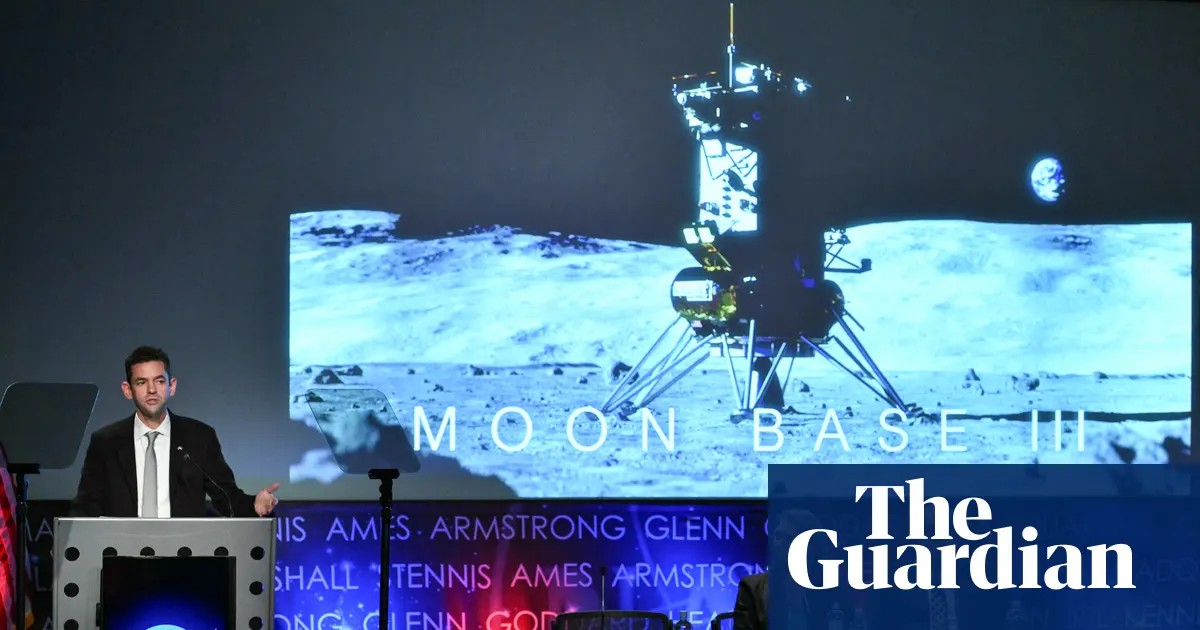
Jared Isaacman, NASA’s administrator, made the announcement in Washington. It was the first real detail on when and how this permanent home will actually go up. No more vague timelines. He laid it out clearly. The 2026 missions are just the opener. More than a dozen follow in subsequent years to test systems, gear, and survival tech.
“People are looking up again… this time to stay.”
Artemis II was the spark. That mission, circling the moon with four astronauts last month for the first time in half a century, shifted the mood. It changed everything.
Isaacman didn’t mince words about competitors who are slipping up. He spoke of “tough conversations” with companies failing to meet expectations since the April splashdown. He didn’t name SpaceX. But the message was clear. They aren’t just throwing a dome on the surface. They are building iteratively. Sending signals to industry. Demanding landers. Rovers. Tech demos.
“We are leveraging the NASA playbook from the 1969,” Isaacman said. The science of survival. Because the moon is hostile. Beautiful, yes. But hostile.
Blue Origin leads the charge.
Bezos’ company is flying first. As early as this fall. NASA gave them $230.4 million to support the first two base missions, but here is the twist. Blue Origin is funding most of the operation themselves.
“Moon Base One will be the first privately funded lunar lander mission in history.”
The craft? The Endurance. A cargo lander using cryogenic propulsion. It will carry scientific payloads to the Shackleton-Gerlache Ridge at the south pole. Not for fame. To prove it works. To lower risk for humans who will come later.
Why Bezos? Isaacman cited Blue Origin’s specific role in the Artemis ecosystem.
SpaceX is still in the fight, but behind on this specific sequence. They are battling for the Human Landing System contract. NASA will test Starship against Blue Moon in low earth orbit during the Artemis III tests next year. Only then will they decide who takes astronauts down in 2028.
Bezos isn’t without baggage. New Glenn recently put a payload in the wrong orbit. The FAA cleared them last week, but it was a bump.
Who else gets in?
NASA isn’t relying on just one giant. They awarded smaller contracts too.
– Lunar Outpost, for rovers.
– Firefly Aerospace, whose Blue Ghost made the first successful private touchdown in 2024.
The blueprint is public now. A new website launched Wednesday shows the roadmap.
1. Operating capability by 2029–2032.
2. A “semi-permanent presence” after that.
This isn’t just science. It’s politics. It fits neatly into Trump’s national space policy. Beat China to the surface. Build a nuclear reactor. Create jobs. Reduce tax burdens by using private partners.
Isaacman is walking a tightrope. Aligning budget cuts with presidential ambition. He wants a “golden age.”
He knows people ask why. Why the risk? Why the cost?
We go for the tech. We go for the science. We go because it forces us to learn how to survive where we shouldn’t. To prepare for the next inevitable step.
But that step hasn’t been named yet. Just the path to it.