July 4, 177. Independence declared. The sky cleared.
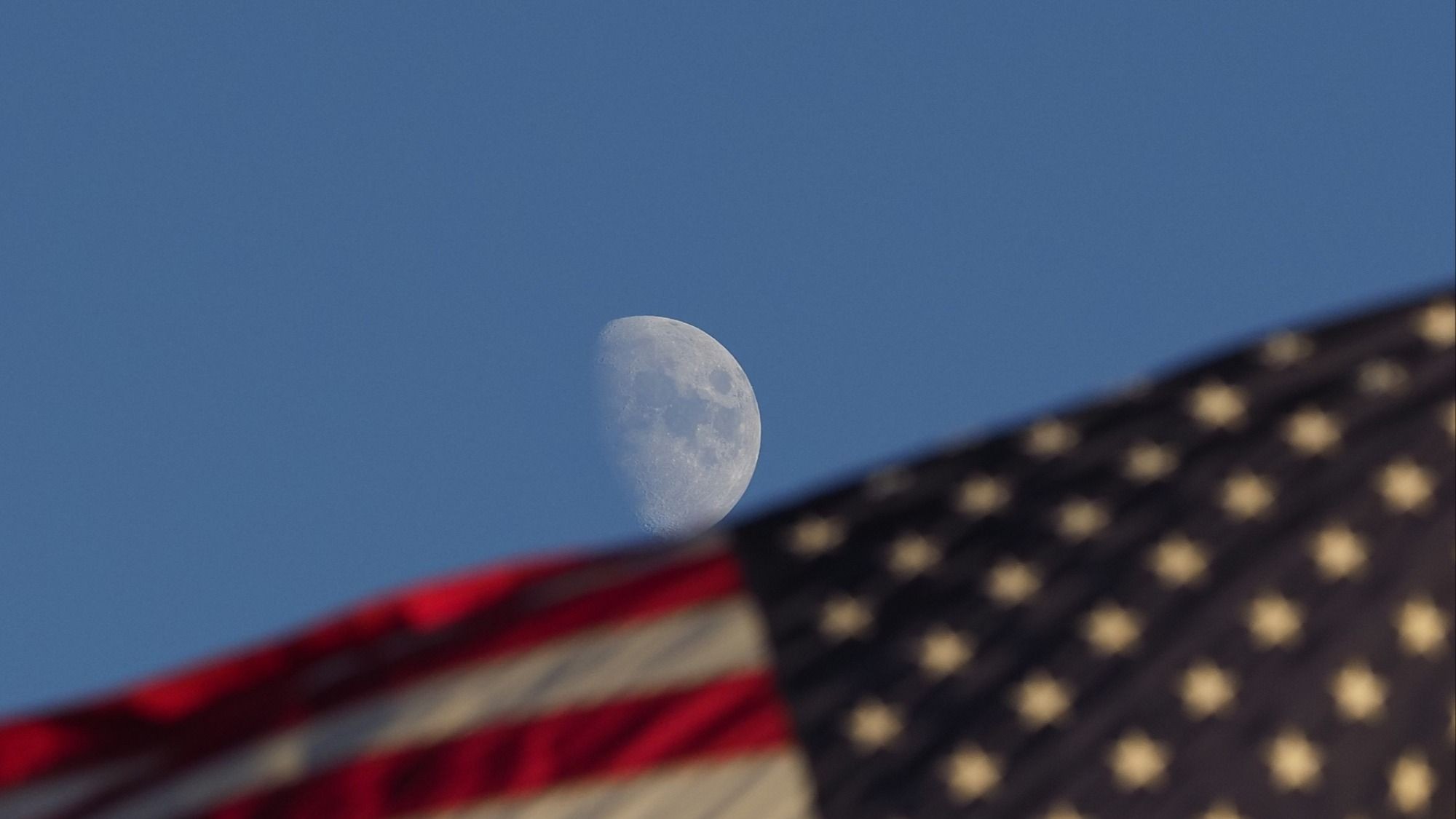
A waning gibbous moon hung overhead. It looked like the one we see now. Mostly. There was a tiny difference, invisible to the naked eye, measurable only by time. The satellite sat about 31 feet—roughly 9.4 meters—closer to home than it does today.
Seth McGowan from the Adirondack Sky & Center points out the pace. The moon drifts away at 3.8 centimeters per year. Coincidentally. That’s about as fast as your fingernails grow.
31 feet sounds like a lot. Until you realize the average distance is nearly 240,000 miles. The number is swallowed whole.
“The tiny 31-foot shift is entirely lost in the monthly variance.”
The orbit isn’t a circle. It’s an ellipse. Every month, the moon swings 26,000 closer at perigee. Then it pulls back to apogee. The yearly drift? Negligible.
No streetlights yet
We take electric bulbs for granted. In 1776. Light came from fire. Or the moon.
Travelers didn’t check weather apps. They watched the lunar cycle. How much illumination was available mattered. It dictated movement.
Farmers and Indigenous peoples tracked phases to predict seasons. Sailors watched tides. Tides follow the moon.
Warfare relied on it too. Moonlight helped troops navigate. It also exposed them to the enemy. Double-edged sword.
People used almanacs. Paper guides.
Benjamin Franklin’s “Poor Richard’s Almanack” was huge before 1776. Later, “The Old Farmer’s Almanac” kept the tradition alive from 1792.
They listed moonrises. Moonsets. Eclipses. Tides. Practical data. No algorithms. Just printed ink and careful observation.
Galileo got it wrong
Wait. Did he? No. He got it right.
By 1776 astronomers knew more than you’d think. Galileo had looked through his telescope 160 years prior.
He saw mountains. Valleys. Craters.
He broke the old rule that heavens must be perfect spheres. The moon is rough terrain. Not smooth marble.
Isaac Newton had already done the math. He explained why it orbits us. He explained tides.
Gravity.
But they missed a lot. No one knew how it formed. They hadn’t seen the dark side. Composition was a guess.
All that remained hidden for centuries. We still have questions today.
Apollo left mirrors behind
The space age changed everything. Literally.
Apollo astronauts went there. They installed retroreflectors. Special mirrors.
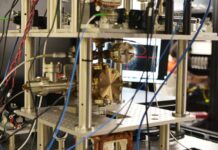
These bounce laser light straight back to its source. Scientists fire lasers. Measure the time of flight.
Precision. Incredible precision.
The math confirmed the drift. 1.5 inches a year. We still use those mirrors. Left over from the 60s and 70s. Still working.
Why is it moving?
McGowan explains the mechanism.
Earth’s oceans form a bulge due to lunar gravity. Earth spins faster than the moon orbits. The bulge drags ahead.
Think of it like a gravitational leash.
That tug pulls the moon up into a wider orbit. The conservation of angular momentum in action.
“Earth’s rotation slows. About 2.3 milliseconds per century.”
It’s slow. Very slow. But it adds up.
In 1776 a day was 5.75 milliseconds shorter. Not a lot. But measurable.
We’re getting darker nights. Longer days. And the moon is further away.
Is it lonely up there? Maybe.
It just keeps going. Inch by inch. Millisecond by millisecond.