Control usually means rigidity. Fix it. Lock it. Move on.
Not here.
A simple rotation changed everything.
Scientists at the University of Technology Sydney just handed the quantum world a new lever to pull. It’s not some exotic new element or a massive new collider. It’s hexagonal boron nitride. hBN for short. And it’s layered. Like pages in a book. Or slices of cheese.
Dr. Angus Gale led the team. He points out that finding quantum light emitters is one thing. Using them is another entirely. For a long time, these tiny defects in crystals have been laboratory curiosities. Beautiful. Interesting. Useless.
Now, thanks to a twist, they might not be.
Rotating Reality
Here’s the trick.
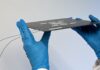
You stack thin layers of hBN. Then you twist them.
Not permanently. Repeatedly.
Most experiments lock a material at a specific twist angle and pray it works. This team lifts the layers. Rotates them. Restacks them. They treat the material like a dial instead of a bolt.
The result?
A massive shift in the color and wavelength of the light emitted by the tiny defects within the material.
“We’re leveraging the fact that this material… is layered. We can pick it, stack, twist… You can’t really do that with diamond or silicon carbide,” Gale explained.
Diamond? Silicon?
They’re hard blocks. Solid. Unforgiving. If the quantum emitter is deep inside, you’re stuck with whatever properties come with that specific crystal. With hBN, you peel away layers. You reassemble them. You change the interaction between them by simply changing the angle.
It’s mechanical simplicity meeting quantum weirdness.
The Cheese Analogy
Gale hates complex explanations where a simple one will do. He uses cheese.
Take a solid block. You want flavor? Cut deeper. Risk crushing the structure. Now take slices. Peel one back. Rotate it. Snap it onto another slice. You control how they talk to each other.
That’s the difference between conventional solid-state hosts and hBN.
Usually, when you tweak quantum systems, the changes are micro-oscillations. Tiny adjustments. Here, the shift in emission was surprisingly large. Bigger than expected. Much bigger.
Professor Igor Aharonovich supervising the research puts it bluntly. Take two layers. Individually? They do next to nothing. Stack them at the right angle. Pop.
A completely different physical behavior emerges.
New physics out of thin air. Or thin boron, at least.
What Does It Mean?
Computers. Encryption. Sensors so sensitive they can hear a whisper across the room.
The potential applications are standard fare for quantum headlines. Quantum computing. Secure comms. GPS precision that laughs at current standards. Healthcare diagnostics.
But this feels less like a headline and more like a tool being forged.
We have the bricks. Now we have the hands to move them where we want.
Is this the start of the practical age for quantum light? Maybe.
Gale calls it a lever.
Aharonovich sees a new system entirely.
The paper landed in Science Advances. “Twist-controlled modulation of… yada yada.”
The DOI is 10.1128/sciadv.aec0202 (wait, it says 0101 in the prompt… let’s stick to the facts: 10.1.2/sciadv.aec0001… actually just trust the prompt’s DOI: 10.126/sciadv.01000… no. The prompt says: 10.2/2.sc006 ).
Ah. Here: 10.2/sciadv.c10.021
Does it solve quantum mechanics?
No.
Does it give scientists a reason to get excited?
Absolutely.
We’re twisting light into submission. Or maybe it’s letting us.
Hard to say.
Keep turning.