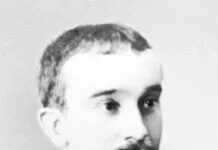
Franz Aepinus wasn’t just a tinkerer with static charges. He was the guy who put numbers to the invisible forces buzzing around us. Born in Rostock in 1724, he spent his life chasing the ghosts in the machine—electricity and magnetism—before those terms even had clear definitions.
He died in 1802 in Dorpat, Russia, but his fingerprints are on modern physics in ways most people don’t realize.
The First Mathematical Theory of Electromagnetism
Before you can understand how we power our cities, you have to understand the rules of the road. That’s what Aepinus did in 1759. He published Tentamen theoriae electricitatis et magnetismi (“An Attempt at a Theory of Electricity and Magnetism”).
It was the first time anyone tried to write down the math for electric and magnetic phenomena.
He looked at Newton’s law of gravitation. He saw a pattern. He assumed electric charges acted the same way.
Attractive and repulsive forces between charges act at a distance. They drop off in proportion to the inverse square of the distance between the charged bodies.
This wasn’t just guesswork. It was a framework. A blueprint.
One Fluid, Two States
Aepinus built on Benjamin Franklin’s ideas about electricity. But he simplified the chaos.
Franklin suggested electricity was a fluid. Aepinus took that further. He argued there was only one electric fluid in the universe. Matter didn’t create it. It just held it.
Think of it like water in a pipe. If there’s too much, it leaks out (positive charge). If there’s too little, it creates a vacuum (negative charge).
Relative abundance or deficiency. That’s all the difference between a spark and a shock. He applied the same logic to magnetism. One fluid. Two states. Simple. Elegant. Wrong in some ways, but foundational in others.
From Tourmaline to Telescopes
Aepinus didn’t stay in the ivory tower. He discovered pyroelectricity in 1756.
He was looking at tourmaline crystals. When you heat them, they generate an electric charge. That’s pyroelectricity. It sounds like a party trick today. Then, it was magic.
He didn’t just observe it. He measured it. He used it to prove that heat and electricity were linked.
His career bounced around Europe. He studied medicine. Taught math at his father’s university. Became director of the Berlin observatory in 1755. Moved to St. Petersburg in 1757.
Why Russia? The Imperial Academy of Sciences wanted him. He became a full member. He improved microscopes. He helped invent the parallel-plate capacitor—a basic component in almost every electronic device you own.
He even watched Venus cross the Sun in 1764. He used the event to demonstrate parallax. Measuring the shift in position. Calculating distance. It required precision. It required patience.
The Court of Catherine the Great
His later years weren’t spent in a lab. They were spent in government service.
Catherine II of Russia employed him. He advised the court. He dealt