It is easy to assume that the germ theory of disease arrived fully formed with Louis Pasteur and Robert Koch. History books love that narrative. It is cleaner. But it is wrong.
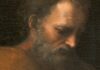
Agostino Bassi saw it first.
Born in 1773 near Lodi, in what is now Lombardy, Italy, Bassi was not just a scientist. He was a problem solver. The silk industry in Italy and France was hemorrhaging money. A disease called mal de segno —known as muscardine—was wiping out silkworm populations. The economic stakes were real. The losses were devastating.
Bassi started investigating in 1807. He had no idea what he would find. He spent 25 years on this. Twenty-five years of experimentation. Of watching worms die. Of looking through microscopes until his eyes burned.
His conclusion changed medicine forever, even if the world didn’t notice immediately.
“Many diseases of plants, animals, and man are caused by animal or vegetable parasites.”
That was the generalization he made. It was the germ theory. Long before Pasteur or Koch.
The Silkworm Crisis
The disease mal de segno was mysterious. It turned silkworms stiff and white. They died. The industry was crumbling. Bassi realized the disease was contagious. It spread by contact. It spread through infected food.
He identified the culprit. It was a microscopic, parasitic fungus. He called it Botrytis paradoxa. We know it today as Beauveria bassiana.
This was not a guess. It was evidence.
He proved that a living organism, not some vague “bad air” or imbalance, was killing the worms. This directly challenged the prevailing ideas of the time. It was dangerous work. It was unpopular work.
Publishing the Proof
Bassi published his findings in 1835. The book was titled Del mal del segno, calcinaccio o moscardino. In English: “The Disease of the Sign, Calcinaccio or Muscardine.”
He didn’t just describe the fungus. He prescribed methods to stop it. He told farmers how to prevent the spread. The methods worked. The silkworms stopped dying in droves. The industry stabilized.
This success earned him honors. But it also made him invisible to the giants of science.
Pasteur is credited with discovering that microorganisms cause disease. He did. But Bassi did it ten years earlier. Bassi did it with a fungus in worms. Pasteur did it with anthrax and silkworm pebrine later on. Bassi laid the groundwork. He showed that the germ theory applied to plants, animals, and humans. He connected the dots.
Why This Matters
We remember the names that got the funding. The names that published in the right journals at the right time. Bassi got the honors for curing the silkworms. But he didn’t get the credit for the theory.
That is a gap in the history of science. A significant one.
Bassi anticipated the work of Pasteur by a decade. He showed that diseases are caused by specific, identifiable organisms. He moved science away from miasma and toward microbi