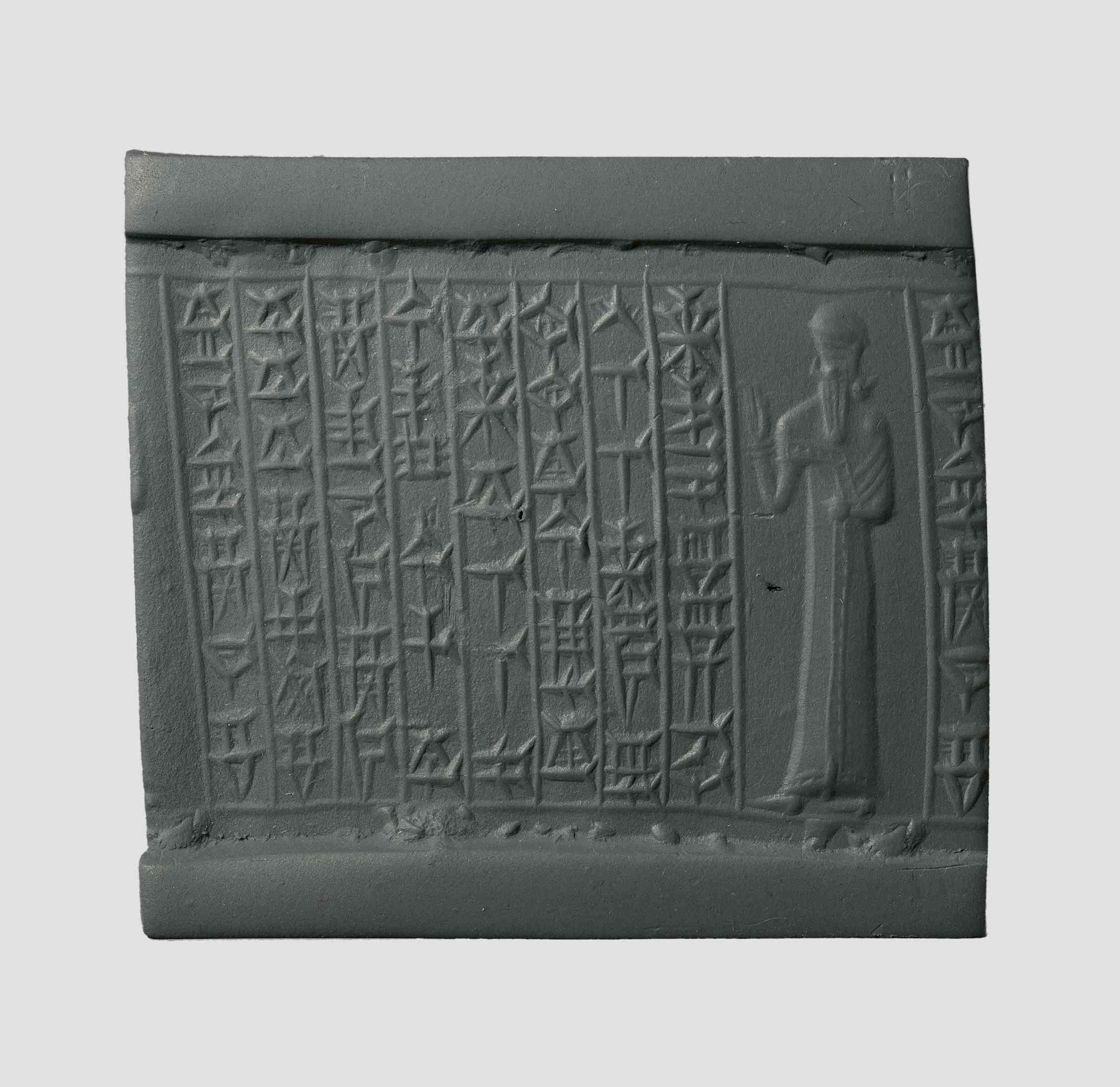
They were small. Roughly the size of a modern thumb drive. No bigger than five centimeters high and two-and-a-half centimeters across. Yet, for the people of ancient Iraq, these cylinder seals were massive deals.
We tend to think of a signature as just that: a scrawl to verify a document. Legal obligation. That’s it. The people living in the land between the Tigris and Euphrates rivers disagreed.
Their cylinder seals weren’t just bureaucratic stamps. They were fused expressions of art, raw material power, and spiritual belief. A single impression told you who the owner was. Not just their name. Their lineage. Their gods. Their exact spot in the rigid hierarchy of early civilization.
It was the world’s first brand, carved by hand.
The Mechanics of an Intaglio Impression
You had to understand the medium to respect the technology. These seals were usually carved from stone. Precious stuff. Lapis lazuli brought in from Afghanistan. Agate and carnelian sourced from the Indus Valley in South Asia. Even diorite dragged overland from Oman.
Raw materials were scarce in Mesopotamia. That’s why getting your hands on high-grade stone required money—or connections to the temple and the palace elite.
The carving technique itself? It was reverse logic. An intaglio engraving meant the artist cut into the stone to create the design. This meant every line, every name, every mythical scene was carved in reverse. Why?
So when the cylinder was rolled across a lump of soft, wet clay, the impression popped out right-side up. Low relief. Permanent. Proof that the document below it had been vetted and approved.
These tiny sculptures date back to the late fourth millennium BCE. They stayed relevant for thousands of years, across the bustling cities of Sumer and the empires that followed them.
Status Symbol: Who Owned a Seal?
Here’s where it gets specific about social standing.
Because these exotic stones cost a fortune, you couldn’t exactly grab one at the market corner. Only the upper echelon of society—the royals, high priests, and senior bureaucrats—could afford the high-value materials. They signed official decrees and commercial contracts.
Lower classes? They used seals too, obviously. You needed a mark of identity for commerce. But theirs were carved from limestone, clay, or cheap glass. Less prestigious. Less durable. But still essential for the machine of ancient commerce.
Losing one’s cylinder seal wasn’t just an inconvenience; it was a terrible omen.
Think about that. Losing your ID badge is annoying. Losing your soul-certification was spiritually disastrous. It implied chaos. It meant your authority had literally fallen into someone else’s hands.
Writing Your Way into History
What did these stones say? Or rather, what did they reveal when rolled out?
Most seals were personalized artifacts. They acted as identity cards for the dead, buried with their owners or left as offerings. The engraved texts were dense with personal data:
- The owner’s full name.
- Their patron deity (your personal god).
- Your profession.
- Sometimes, even your father’s name or hometown.
We know this because we read it. Archaeologists have found enough seals to map out a surprisingly detailed demographic picture. Yes, men owned most seals. But women did too. Wealthy, high-status women carried their own stone seals. Not copies. Actual stone carvings that authorized their transactions independently of their husbands.
This matters. It breaks the modern assumption of total exclusion from financial authority in early societies.
Vignettes in Stone: Daily Life Frozen in Relief
If you look closely at the rolling action of a seal, you get more than just text. You get imagery. And it’s weirdly modern.
Seal-cutters—artists who specialized in this one craft for generations—carved intricate scenes. Not just generic symbols. Actual narratives.
Imagine unrolling a clay tablet and seeing a detailed religious ritual. A priest pouring libations. Or perhaps a mythic scene: a hero wrestling a lion. Or a griffin. Or a winged horse. Pegasus-like creatures dominating the frame.
But it wasn’t all magic and monsters.
Many seals depicted mundane life. A farmer herding sheep. A banquet. Architectural structures showing temple ziggurats. Warfare. These images communicated religious identity. By associating themselves with a specific god through iconography, the seal owner was publicly declaring their spiritual safety net.
In rare, high-profile cases, kings or royal aides actually designed these seals to gift to loyal officials. The state was curating the imagery of its most powerful servants. Control was aesthetic. Control was material.
Personal Connection in a Bureaucratic World
We’ve lost the tangible weight of ownership.
When you sign a document now—digitally or on paper—the mark is often standardized. It’s about efficiency. Verification. You check the box. You sign. Next transaction.
A Mesopotamian seal was intimate.
The combination of stone type, the specific prayers invoked, and the custom-carved narrative scene made each seal a fragment of the owner’s worldview. It was a personalized artifact. It represented their view of life, death, and their place in the cosmic order.
When they rolled that stone on clay, they were imposing their individuality on history.
These artifacts tell us that even 6,000+ years ago, in a time of mud bricks and river floods, people wanted to be remembered. Not just as “a buyer of barley,” but as distinct human beings with gods, families, and favorite mythical creatures.
We still have signatures. We still need to verify identity. But somewhere along the line, the artistry died. The magic of the stone roll faded. We gained speed.
We lost the soul.
Mostly, cylinder seals prove that we’ve always needed to say, “This is me. And this matters.”