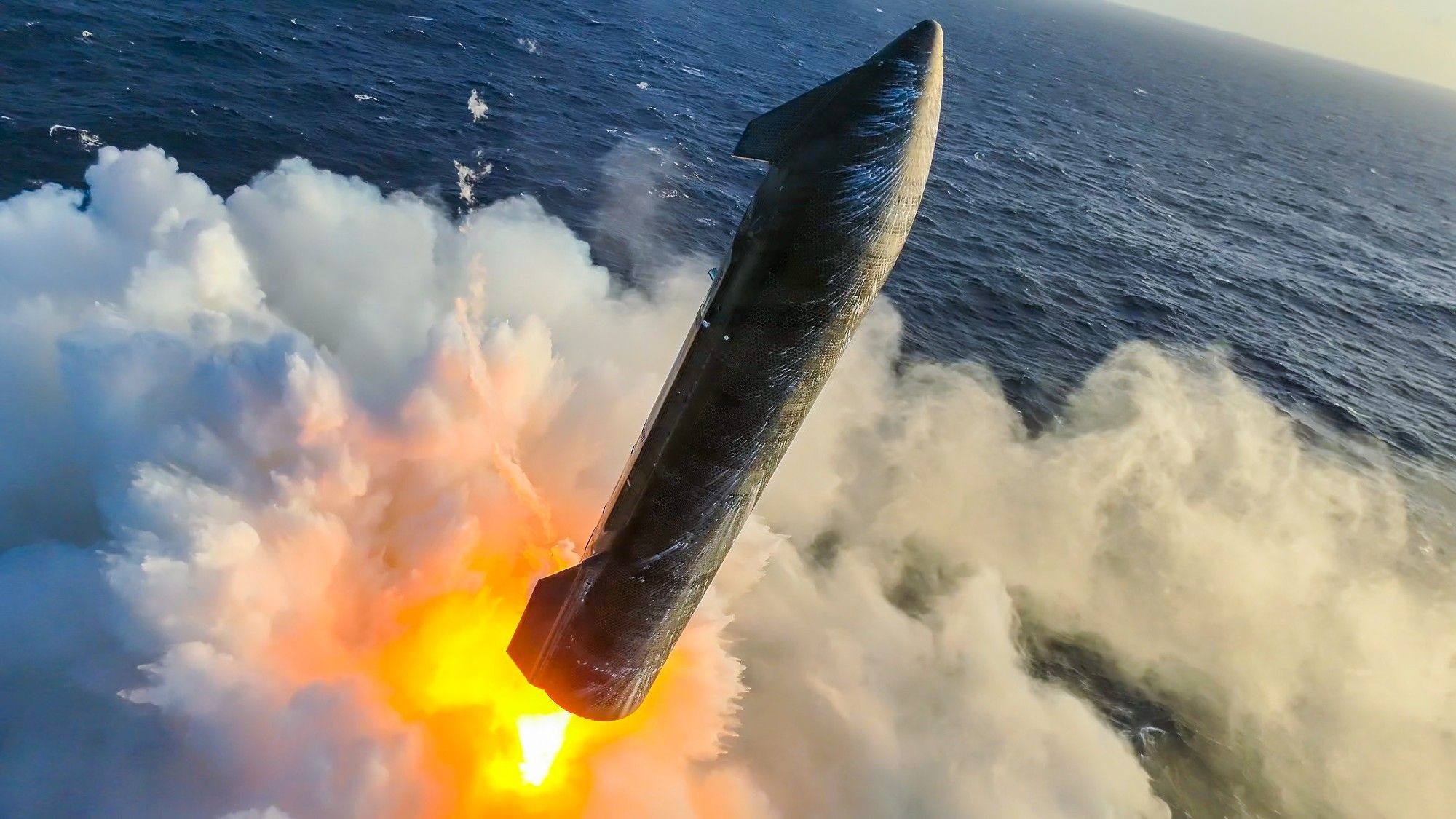
Elon Musk dropped a bombshell on August 4. It happened during SpaceX’s first-ever quarterly earnings call following its historic public debut. The company is racing to launch the 14th Starship test flight before the month ends. They want to catch the upper stage with tower “chopsticks,” too. This isn’t just a retry. It’s a bid for full reusability, and potentially, a new era for space commerce.
Solving the Heat Shield Crisis
Flight 13, which launched on July 24, ended in the Indian Ocean. But unlike previous attempts, the upper stage—the 171-foot Starship ship—landed intact. SpaceX recovered it. The heat shield survived the descent through Earth’s atmosphere without critical damage.
“I’d say things look very good,” Musk told investors.
The data suggests the heat shield issue, a major bottleneck for years, is effectively solved. If regulatory approvals hold, SpaceX will attempt to catch Starship with its launch tower arms in the upcoming test. It’s a high-stakes maneuver. One mistake means losing a vehicle that costs hundreds of millions. But if they pull it off, the cost of access to space plummets.
“I don’t want to jinx it… but I think I’d consider the heat shield solved at this point.”
Flight 14: Payload and Precision
SpaceX has caught the Super Heavy booster on three occasions. Catching Starship? That’s new territory. The stakes are higher because the ship carries more valuable hardware.
Flight 14 won’t just be an empty shell. It will carry a batch of V3 Starlink satellites. These are larger, more capable versions of the satellites currently powering the internet constellation. In Flight 13, Starlink V3s were deployed into suborbital space—just dropped. In Flight 14, they aim to place them into operational orbits. That’s a functional payload delivery.
The cadence is accelerating. Musk promised at least one flight a day within a year. Maybe more. The hardware needs to keep up with that ambition.
From Rocket Company to AI Giant
Let’s be clear: SpaceX is no longer just about rockets. It’s becoming an infrastructure powerhouse.
The company went public on June 12. It raised $86 billion. Valuation? $1.77 trillion. That’s the richest IPO in history. But the financials tell a different story than pure launch revenue.
In the second quarter (March to June), revenue hit $7.8 billion. Up 92% from last year. Net loss? Down to $541 million. Better, but still losing money on growth. The bulk of the cash—$4.3 billion—came from Starlink. Internet from space is funding the rocket science below.
The long-term plan goes beyond connectivity. Musk outlined a massive pivot toward artificial intelligence. SpaceX sees a “total addressable market” of $28.5 trillion. Most of that—roughly $23 trillion—lies in enterprise AI applications.
Yes, really. They want to build the plumbing for AI.
Starmind: One Million Data Centers in Orbit
The mechanism for this expansion is called Starmind. It’s an orbiting constellation of one million dedicated AI data centers. Launches for operational Starmind spacecraft are slated for 2027.
It sounds like sci-fi. It requires a lot of flights. But Musk sees flight cadence as a solved problem in the near future. If you can launch daily, the bottleneck disappears. The supply chain catches up.
SpaceX is betting that the future of computing is off-planet. Low latency. High bandwidth. Untethered from terrestrial grid constraints. It’s a bold claim. The GDP of the entire U.S. is $31 trillion. SpaceX is aiming for a slice of that pie with AI infrastructure.
The Earnings Reality Check
Public markets demand transparency. Quarterly reports are no longer secret documents. The numbers show improvement, yes. But they also show scale. $7.8 billion in revenue is significant. It proves Starlink is profitable enough to subsidize the deep-space ambitions.
The IPO wasn’t just a celebration. It was a capital injection for a company running hot. Starship development costs billions. Starmind will cost trillions over time. Starlink needs continuous deployment.
The financial ground is shifting. Launches will yield a smaller percentage of revenue in coming years. Starlink leads today. AI leads tomorrow. Rockets are just the delivery truck.
Catching History
If Flight 14 succeeds in catching Starship, it’s a technological milestone. Full and rapid reusability of both stages. It changes the economics of orbit.
But the real story isn’t the catch. It’s the business model. SpaceX is leveraging space to build an AI backbone for the next decade. The rocket launches are just the first step in a much larger, much stranger strategy.
One flight a day. One million data centers. $23 trillion in AI addressable market.
Does it work? We’ll see in August. Then we’ll see in 2027. The tape is rolling. And SpaceX is finally earning its keep in the public eye.