The sands of Egypt have revealed another secret. The Ministry of Antiquities announced the discovery of a new tomb in the southeast corner of the Giza Plateau. This is the same desert where the world’s most famous pyramids are located. The burial dates back to the Old Kingdom. About 4500 years ago. This harkens back to a time when pharaohs still built huge stone monuments to mark their eternal rest.
Where exactly was the tomb found?
In archaeology, location matters. The location is in the southeast part of the plateau. This is no accident. It’s close to the action. The main pyramids of Khufu, Khafre and Menkaure dominate the nearby landscape. The discovery of a tomb here suggests a hierarchy of the dead. High-ranking officials or nobles often built their final resting location near their rulers. It was a way to stay close to power even in death.
What does the context of the old kingdom mean?
The Old Kingdom is a special era. It spans around 2686-2181 BCE This was the golden age of pyramid building. Society was well organized. The bureaucracy was complex. The people buried here were probably part of this structure. They were not kings. But they were important. Their tombs reveal the layers of society that supported the crown.
Why this discovery is important now
New tombs are rare. Each provides new information. It helps historians understand the daily life, religion and social structure of ancient Egypt. This discovery adds to the puzzle. It shows how the Giza Necropolis was used for thousands of years. It was not just a building site for kings. It was a city of the dead.
The announcement came from the Ministry of Antiquities. They haven’t released more detailed photos yet. However, the location has been confirmed. The southeast plateau is the hotspot for excavations. Workers have already found many tombs there. This is probably similar in style. It may contain inscriptions. Or artifacts. Or nothing but stone.
What next?
Excavation will take time. The team must clear the entrance. They need to document everything. You need to protect the location from the elements. And from looters. The ministry will likely release more information as the work progresses. Right now we know one thing. Another chapter in the history of ancient Egypt is waiting to be read.
The dust settles. Stones remain. But the story continues.
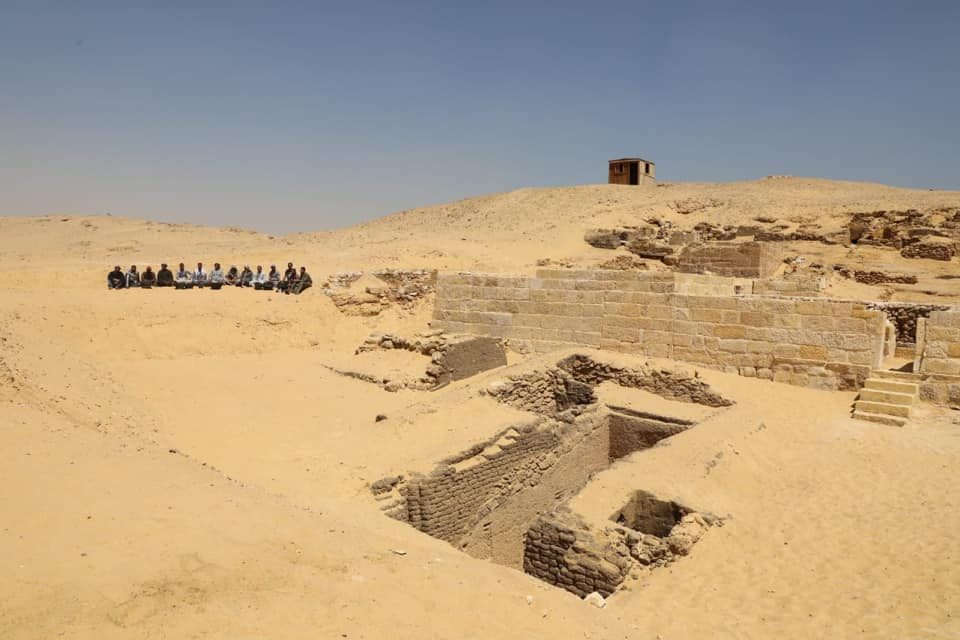
The story moves from a grand palace to a peaceful cemetery. Archaeologists led by Mostafa Waziri have found more than pottery shards. They found a building complex. There are several graves in the area. Some are simple pits. Others are structures.
The oldest of these dates from the Fifth Dynasty. This corresponds to the years 2500-2300 BC. The grave is made of limestone. It is a strong and durable material. Two figures rested inside. Their names are Benhui Ka and Nuwi.
Why are these names important? They are not pharaohs. They were high-ranking officials or nobles. Their burial methods reflected the social class of the time. The limestone suggests wealth. It also means status. During the Fifth Dynasty, religious beliefs changed. The sun god Ra was the focal point. Funeral documents began to appear in the pyramids. However, these graves are smaller. they are private.
Excavations have revealed how people lived and died. Benhui-Ka and Nwi are part of that world. Their resting places give clues about everyday life. what did they eat? How did they worship? Limestone walls may have carvings. These sculptures tell us even more.
The group continues its work. There may be other graves nearby. Each soil layer tells a story. The Fifth Dynasty was a time of stability. Power was decentralized. Local governors held influence. Benhui Ka and Nwi may be such governors. Or perhaps administrators. Their graves are a window into that era.
This discovery further deepens our understanding of ancient Egypt. This is not just a pyramid issue. It is about the people who built them. Benhui-Ka and Nwi are no longer just names. They are real individuals. Their legacy is set in stone.
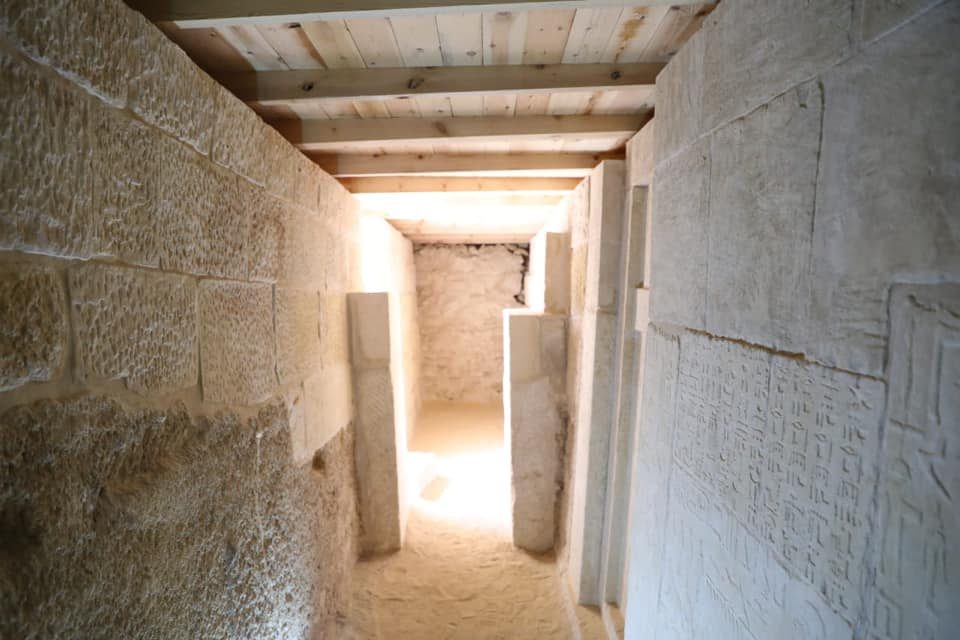
There were two men in the grave, but their lives tell a story of enormous impact. The first resident was not just any petty bureaucrat. He had seven official titles. These included Priests, Judges and a very special role: Purifier of the Pharaohs. Which pharaohs? The list is impressive. It covers Khafre, the builder of the second largest pyramid at Giza. Userkaf, the founder of Egypt’s fifth dynasty, and Niuserra, the sixth ruler of the same line, are also included.
This man touched the highest levels of power during several reigns.
Another man buried there was also notable, although his resume was shorter. He had five titles. One was the Chief of the Great State. The second was a Master of Works for new installations. Like the first man, he was also the purifier of Pharaoh Khafre.
It is rare enough to find two high-ranking officials in one place. But the tomb was further proof of their status.
Artifacts that speak volumes
Excavators found numerous ancient Egyptian artifacts in the chamber. The most striking finds were statues carved from limestone. These weren’t just random rocks. They showed the two men buried there.
The statue depicted the first man. Another showed his wife. The third showed his son.
This family trio is telling. It refers to a lineage of power. The first man did not serve only one king. He served several. His son was buried nearby, implying the family maintained its position for generations. The presence of a wife and son in the tomb art reinforces the idea of a dynasty built on religious and administrative duties.
These statues were not just decorations. They were supposed to preserve the identity of the dead in the afterlife. By including family members, tomb owners ensured that their social network survived death.
The combination of titles and artifacts paints a clear image. This was not a royal tomb. It belonged to the elite servants who kept the empire running. They cleaned the pharaohs. They judged people. They built new temples.
Why is this important today? Because it shows how the pyramid builders lived. We often think of pyramids as monuments to kings. But they were also engines that required a huge amount of bureaucracy. These two men were the cogs in this machine. Highly polished, well-connected cogs.
The discovery adds texture to our understanding of the Old Kingdom. It moves beyond the pharaohs. It looks at the people who were standing next to them. The ones with titles. The ones with the limestone statues.
How many of these officials are still waiting under the sand? We don’t know yet. The tomb is just one piece of a much bigger puzzle.
A story about reuse
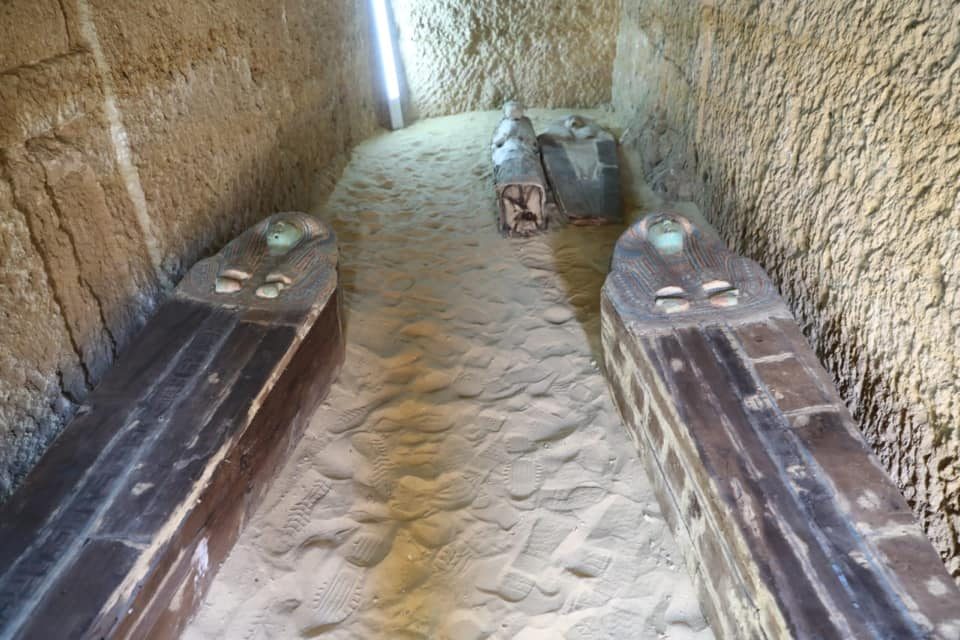
The Giza Plateau is not just a static museum of the Old Kingdom. According to Ashraf Mohi, the general director of the site, the tombs there were heavily recycled during the Late Period of ancient Egypt. We are talking about a time from the seventh century BCE, long after the original construction of the pyramids.
This was not vandalism. It was reuse.
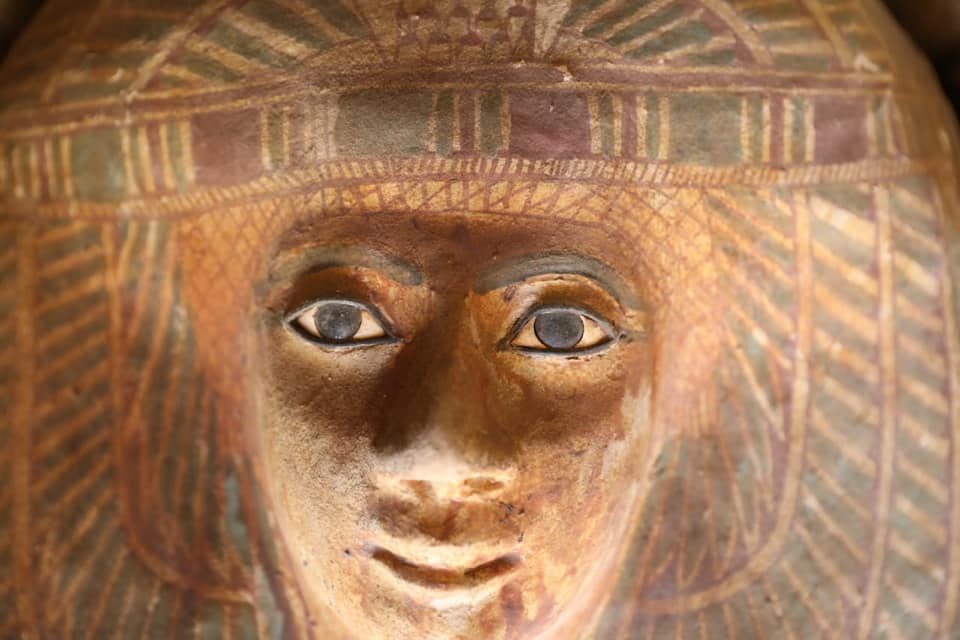
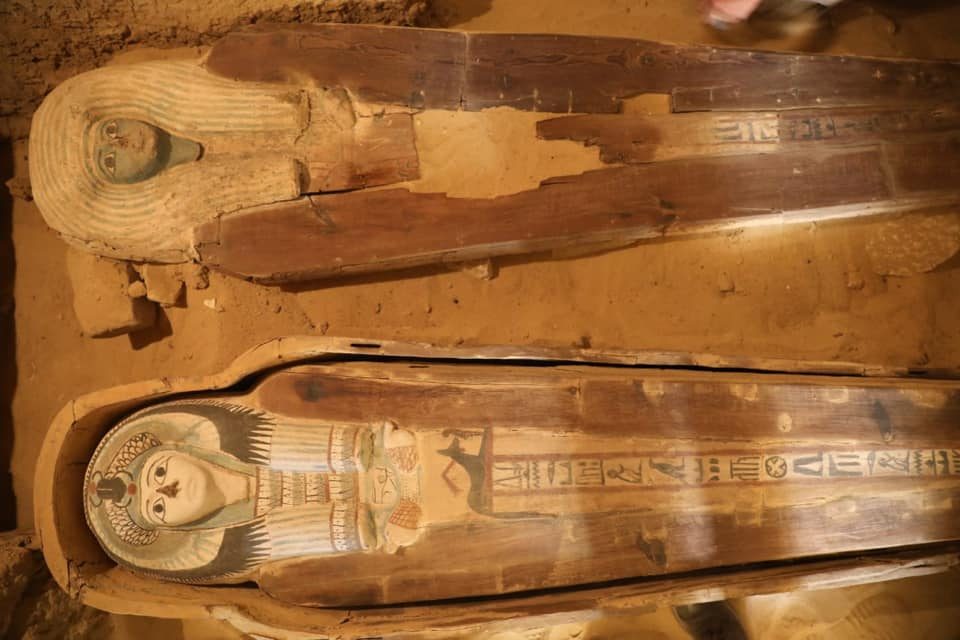
Archaeologists found evidence of this second life for the tombs. They found painted and carved wooden sarcophagi. Some coffins even have a series of hieroglyphic inscriptions on their lids. There were also burial masks made of wood and clay. These objects date from this late period.
Why is this important? It shows how the Egyptians later viewed these ancient spaces. They saw more than just ruins. They saw available real estate. They repurposed the tombs and added their own materials and markings to the existing structures. The presence of these special objects – wooden sarcophagi and masks – marks a clear change in the use of the site centuries after its original construction. It is a tangible link to a time when the ancient cemetery was still active , just operating according to different rules.

Stay informed
There is a lot of digital noise. Technology news updates quickly, often faster than you can read. Missing an eruption is like falling behind.
But it doesn’t have to be that hard.
You need to get the facts straight from the source. No fluff.
WhatsApp offers private direct calls. Receive alerts. See title. Keep reading for more research. You can do it all in the daily chat app.
Google News brings together the best stories. Filter static signals. Get handpicked stories from trusted sources. Related updates. Submitted to your feed.
Why let an algorithm guess what you care about?
Take control.
Order Futura on these platforms.
- WhatsApp : instant notifications. Threads to share. private group.
- Google News : personal feed. Worldwide coverage. Updated in real time.
Don’t wait for the news to arrive.
Please go find it.
The next great discovery won’t wait to check your browser tab.
i will come
Make sure you are ready.