The light hits the object. Transfer energy. It also carries momentum. When electromagnetic radiation hits a surface, it creates a physical push. This is radiation pressure. The effect is usually negligible. A beam of light shines on your hand, but it doesn’t move. But regardless of scale, physics applies.
The mechanism is simple. When a surface absorbs radiation, it also absorbs momentum. Pressure is equal to momentum transfer rate. The effect is doubled when the surface reflects light. The photons bounce back. they change direction. This change in motion produces double the force. Consider throwing a tennis ball at a wall versus smearing it against the wall. Bounces have a greater effect.
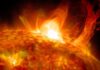
The sun’s radiation is a continuous shower of photons. Sunlight does not cause much pressure. Astronauts don’t know it. Engineers often ignore this in standard calculations. But the space is empty. There is no friction that weakens small forces. The accumulation of years of effort only adds up in a few steps.
This principle makes solar sails possible. This is a theoretical propulsion system. A large reflective sheet is used. These sails catch the sunlight. The pressure pushes the spacecraft forward. No fuel is needed. The sun provides the thrust. Calculations show that a large enough sail could carry a spacecraft through the solar system. It moves under the pressure of starlight.
Why is this important? Conventional rockets carry fuel. The fuel is quality. Carrying fuel means carrying more fuel to lift that fuel. This is the tyranny of the rocket equation. Solar sails work around this limitation. They depend on infinite resources. They may continue to accelerate. The first transfer will take some time. However, the distance is infinite.
This concept is not new. Johannes Kepler observed the comet’s tail pointing away from the Sun. He suspected light pressure. He’s right. Modern physics supports this. The pressure is real. This can be measured. It’s just weak.
Technology is catching up. Materials science has advanced. You can lighten the sails. You can also make it bigger. The thinner the material, the better the reflective effect. It’s also lightweight. The ratio of surface area to mass increases. This is an important metric. The higher the ratio, the higher the acceleration.
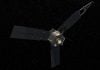
Current projects are testing the waters. Some satellites use small sails for attitude control. They are oriented. They don’t change orbit significantly. Yet. Full-scale propulsion is still in the experimental stage. The challenge is mechanical. Spreading a sail the size of a football field in the vacuum of space is difficult. The material must withstand radiation. They must not tear. They must remain reflective.
If solved, the impact would be huge. Missions to outer planets are possible. Travel time has been shortened. Costs are coming down. No fuel means a lighter launch. We can send more mass to distant worlds. You can explore the Kuiper belt. It is also possible to leave the solar system.
The sun is a pusher. Everything is powered by light. All you have to do is make your hand big enough to grab it.