It felt like a triumph back in Stockholm. October 2013. Prof Peter Higgs finally got the Nobel for predicting the particle that holds the universe together. He was eighty-six then, frail, shaking hands in that big hall. A quiet British moment. A massive scientific victory.
CERN had just confirmed his theory. The Higgs boson was real. The world cheered. It was the biggest discovery in a generation, and Britain was at the center of it. Higgs later said he hoped this recognition would help raise awareness for “blue-sky research.”
Blue-sky research is not about designing products. It asks the hard questions about existence. No immediate utility. No clear profit. Just understanding.
It’s the kind of science Britain used to do best. The electron. The structure of DNA. The first computer. None of those had obvious jobs for them when they were discovered. Now they are the backbone of global industry. Billions of pounds. Transformed world.
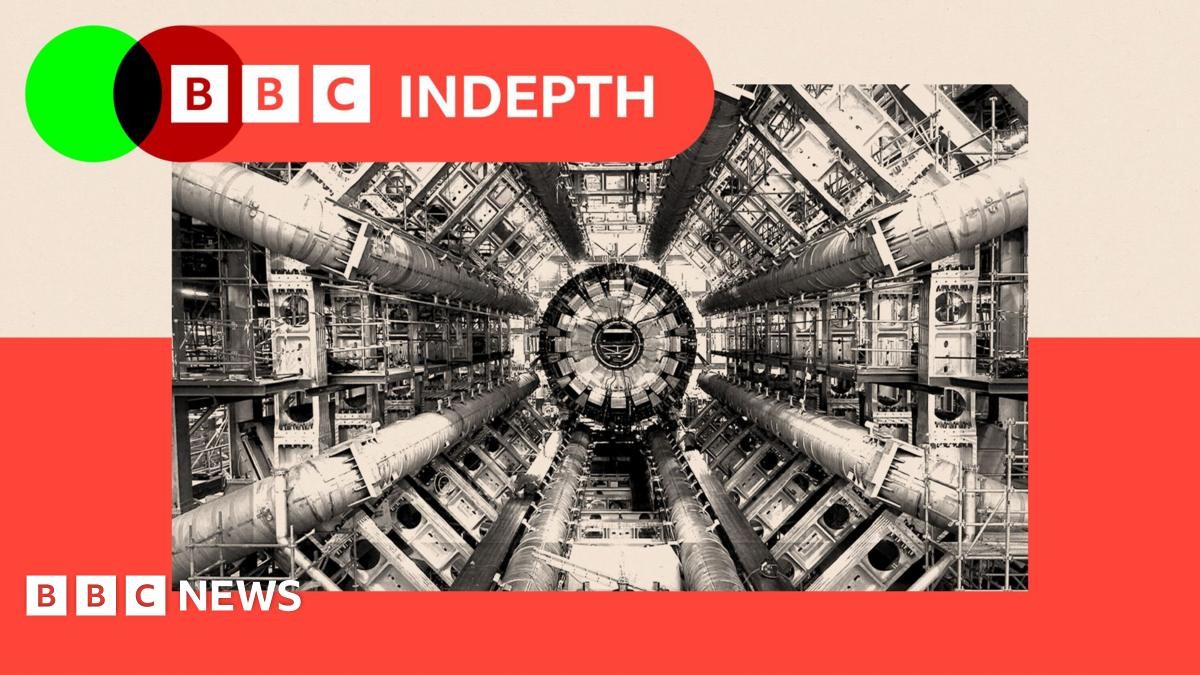
That era feels distant now. Britain is about to pull its plug from the next major upgrade at CERN’s Large Hadron Collider.
Not just a small tweak. We are talking about cancelling our contribution to one of the most significant experiments in particle physics history. This isn’t isolated either. It’s part of a wave of proposed cuts across UK astronomy and particle physics projects. Scientists are facing reduced involvement or total withdrawal from the leading edge of international collaboration.
For some observers. It’s like Higgs’s words vanished the day after he won.
The bucket problem
The anger runs deep. Science Minister Lord Vallance and the head of the funding agency have been accused of shifting money away from curiosity-driven work. The target is the economy. Growth. Priorities set by Westminster rather than the laboratory.
Minutes from high-level meetings at the Science and Technology Facilities Council suggest this is happening.
Vallance denies it. The leaders of UK research funding deny it too. They insist curiosity-driven science is protected. Growing, even, in cash terms. But the physics community isn’t buying it.
The core debate remains. How much should research aim at the mysteries of the cosmos versus solving practical problems? Can you have one without the other? Dr Simon Williams thinks you need both. He is a theoretical physicist at Durham. He uses quantum computers to predict sub-atomic behavior.
Pure theory. Very blue. Sky.
But his work has found a buyer. A British company now uses his predictions. Williams believes cutting this root kills the tree. Not just for academic pride, but for business. If the research leaves the country. So does the industry that feeds on it.
He is among thirty young physicists this year who received no grant to stay in UK research. STFC delayed decisions. Planning cuts. Many are forced to look abroad or leave science entirely to make ends meet.
“A major shift”
Earlier this year. The system changed. The UK Research and Innovation agency imposed a three-bucket structure.
- Bucket one: Blue-sky research.
- Bucket two: Government priorities like AI and quantum computing.
- Bucket three: Helping businesses develop products.
Buckets two and three count as applied research. These are the engines of growth, the government says. The science that pays.
Then came the knife. STFC announced a likely thirty percent cut. That is £162 million gone.
Michele Dougherty, head of STFC, told MPs this was necessary. The Council had too much ambition. Too many projects without sufficient funds. Inflation. Currency swings. A house of cards coming down.
A senior scientist inside that circle disagrees. Calls it a fig leaf.
We always had the money. I do not understand the cut unless a choice was made to reduce it. A diversion.
Internal documents paint a different picture. Strategy minutes mention “a major shift of funding” away from curiosity-driven work toward priority areas.
I asked Ian Chapman. Head of UKRI. Direct question. Had money been moved from blue-sky buckets to the applied ones?
“No. That is not our position.” Chapman said. Categorical. Flat. When pressed on the strategy minutes, he called them a misstatement. He and Vallance repeat this refrain constantly. Curiosity science is safe. The £14.5 billion earmarked for it over the next few years proves it.
The government insists it has done nothing wrong.
We make no apologies for investing in research that delivers impact for the public.
The problem? Transparency. Or lack of it.
Chi Onwurah. MP and chair of the select committee investigating this. Asked for a simple comparison. Blue-sky spending before the reorganization. Blue-sky spending after.
Chapman said it was impossible. Then agreed to write a breakdown. Onwurah found it lacking. It didn’t show enough detail. Couldn’t prove whether particle physics curiosity work was being sliced. Just opaque shifts in numbers.
Roots severed
There is another complication. Sixty percent of bucket one money goes directly to universities. They get to decide how to spend it. Some goes to pure research. A lot plugs general holes in budgets. Staff costs. Public engagement. Overheads. It doesn’t always hit the lab bench directly.
Vallance called the situation causing Williams’s joblessness a mistake. The government is rushing to fix it. But other cuts stand.
Catherine Heymans. Scotland’s Astronomer Royal. Calls the proposed reductions “catastrophic.” Devastating for the UK. She told MPs that British scientists face total lockout from experiments that map newborn planets and search for alien life. Experiments where the UK has traditionally led.
Black holes. The origin of the universe. The end of the universe. If STFC cannot pay its way, British researchers stand outside looking in.
Prof Jon Butterworth from UCL calls it an existential threat. To the very soul of UK physics.
There are defenders. Of course there are. Dr Stuart Wainwright runs a large national research organization. He backs the changes. Argues that working with government and business drives innovation. Says the reorganization allows for better discovery science if done correctly.
“If done correctly.” That is the catch.
One respected scientist wants everyone to just pause. Stop tearing hearts out. Consult. Think. Find a way forward together. Chapman agrees. Says he wants to nurture curiosity while growing the economy. He cares about physics. Really cares. Hopes the bucket model makes sense in time.
Everyone agrees a way out is needed. Urgently. Before the brilliance fades into history books and balance sheets. The goal is still there. Translate blue skies into benefits. Jobs. Breakthroughs.
But for now the roots are trembling. And the tree is thirsty. 🍂