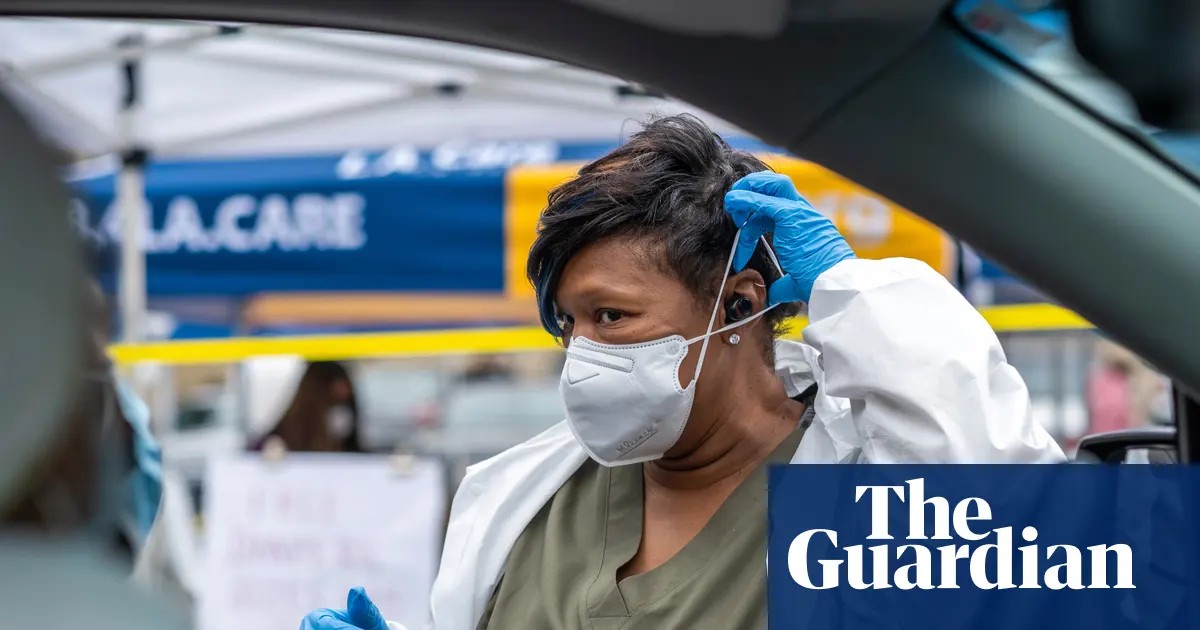
Hantavirus is here. It won’t trigger the next global pandemic, probably. But it is acting like a flashlight in a dark room, showing exactly how broken American public health has become. Testing for rare diseases? Gutted. Expertise in stopping outbreaks? Evaporated. Trust in institutions? A distant memory.
“The takeaway should not be ‘we’re fine.’”
Stephanie Psaki, who used to coordinate global health security at the White House, said it plainly. We aren’t ready for the real threats. The people who knew how to move fast when things went wrong? They are gone. So are the systems that supported them.
This is just one pathogen. There will be others. Models say there is a fifty percent chance of another pandemic as bad as Covid in the next twenty-five years. Not a maybe. A coin flip.
The Social Media Trap
How do we fix this? Experts in Washington recently laid it out. The biggest enemy isn’t just the virus. It is the noise.
Conspiracies are old news. Even the plague in Milan in 1630 had rumors. But Anthony Fauci, the former top infectious disease adviser, pointed out the difference. Back then, people heard things locally. Now, social media overwhelms them.
It is a problem without an easy fix. People do not connect with New England Journal of Medicine papers full of statistical analysis. They connect with influencers promising fake cures. It is stunning how easily data gets outflanked by personality.
Fauci put it bluntly: you cannot fight misinformation with more data. You lose if you try. You have to change how you speak to people. Speak to the level they understand. Get there first. Pre-bunk the myths. If you are playing catch-up, you have already lost.
Then there is the problem of certainty. Nina Schwalbe of Georgetown University says officials simplify things too much. They say it is black and white. When the nuance returns, people feel lied to. Trust collapses.
“The world is an uncertain place.”
We have to let people sit with that discomfort. They can handle it. We just stopped explaining how.
Lost Science
The science from the pandemic was extraordinary. mRNA vaccines are likely the greatest tech leap of our generation. Vaccine development started six days after the virus was sequenced. Eleven months later, something ninety-five percent effective was in arms.
It did not happen by accident. Decades of basic research built that speed. HIV research laid the groundwork. These vaccines can be tweaked overnight as viruses change. They can be made in huge quantities quickly.
They saved us. Imagine if we had to start from scratch. How many more would have died?
Now, that work is at risk. Funding is being slashed. Misinformation is growing. The progress is getting lost in the muddle of politics and bad response.
Broken Global Ties
It is not just domestic failure. The US failed to vaccinate the world effectively. Fauci admitted we got in our own way. Equity was not the driver.
When the US finally sent vaccines overseas, there were no syringes. No plan. Tens of millions of doses mean nothing if you cannot get them into the patient.
“It’s being reinforced… but the damage was deep.”
Psaki said this did long-lasting harm to alliances. Trust is hard to rebuild after betrayal. Even the mpox response in 2024, which had vaccines on hand, still failed to get doses into arms efficiently.
Testing was a disaster too. South Korea was churning out 20,000 usable tests a day while the US struggled with five bad ones. Fauci called the refusal to learn from others a catastrophe.
Leaving the Table
Donald Trump’s move to withdraw from the World Health Organization is another nail in the coffin. Psaki called the WHO essential. The US gives it $130 million a year. Roughly the same amount the Pentagon spent recently on lobster and steak.
Without federal guidance, states are stepping up. Matthew Kavanaugh of Georgetown’s global health policy center said the federal government probably won’t lead in the next pandemic. States are forming their own alliances now. Working directly with international partners.
The basics remain the same though. Stop the threat. Find it fast. Contain it. Keep people alive. Keep hospitals running.
Will the public listen this time? Probably not easily. Politics divide. Misinformation overwhelms.
But most families just want their own safe. That instinct is stronger than political manipulation. It is different.
Schwalbe knows what failure looks like. Her father was among the first to die from Covid in New York. March 2020. The system collapsed. She sat alone in his apartment on Lexington Avenue while he died.
No oxygen. No palliative care. Just body trucks and sirens.
She knew six people who died. The memory drives her. Public health cannot be the invisible thing everyone ignores until it breaks.
We have to invest in it. Not for the government. For the next father. The next sister.
The question isn’t if the next one is coming. It’s whether we’ll be looking at it, or looking away.