
Concrete holds heat like a sponge holds water. You know this if you’ve ever walked across a city plaza in July. The asphalt radiates. The glass reflects. The air shimmers. For people living in these dense grids, the longing for greenery isn’t just a aesthetic preference. It is a physiological need. We are surrounded by barriers to nature, yet we crave it deeply. This disconnect creates a specific kind of urban stress. Heat islands. Noise. Stifling air.
Enter biophilic design.
It sounds like a buzzword until you realize it is essentially architecture with a heartbeat. The concept is simple: integrate natural elements into built environments to boost human well-being. It’s not about adding a potted fern to a windowsill and calling it a day. It is about reshaping how we live indoors. By bringing light, air, and vegetation into apartments and offices, we can lower stress and improve physical health. It is a philosophy that puts the human body back at the center of the room.
Beating the Urban Heat Island Effect
Cities are thermos flasks. Dense building layouts and sealed surfaces trap solar energy. This creates the “heat island” effect. Temperatures in the city center can soar several degrees higher than in the surrounding rural areas. The lack of vegetation removes natural cooling mechanisms. Air circulation stagnates.
But heat is only half the problem.
Insect swarms follow the warmth. In cities like Karlsruhe, residents have found creative solutions. They are installing smart screens and shaded structures that block pests while letting in light and breeze. It is a symbiotic approach. You get protection from the insects without sacrificing the connection to the outdoors. The concrete landscape heats up, but these interventions provide a sanctuary. They offer a piece of relief from the stagnation.
The Philosophy Behind the Plants
Biophilic design rejects the idea that technology and nature are opposites. Instead, it merges them. Green roofs. Plant walls. Interior layouts that prioritize cross-ventilation. These are not just decorative choices. They are functional tools against urban hazards.
“Biophilic design represents a philosophy that places humans at the center, leveraging natural elements to support both mental and physical health.”
Architects are using these techniques to combat heat islands and stress-related illnesses. The goal is a return to basics. We are reconnecting with natural rhythms within the modern city. This is how we make urban spaces livable again. The future city blends nature and technology. It creates environments where people can breathe easier. Not just metaphorically. Literally.
The shift is happening. It starts with recognizing that we are not separate from the natural world, even when we are buried under steel and glass. The question isn’t if we can bring nature back in. The question is how fast we will stop resisting it.
Biophilic Cooling: How Vertical Gardens Fight Urban Heat
Cities are getting hotter. Not just in temperature, but in density. Concrete absorbs solar radiation, traps it, and radiates it back out at night. This is the urban heat island effect, and it’s becoming a public health crisis. But there is a solution growing right on the walls of our skyscrapers.
Biophilic design isn’t just about putting a potted plant on a windowsill for good vibes. It’s an architectural strategy to cool cities down. We are seeing a shift from decorative greenery to functional infrastructure. Vertical gardens and living facades act as natural shields. They block direct sunlight before it hits the building material. This reduces the need for air conditioning. The buildings stay cooler. The air around them cools too.
The Mechanics of Green Cooling
How does a wall of leaves actually lower the temperature? It’s physics and biology working together. Plants release water vapor through their leaves. This process is called evapotranspiration. It draws heat from the surrounding air. Think of it as a natural evaporative cooler. No electricity required.
Green roofs work similarly but on a horizontal plane. They absorb rainwater, reducing runoff. The soil and plants insulate the building below. This keeps interiors cooler in summer and warmer in winter. The effect is immediate. A bare concrete roof can exceed 70°C (158°F) in summer. A green roof might stay below 30°C (86°F). That difference changes the energy load of an entire building.
Beyond temperature, these systems support biodiversity. Birds and insects find refuge in urban canyons. The noise pollution of traffic is dampened by the porous nature of plants and soil. It’s a multi-layered benefit. You get cleaner air. Lower energy bills. A quieter street. And a sense of calm that concrete cannot provide.
Smart Tech Meets Organic Life
Plants need water. Cities are dry. This is the friction point where technology steps in. We don’t need to water vertical gardens by hand. That’s inefficient and impractical. Instead, we use smart irrigation systems.
These systems monitor soil moisture. They check the weather forecast. If it’s going to rain, the system holds back. If it’s hot and dry, it waters. This precision saves water. It ensures plants survive even if the owner is away for weeks. Sensors also monitor indoor air quality. They trigger ventilation when CO2 levels rise. The building breathes with the occupants.
Lighting plays a role too. In windowless atriums or deep interiors, full-spectrum LEDs mimic the sun. They keep plants alive. They help humans regulate their circadian rhythms. The result is a space that feels alive. Not sterile. Not artificial. Just balanced.
Real-World Proof: Singapore’s Garden City
You don’t have to take my word for it. Look at Singapore. The city-state is often called the “City in a Garden.” It’s not a nickname. It’s a policy.
Singapore mandates green building features. Developers must replace lost greenery with vertical greenery or sky terraces. The result is visible. Skyscrapers are draped in vines. Rooftops are parks. The average temperature in certain districts has dropped slightly. Air quality has improved. Property values in green zones are higher. Residents report higher satisfaction.
This wasn’t an accident. It was a deliberate integration of nature into the urban fabric. The government provided incentives. Architects embraced the challenge. The public accepted the change. Today, Singapore shows that high-density living doesn’t mean low-quality living. Nature and skyscrapers can coexist.
Why This Matters Now
Climate change is accelerating. Heatwaves are longer and more intense. Traditional cooling methods—like more air conditioners—exacerbate the problem. They dump heat outside while consuming vast amounts of power. It’s a feedback loop.
Biophilic design breaks the loop. It uses passive cooling. It reduces energy demand. It creates resilience. When the grid fails, green buildings still offer some thermal comfort. They are safer. They are healthier.
We have the technology. We have the plants. We have the examples. What’s missing is the will to implement these solutions at scale. Most developers still prioritize quick profits over long-term sustainability. But the tide is turning. Consumers want healthier spaces. Cities need to adapt.
The question isn’t whether we can integrate nature into the city. We already do. The question is whether we will do it intentionally or accidentally. Accidental greenery is nice. Intentional biophilic design is survival.
There are still challenges. Maintenance costs for living walls can be high. Structural load-bearing requirements add complexity. But these are engineering problems. They have solutions. The barrier is mostly mental. We’ve spent the last century building against nature. Now we’re learning to build with it.
It’s not just about aesthetics. It’s about thermodynamics. It’s about survival. The next generation of cities won’t be gray. They’ll be green. And they’ll be cool.
The Copenhagen Model: Small Actions, Big Impact
Copenhagen isn’t just talking about sustainability. It’s building it, one roof at a time. The city has doubled down on nature-integrated design, but not through massive, top-down mandates alone. Instead, they are blending public space greening with private rooftop initiatives.
The result? A cityscape that feels less like a concrete grid and more like an extension of the surrounding landscape.
This approach highlights a crucial distinction in biophilic design: it’s not just about aesthetics. It’s about community agency. When residents plant on their own roofs, or when a plaza gets a new canopy of trees, it shifts the dynamic from passive observation to active stewardship. These projects prove that individual choices and communal goals can reinforce each other.
Beyond the Trend: Answering Urban Crises
Biophilic design has been labeled a “trend” by critics who think it’s just about putting plants in lobbies. But in Copenhagen, and similar forward-thinking cities, it’s anything but superficial. It’s a direct response to pressing urban problems:
- Heat Island Effect: Concrete absorbs and re-radiates heat. Green roofs cool the air.
- Mental Fatigue: City dwellers suffer from high stress. Nature exposure lowers cortisol levels.
- Biodiversity Loss: Urban areas are often ecological dead zones. Green corridors reconnect species.
The question isn’t whether we should use biophilic principles. The question is how fast we can implement them before climate and social pressures become unmanageable.
Inspiration for Global Cities
These success stories aren’t just local curiosities. They are blueprints. Cities worldwide are watching Copenhagen’s data on energy savings, resident satisfaction, and biodiversity gains.
“Biophilic design is a compass for those who want to build a sustainable, nature-connected future, not just a decorative choice.”
The message is clear. To make urban spaces more livable, we don’t need to invent new technology. We need to integrate the old one. Trees. Grass. Water. The elements that have sustained human life for millennia, woven back into the fabric of the modern city.
The path forward is visible. It’s green. It’s growing. The only missing piece is the will to plant.
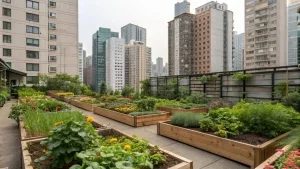
Turning Concrete Into Communities: The Real Value of Urban Greening
Most cities are done with cookie-cutter fixes. They are chasing something messier, more organic. The goal? Blending architecture with the ecosystem in a way that actually feels alive. It is not just about making streets pretty. It is about recognizing that integrating green spaces into the built environment unlocks massive potential. Potential that goes far deeper than curb appeal.
Take the community garden, for instance. It sounds simple. Maybe too simple. But these plots are functional hubs. They supply fresh food. More importantly, they force interaction. In a world where neighbors are often strangers, these gardens become social anchors. They turn isolated residents into a collective. The space buzzes. It serves as both a market and a sanctuary. You get produce. You get connection. You get a place to just exist among others without the usual urban friction.
Then there is the push to transform vacant lots into urban micro-forests. This flips the script on traditional landscaping. Instead of manicured lawns that demand water and mowing, you get dense, native planting. The results are immediate and measurable. Air quality improves. Noise pollution dampens as vegetation absorbs sound waves. Birds and insects find refuge. But there is a subtler benefit: microclimate regulation. The trees cool the air. The soil holds moisture. It creates a buffer against the heat island effect that plagues dense cities. This is how you cool a neighborhood without cranking up the AC.
Mobility gets a rethink, too. It is not just about adding another lane. It is about reclaiming space for people. Sustainable transit infrastructure means wider bike lanes. Pedestrian-only zones. Green corridors that guide movement without emitting fumes. This shifts the reliance away from private cars. The environmental payoff is obvious. The human benefit is often overlooked. Walking or biking forces you to notice things. The texture of a brick wall. The shift in light. You experience the city differently when you are moving at human speed.
This approach to urban planning is not a trend. It is a shift in priority. It asks us to view the city not as a machine for housing, but as a living system. It prioritizes resource consciousness. It values community well-being over pure efficiency. The result is an environment that engages all the senses. It feels less like a transit point and more like a home. The question remains whether we can scale this intimacy. Or if it will always remain a patchwork of islands in a sea of gray. The path forward seems clear enough, but implementation is another beast entirely.