Astronomers have uncovered the true scale of a massive cosmic structure hidden behind the dust lanes of our own Milky Way. Known as the Vela Supercluster, this enormous collection of galaxies is significantly larger and more massive than previously believed. Its gravitational pull is so strong that it influences the motion of galaxies across our local corner of the universe, acting as a major driver of “cosmic flows.”
Peering Into the “Zone of Avoidance”
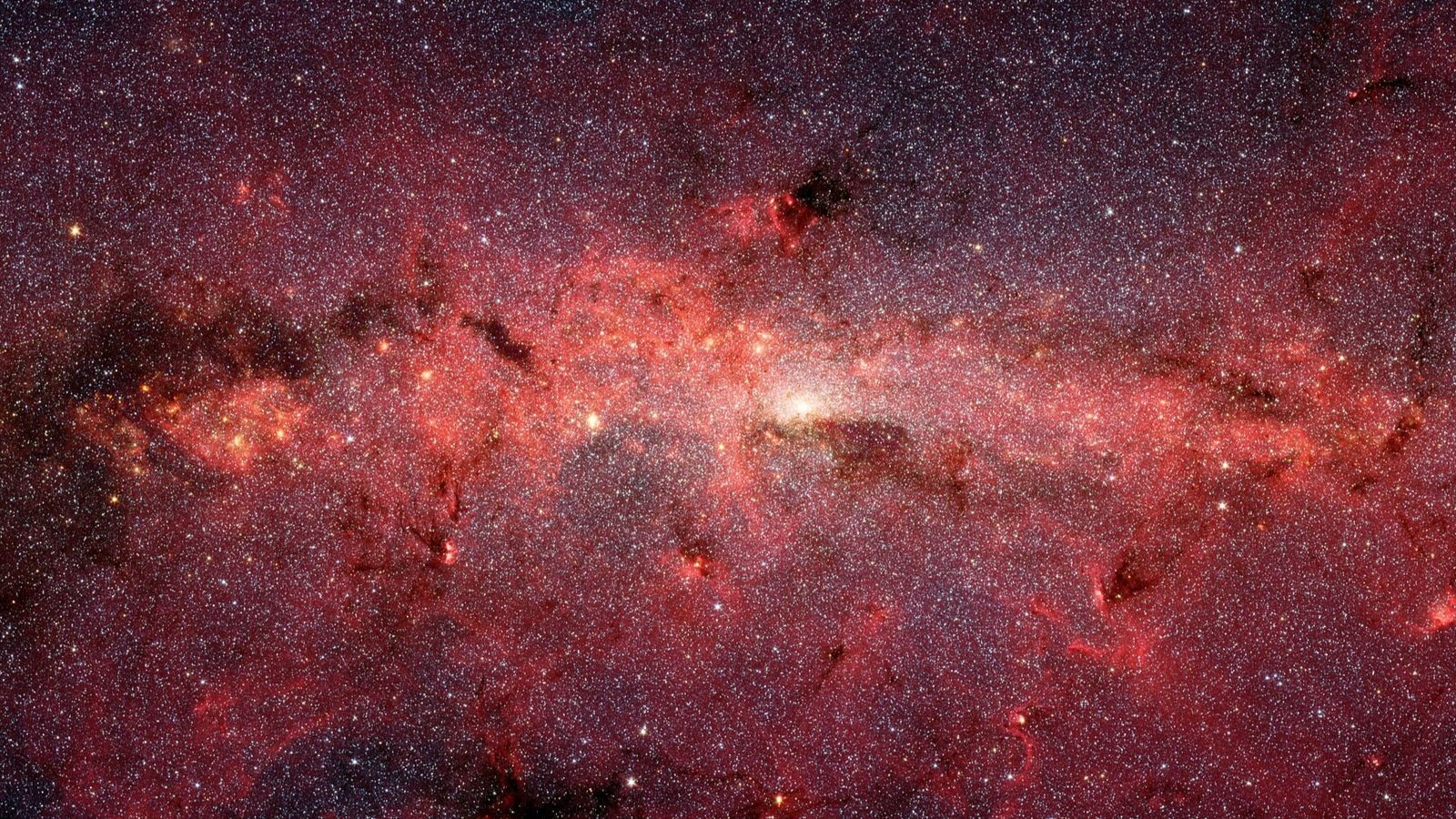
For decades, astronomers have referred to a large portion of the sky as the “Zone of Avoidance.” This region lies directly behind the dense disk of our Milky Way galaxy. Because our galaxy is filled with clouds of interstellar dust and gas, visible light from distant objects behind this veil is blocked or deeply reddened, making them nearly invisible to traditional optical telescopes.
This zone covers approximately 20% of the entire sky from Earth’s perspective. Consequently, a significant amount of cosmic real estate has remained largely unexplored. However, recent advancements in radio astronomy have allowed scientists to bypass these dusty barriers. Radio waves, unlike visible light, can pass through interstellar dust relatively unhindered, revealing the hidden structures lurking within.
The Mystery of Excess Cosmic Flow
The Vela Supercluster was first identified in 2016 by a team led by Renée C. Kraan-Korteweg of the University of Cape Town. Located about 870 million light-years away, it was initially thought to be massive. However, observations suggested a discrepancy: the known mass of Vela did not seem sufficient to explain the gravitational tugs observed in nearby galaxies.
Astronomers study these movements through “cosmic flows” —subtle deviations in galaxy motions caused by the gravitational attraction of massive structures. These flows are similar to tides in an ocean, where large masses draw matter toward them. While other giants like the Great Attractor and the Shapley Supercluster (650 million light-years away) are known to drive such flows, the observed motion in this region exceeded what Vela’s previously calculated mass could account for.
Vela-Banzi: A Supercluster Revealed
To solve this mystery, a new study led by Amber Hollinger of Lyon 1 Claude Bernard University in France, in collaboration with Kraan-Korteweg’s team, analyzed extensive new data. They combined 65,518 galaxy distance measurements from the CosmicFlows catalogue with 8,283 new galaxy redshifts observed near the Milky Way’s plane.
Crucially, the team utilized data from two major South African facilities:
* SALT (Southern African Large Telescope): Provided optical observations.
* MeerKAT Radio Telescope Array: Detected radio emissions from hydrogen gas in distant galaxies, allowing astronomers to see through the Milky Way’s dust.
The analysis revealed that the Vela Supercluster is composed of two walls of galaxy clusters, each with a dense, massive core, moving toward one another under gravity. The updated calculations show that Vela contains approximately 33,800 trillion solar masses of material spread across a volume 300 million light-years wide.
Why This Matters
The discovery redefines our understanding of the local universe’s gravitational landscape. The Vela Supercluster is now comparable in mass to the Shapley Supercluster and exerts a gravitational influence that exceeds that of the Great Attractor. This explains the previously unaccounted-for cosmic flows, as the sheer mass of Vela is sufficient to tug on surrounding galaxies with immense force.
The research team has nicknamed this revealed structure “Vela-Banzi,” which means “revealing widely” in isiXhosa, a language spoken in South Africa. This name reflects both the method of discovery—looking through the veil of dust—and the broader visibility it brings to our cosmic neighborhood.
“This discovery helps complete our map of the nearby Universe. For the first time we can clearly see one of the major gravitational players hidden behind our own galaxy.”
Conclusion
The unveiling of Vela-Banzi demonstrates how modern radio astronomy can penetrate the blind spots of traditional observation. By mapping this hidden giant, astronomers have corrected our understanding of local gravitational forces, showing that the structures shaping our cosmic neighborhood are even more massive and interconnected than previously imagined.