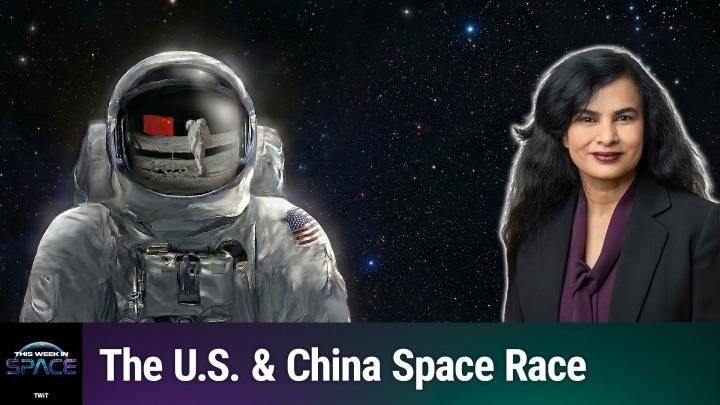
The latest episode of This Week in Space podcast, featuring Dr. Namrata Goswami, examines the growing competition between the United States and China in space exploration. The discussion centers on whether China’s accelerating lunar program will spur renewed urgency and innovation in the American space sector.
The Emerging Space Race
For decades, the U.S. has been the dominant force in space. However, China has made rapid advancements, designating space as a key “emerging pillar industry” in its economic plans. This deliberate investment signals a long-term commitment to deep space exploration.
The question isn’t just who will land on the moon first, but what control will major space powers exert over lunar territories. Cislunar space—the region between Earth and the Moon—could become a contested zone, raising strategic implications for both nations.
U.S. Response and Historical Trends
The U.S. has historically thrived on challenges, with periods of peak innovation often coinciding with external pressure. The current situation echoes the Cold War space race, where Soviet achievements galvanized American efforts.
If China successfully lands astronauts on the moon before the U.S., it could force a reassessment of NASA’s lunar program and other spaceflight initiatives. The potential for geopolitical leverage in space is substantial, and this rivalry could reshape the future of space exploration.
Key Takeaways
- China’s strategic investment in space signals long-term ambition.
- Competition may drive innovation in both the U.S. and China.
- Control over lunar resources and cislunar space could be a major geopolitical factor.
The podcast also highlights relevant space news, including updates on NASA’s Artemis 2 mission, new images from the James Webb Space Telescope, and the final season of Apple TV’s For All Mankind. The episode concludes with product recommendations, such as the Celestron Astro Fi 102 telescope and a scale model of SpaceX’s Falcon 9 rocket.
Ultimately, the rising influence of China in space presents both a challenge and an opportunity for the U.S. to reaffirm its leadership or adapt to a new era of shared dominance.