Two years.
That’s the timeline Yuval Boger at QuEra is throwing at the industry. He claims useful, error-free quantum computers are that close. Not decades away. Not ten years. Now. Or at least, 2026.
The problem holding us back today? Noise. Current machines are shaky. They make mistakes. Too many of them. That noise limits what we can simulate, choking progress in drug discovery and material science. But QuEra thinks they have the cure.
The Libra Promise
They’re building it. Libra is the name.
A fault-tolerant system. One that catches its own errors. Corrects them. Keeps running. Boger compares the first true instance of this to breaking the sound barrier. A physical wall shattered, then gone forever.
It won’t just sit in a lab. It’s coming to the cloud, courtesy of Amazon Web Services. Arriving in 2028.
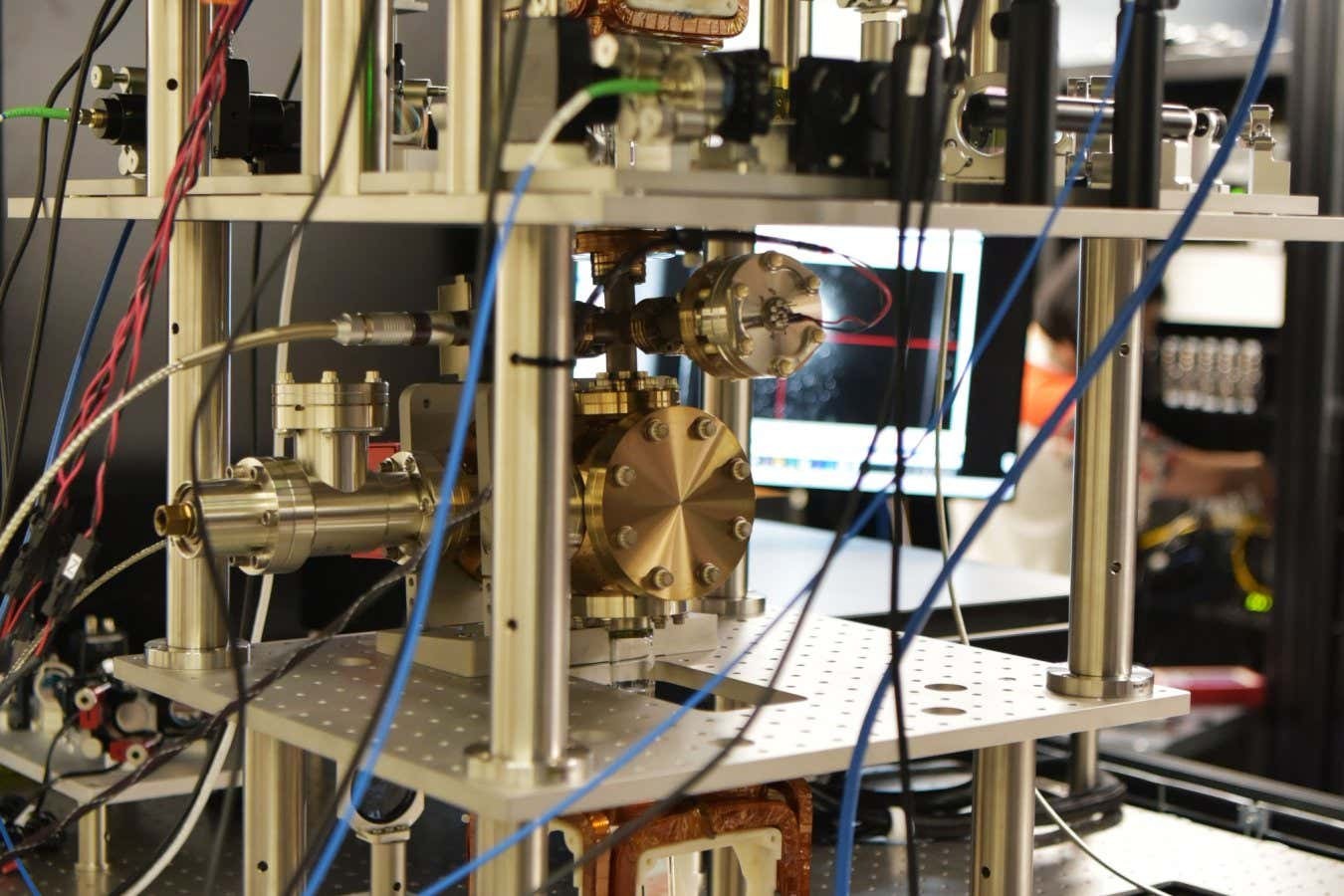
How does it work? Atoms. Neutral ones. Chilled to near absolute zero and wrangled with lasers. Libra will host 10,00 to 15,0,00 of these physical qubits. They get grouped. Partitioned into logical qubits. 256 of them. Each group acts like a single, stable bit of data, even if the atoms underneath are flipping out.
An error only happens once in a million times.
That’s the math. Individual qubits are messy. The system isn’t.
The Gap Is Huge
But here’s the catch. The jump from where we are now to 2028 is a cliff.
Right now, the largest array of neutral atoms has 6,10 qubits. They haven’t done much computation with them. The record for corrected logical qubits is 48. Fourteen and eight. Not twenty-five hundred. Not fifteen thousand.
IBM, a giant in this space, thinks they’ll be ready in 2029. One year behind QuEra’s claim. Who’s right? Maybe neither.
John Preskill, a big name at Caltech, told New Scientist recently that a “megaquop”—one million operations —marks the start of the real quantum era. That’s Libra’s goal. But getting there means scaling from hundreds of qubits to tens of thousands, and doing it while keeping errors under control. It’s a lot of engineering.
Science vs. Engineering
It’s not just science anymore.
The balance has shifted from 9 per cent science 9 engineering 9 engineering.
Boger admits as much. Five experimental machines are currently running at QuEra, each testing different parts of the Libra puzzle. Can you replace an atom when it heats up and fails? Can you manage the laser power for thousands of them simultaneously?
It’s messy hardware work. Jonathan King at Atom Computing agrees. He notes that a demo is easy. A computer that people use? That requires integrating advances that barely exist today.
Thomas Wong at Creighton University is skeptical of the speed. “It’s plausible,” he says, “but equally plausible they miss it by two years.” Maybe three. Joe Fitzsimons, at Horizon Quantum Computing, points to QuEra’s track record in error correction. The neutral atom approach might be easier to scale than superconducting qubits. It might work. It might not.
What Now?
So assume they make it. Assume 2028 arrives and Libra is humming on the cloud.
What do you do with it?
Boger hopes it’ll simulate physics systems too complex for today’s computers. Materials science, chemistry. He’s betting researchers will find better algorithms along the way.
I wouldn’t be surprised if the useful algorithms haven’t been invented yet.
Wong thinks it’ll be more of a discovery machine. A tool for researchers to figure out what’s even possible, rather than immediately changing the game. He sees it as a way for QuEra to shape the field, to force the community to focus on their strengths.
That’s the thing. We don’t really know.