It happens fast. Fast enough to blur the concept of speed.
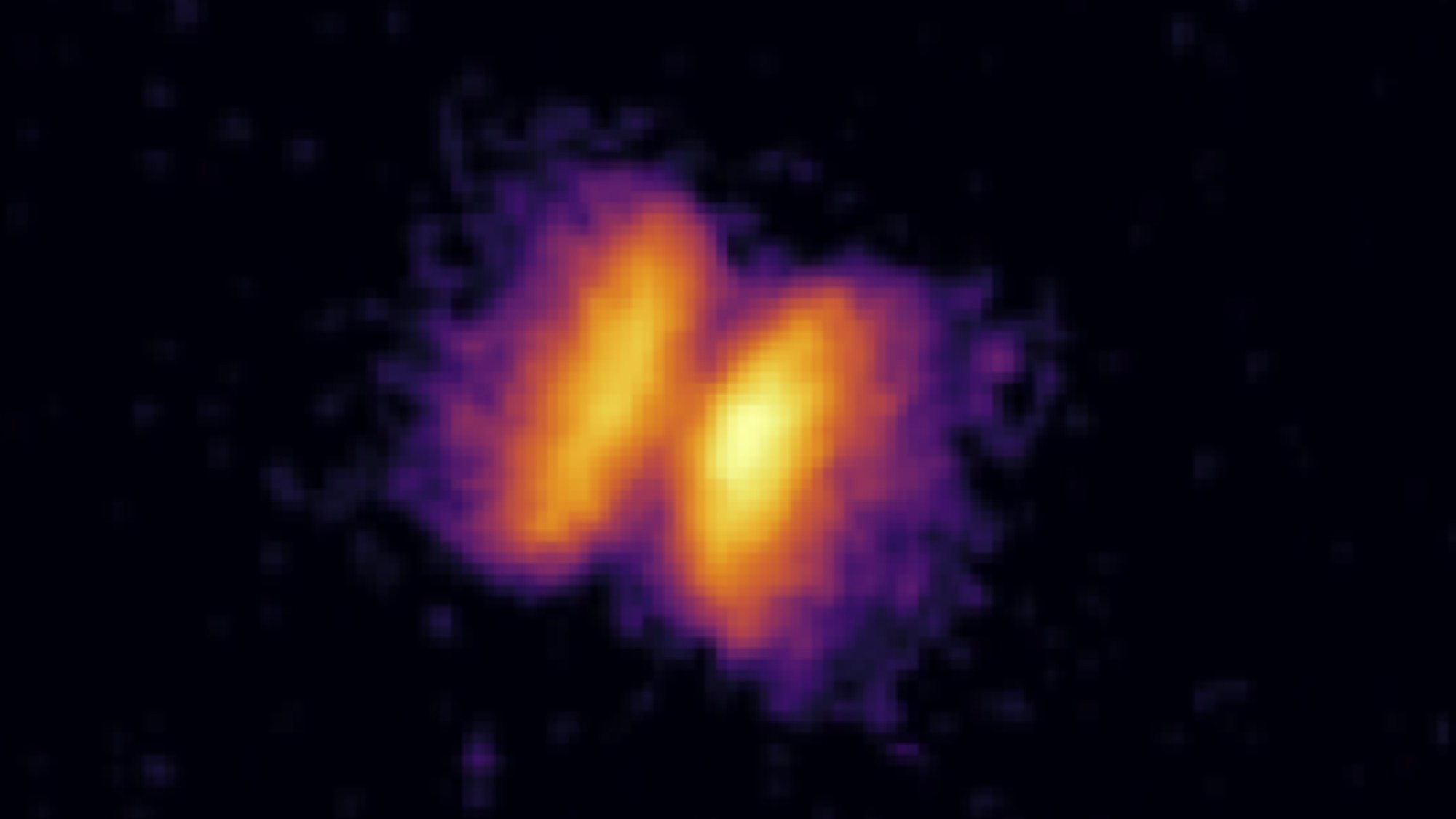
The Hubble Space Telescope just watched a stellar explosion launch clumps of gas at 20 million miles per hour through the Milky Way. Not wind. Not vapor. Cosmic bullets.
This isn’t your standard garden-variety nova event. It involves V445 Puppis. The only known helium nova in our galaxy. And for two decades, it kept its secrets locked behind a curtain of dust.
“The origin of these ‘bullets’ is still a mystery, though we suspect they originated post-outburst. We haven’t observed anything like this in other novas.”
— John Mills, University of Warwick researcher
So what actually happened? And why does this specific binary system matter?
What exactly is a helium nova explosion?
Most people picture a nova as a hydrogen-rich blast. You steal gas. You build it up. Boom. Thermonuclear fireworks. That’s the standard recipe.
V445 Puppis breaks the recipe.
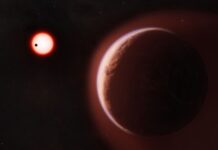
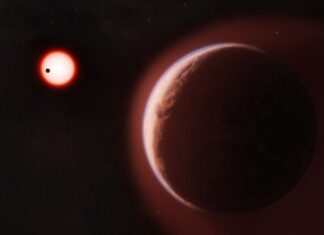
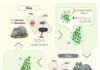
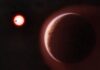
Here’s the mechanism: A white dwarf star—the dense, dead remnant of a sun-like star—gets hungry. But it doesn’t eat hydrogen. It eats helium.
Its partner is a rare helium star. This companion has already lost its outer hydrogen skin. Just bare, exposed helium layers. The white dwarf cannibalistically strips this material.
As the helium piles up on the white dwarf’s surface, pressure mounts. Temperature spikes. The system can’t hold it.
Runaway fusion triggers.
When V445 Puppis erupted in late 2000, the result was visually distinct. Twin plumes of debris shot out like butterfly wings. These structures stretch for over a trillion miles. Astronomers first spotted them in infrared light.
But there was a problem.
A thick disk of dust formed during the blast. It wrapped around the binary pair like a shroud. For twenty-five years, astronomers couldn’t see the stars causing the mess. They could only watch the dust expand.
Then the debris finally cleared.
Researchers pulled in every tool they had. Hubble. NASA’s TESS satellite. The Earth-based Very Large Telescope (VLT). They pierced the haze.
What they saw changed everything.
Why these cosmic bullets change the model
The cleared view revealed the “bullets.”
These are clumps of oxygen-rich gas. They are firing outward at extreme velocity. Twenty million mph. That’s roughly 3% the speed of light.
No other nova does this.
Mills and his team didn’t just see the debris. They confirmed the engine behind it. A helium star feeding a white dwarf. A rare binary system. One of only a few thousand such stripped stars known in the entire Milky Way.
“Confirming this helium nova was the result of a helium star accreting onto a white dwarf solves a 25-year mystery.”
— John Mills
Why is this specific interaction important?
It bridges the gap between rare helium novas and a much bigger, brighter explosion: the Type Ia supernova.
Will V445 Puppis explode again?
Watch closely. The white dwarf has finished digesting its last meal.
And now it’s feeding again.
The companion helium star is still there. The white dwarf is stripping it once more. The cycle is resetting.
This isn’t just curiosity. It’s a preview of cosmic violence.
Scientists have long theorized that repeated helium nova eruptions don’t just end. They escalate. Eventually, the white dwarf gathers too much mass. It collapses. It detonates completely.
That’s a Type Ia supernova.
These supernovas are the gold standard in astrophysics. Their light output is consistent. They act as “standard candles.” Astronomers use them to measure the age of the universe. They use them to map the expansion of space itself. They rely on them to understand dark energy.
If V445 Puppis triggers another helium nova soon, it provides a real-time case study.
It shows how these systems evolve. It hints at how the universe measures itself.
The white dwarf is feeding. The bullets have been fired. The dust has cleared.
Now we wait for the next spark.