


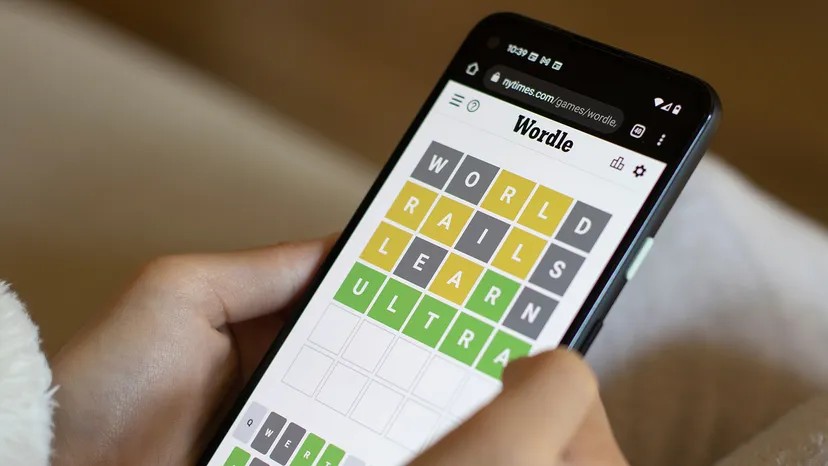
Wordle isn’t just a browser game anymore. It’s a daily habit for millions. Created by Josh Wardle in 2019 and bought by The New York Times, it turned five-letter words into a global obsession. You get six guesses. One puzzle per day. Every letter counts.
The thrill comes from the constraint. You have to deduce a hidden word using logic, pattern recognition, and a little bit of vocabulary luck. Understanding the list of words used in Wordle isn’t about cheating. It’s about understanding the pool you’re drawing from. It helps you make smarter guesses. It stops you from wasting attempts on words that don’t fit the pattern.
How the Feedback System Guides Your Guesses
The grid is simple. Five letters. Six attempts. The color-coded feedback is where the actual game lives.
Green means the letter is in the right spot. Yellow means it’s in the word, but wrong position. Grey usually means it’s not in the word at all. There’s a catch with grey though. If you guess a letter twice and only one instance is in the answer, the second one turns grey. That can trip you up.
Think of it as elimination. Each guess narrows the field. You are essentially filtering a database of 2,309 potential answers. If you hit six wrong guesses, the day is over. You wait 24 hours for the next one. The stakes are low, but the frustration is real.
Why Past Answers and the Full Word List Matter
There are over 1,700 answers in the game’s history. The list grows every midnight. Some players treat these lists as archives. They track their progress over months or years.
In the early days, checking past answers helped you avoid repeating words that had already been used. That logic no longer holds. Wordle now reuses solutions. A word that appeared last year could appear again today. You can’t cross them off your mental list just because they’ve been seen before.
Most sites organize these answers alphabetically. This makes scanning for specific letters faster. If you know the word starts with S and ends with E, an alphabetical list helps you filter options instantly. It turns a vague intuition into a concrete strategy.
Strategies for Choosing Your Starting Words
Success often depends on the first guess. You want to maximize information early. Don’t pick a word with repeated letters unless you suspect the answer has doubles.
Common starting words like SLATE, CRANE, TRACE, and STARE cover high-frequency letters. They test common vowels and consonants in one go.
Vowel-heavy starters like ADIEU, AUDIO, or OUIJA are also popular. They confirm vowel presence quickly. If you get greens or yellows on vowels, you’ve made huge progress.
There is a theoretical “magic” sequence: CHUNK, FJORD, VIBEX, WALTZ, and GYMPS. These five words cover nearly the entire alphabet. It’s a brute-force approach. It’s not always practical, but it illustrates the goal: eliminate possibilities as fast as possible.
Letter Frequency and Probability
Not all letters are created equal. The most common letters in Wordle answers are S, E, A, O, and R. S is the most frequent starting letter. E is the most common ending letter, appearing in about 18 percent of answers.
Ending in S is rare. Only about 1.6 percent of answers end in S. So, if you’re down to your last guess and the pattern fits a plural, think twice. It might be a trap.
A good guess balances probability with information. “APPLE” looks strong because it has common letters. But the double P limits new data. You’re guessing twice on the same letter. A better early guess spreads letters out. It tests more of the alphabet.
What Makes a Good Wordle Guess
Early guesses are for exploration. Later guesses are for precision. You shift from testing letters to placing them.
If you’ve confirmed A, E, and T are in the word, your next moves should focus on positioning them. Stop guessing random words. Start constructing the solution based on the clues you have. This turns a game of chance into a structured problem-solving exercise.
The pool of answers avoids obscure terms. It also avoids most plurals. This keeps the game accessible. Words like APHID, APPLE, BADLY, BAGEL, BAKER, BENCH, BERET, BERTH, BELCH, BELIE, BELLY, EXTRA, EXULT, EPOCH, EPOXY, HEART, HEATH, HEAVY, HEFTY, HEIST, HELIX, HOWDY, HUMAN, HUMID, HUMOR, LEAFY, LEAKY, LEAPT, MARSH, MASON, MASSE, MAYOR, MEALY, READY, REALM, REBEL, REBUS, SCOUR, SCOUT, SCOWL, SEVEN, SEVER, SHADE, SHAFT, SHANK, SHAPE, SHARD, SMALL, SMART, SMASH, SMEAR, THYME, TIARA, TWICE, TWINE, UNLIT, UNMET, UNITE, YOUNG, YOUTH, and ZEBRA are all part of the standard pool.
Knowing which words are in the pool changes how you play. You stop guessing outside the box. You start working within the constraints of the known list.
The game evolves. New words are added. Old ones are recycled. The strategy remains the same. Use logic. Track your letters. Don’t waste guesses.
Does knowing the list make you a better player? Maybe. Or maybe it just makes you more patient. Either way, the puzzle is still waiting.


