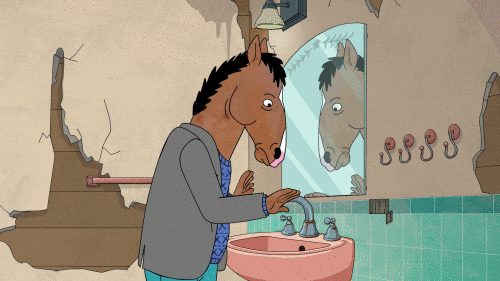
“BoJack Horseman” has a strange and heavy place in the list of Netflix originals. Launched in 2014, it quickly shed the features of a typical animated sitcom. This show doesn’t use humor as a prop. Treat comedy like a knife.
At the core of this drama is a story of damaged people trying to come to terms with their history. This is a scathing critique of Hollywood, fame and the rotten foundation of the American Dream. The animation style is bright, almost cheerful, which makes the visceral existential dread all the more unnerving.
Most of the viewers were hooked on the first season. They stay because of their nature. In particular, they stay with BoJack.
好莱坞痛苦的面孔
标题人物是一匹拟人化的马。 他住在好莱坞一座宽敞、空荡荡的豪宅里。 他很有名。 他很有钱。 他非常不高兴。
波杰克永远焦躁不安。 他追逐下一个重要角色,下一个道歉,下一个让头脑中的噪音麻木的物质。 他是后期名人文化的化身。 你看着他,你笑了。 然后你就哭了。 片尾字幕滚动后,你盯着墙壁看了二十分钟。
该节目提出了令人不安的问题。 为什么我们要原谅伤害我们的人? 如果你讨厌自己,你能改变吗? 成功只是一种更昂贵的孤独吗?
A joke beyond the surface
Many people miss the details of their first watch. This show is full of visual gags and narrative traps. Spectators looking away will be penalized. Those who pay attention to the background characters will be rewarded.
Let’s dig deeper into the layers here. Not just the plot, but also the structure of the story. These are what make BoJack Horseman worth analyzing in detail. There’s a reason why it’s one of the most watched Animated Series on NETFLIX. He respects his viewers in order to hurt them.
Topになゃたすすす reason
If you look at a list of popular Netflix shows, BoJack is always there. However, that is not the case. This is a lightweight watch
Each episode of the program is about 25 minutes long. It’s hard to believe that each script carries an emotional weight in such a short time. 分優の演技は伝説的です。 But the real star is the character’s willingness to tolerate failure.
Most shows offer a redemption arc. BoJack has consequences. It shows a messy, non-linear path to self-improvement. Sometimes it takes two steps forward. Sometimes they fall off the floor.
动画世界中的人为因素
不要让卡通片欺骗了你。 这里的人类情感是原始的。 这些关系是有毒的、相互依赖的、真实的。
波杰克与父亲奶油糖果的关系决定了他的创伤。 他与花生酱先生的友谊凸显了肤浅的积极性和真正的联系之间的区别。 他与黛安和卡罗琳公主的动态表明,爱情既可以是生命线,也可以是绞索。
节目不评判。 它只是显示。
《马男波杰克》不是一部关于马的喜剧。 对于一个认为自己是一匹马的人来说,这是一个悲剧。
这种区别很重要。 它改变了你看待每个场景的方式。 每个笑话都落地
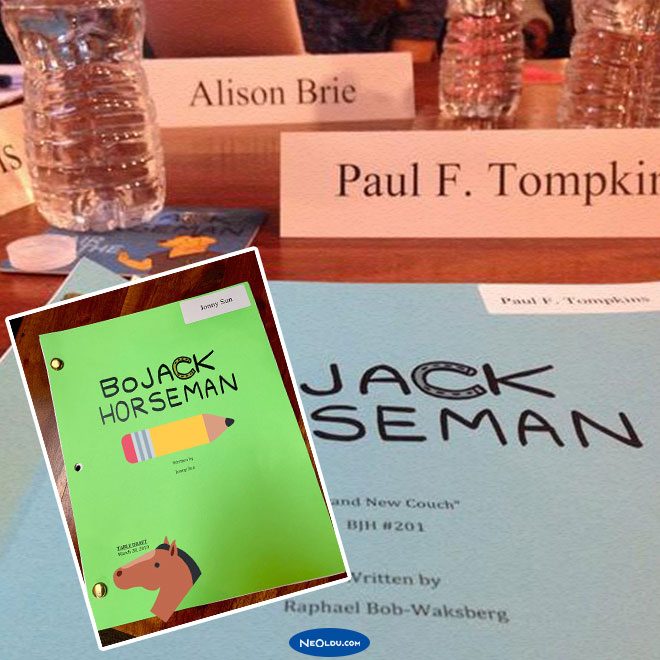
The actors of BoJack Horseman don’t just read scripts in isolation. They gather. Regularly. This isn’t the usual animation voiceover workflow where the talent records the lines in the booth and then moves on. The team takes the show seriously, which sets it apart from almost every other animated series on television.
Show creator Raphael Bob-Waksberg has a favorite moment to watch during these table reads. It’s not big ensemble scenes. It’s a special solo performance by Will Arnett.
The episode is “Free Churro”. This is season 5.
Arnett delivers a monologue that has become legendary among the crew. Bob-Waksberg admitted that he loves watching the rehearsals for this scene. He doesn’t just enjoy it. In his opinion, the performance is of such high caliber that it deserves an Emmy Award.
“The performance is a lesson in acting.”
Bob-Waksberg is not polite. He speaks about Arnett’s work on that scene with serious intent. It’s not just funny. It’s technically brilliant. The way Arnett navigates the character’s grief and manic energy in that single take makes the scene stick. Other writers are watching. They take notes.
Why is this important to the show’s legacy? Because it proves that the voice actors take these roles as serious dramatic work. They aren’t just hitting marks. They’re building a reality.
The “Free Churro” monologue remains the benchmark. It is the moment when the line between comedy and tragedy dissolves. And it all boils down to an actor reading lines in a room with friends who respect the craft enough to listen.
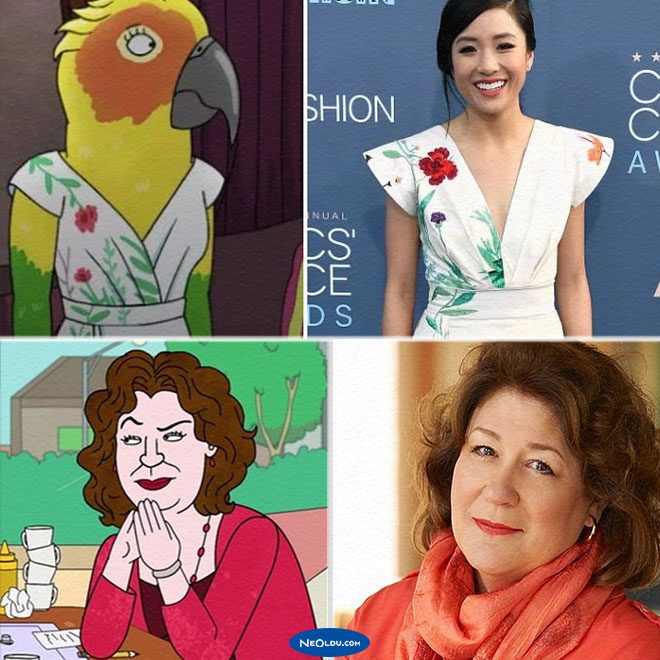
It’s an often overlooked detail, but BoJack Horseman’s costumes are heavily influenced by actual fashion. Finding the screen actually worn by Rihanna and Katy Perry is a fun easter egg. Lisa Hanawalt, the show’s costume designer, admits she loved designing the dolphin pop star Sextina Aquafina. For fans, following the original appearance of celebrities has become a hobby.
The Weight of the Voice
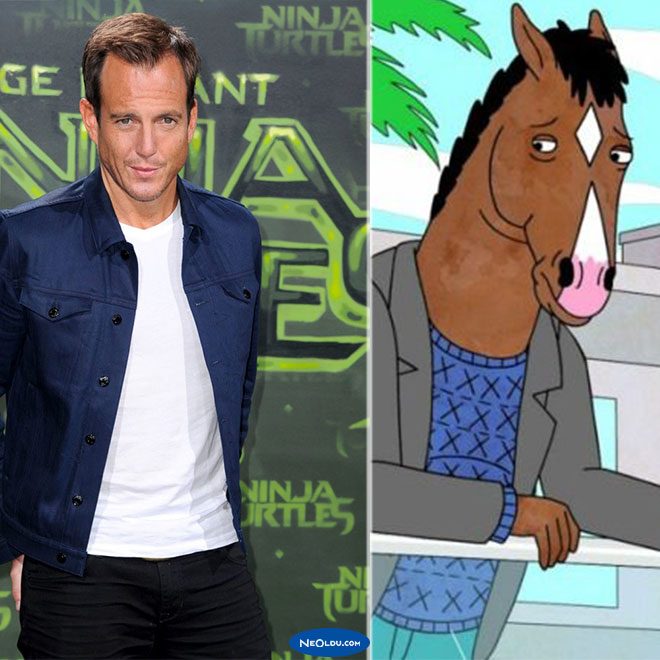
Will Arnett has been voicing BoJack since the character was a young, troubled on-screen horse struggling with decades of alcoholism. But behind the microphone, the connection went deeper than just vocal technique. Arnett has been open about how this role has left a heavy impact on his psyche.
He admits that BoJack is a character he struggled to identify with throughout his career. It wasn’t just acting. It was recognition.
Arnett says they are similar in many ways. He feels the character’s unhappiness. He feels the darkness. Sometimes he sees his own reflection in BoJack’s chaotic life.
“He’s the character I struggled to identify with the most.” — Will Arnett
It’s not just about method acting. It’s about the burden of carrying a mirror that reflects your own flaws. For fans of the series, it adds a layer of creepy realism to every toast BoJack raises. The actor doesn’t just play a depressed horse. He channels a very human, very complex pain.
One wonders where the performance ends and the person begins.
Digital echo from BoJack’s hard drive
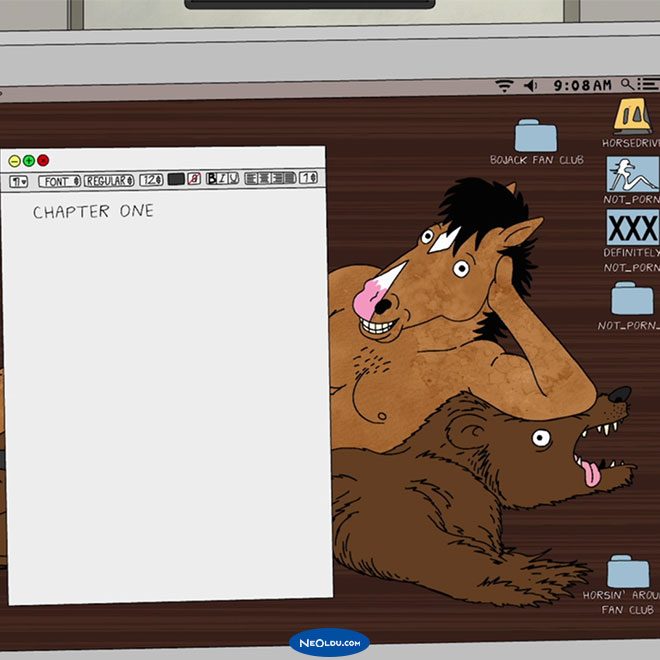
4. Have you ever checked what’s on BoJack’s laptop?
We didn’t notice it at first either. But those file names on the screen? They are strangely specific. And honestly, they tell you more about BoJack’s soul than any dialogue ever could.
The file names act as a quiet autopsy of his character. You see the mess. You see the avoidance. A disorganized digital life reflects a mind that is constantly running away from itself. It’s not just background noise. It’s evidence.
Files are not just props. They are a mirror.
Notice the pattern. Missed calls. Half-written drafts. Silence where conversation should be. All in all, what emerges is a portrait of a person profoundly alone, even in a crowded room.
What does it say about a person when their most private moments are just unsorted data?
The unlikely rarity of F-words in BoJack Horseman
Do you remember exactly how many times you heard that four-letter word? Probably not. That’s the point.
Despite the series’ dark humor and heavy themes, the F-word is used with surgical precision. It happens exactly five times throughout the run. That’s it. Five. And the delivery is oddly specific. BoJack himself only says it once. The other four times it’s directed at him.
Let’s break down the list of people who dared to use this word in the animated world of Horseshoe Bay:
- Herb Kazaz takes the crown for the first instance.
- Next up is Charlotte Moore who uses it against our protagonist.
- Todd Chavez follows suit and adds his own chaotic flair to the list.
- BoJack finally joins the club and says it once.
- Gina Cazador completes the group with the fifth and final usage.
It’s a testament to how carefully the writers controlled the tone. They didn’t need profanity to make their points.
The dark humor behind BoJack Horseman’s celebrity appearances
Real-world celebrities keep popping up on BoJack Horseman, but the show’s creators play a dangerous game with them. According to creator Raphael Bob-Waksberg, there’s an unspoken rule when asking stars to voice their fictionalized selves: play along. They accept the absurdity of animation. And if you refuse? The show tends to punish you. Hard.
The writers don’t hold back. They don’t give the celebrity a gentle nod or a safe cameo. They write them into scenarios that are often cruel, humiliating or just plain unlucky. It’s a kind of meta-humor relies on the star’s refusal to take a joke lightly. Saying no to its animated counterpart has serious narrative consequences.
Take Andrew Garfield for example. He doesn’t get polite rejection from the show. He falls into a hole. His legs are broken. It’s graphic, abrupt, and serves as a warning to anyone who might think they’re too cool for animation. The message is clear: join in or suffer the wrath of the story.
This high-stakes approach to celebrity guests is part of what makes the series so sharp. It forces famous people to confront their own personas in a medium that takes away the glamour. They become cartoons. They become punchlines. Or in some cases they become cautionary tales.
The stars who played along
Not everyone followed Garfield’s path. Some stars understood the assignment immediately. They understood the value of being on a show that was willing to go to such extreme lengths for a joke. These Actors didn’t just lend their voices; they leaned into the satire.
One of the most notable names to take on the role of his animated self is Daniel Radcliffe. The Harry Potter star, known for his willingness to look silly in projects like The Broken Hearts Gallery, fits perfectly into BoJack ‘s world of self-deprecation and mayhem. He’s not trying to be dignified. He lets the show make a fool of himself.
Stanley Tucci brings his trademark charm even as the script tries to dismantle it. Jessica Biel shows up and accepts the absurdity of her own fame without batting an eye. Then there’s Naomi Watts, who moves through the series’ darker, more surreal corners with ease. And Margo Martindale, the show’s frequent collaborator, grounds the chaos with her seasoned presence, even as she voicing a version of herself caught up in the show’s relentless satire.
These performances work because they are willing. They accept the premise that fame in BoJack Horseman is a trap and the only way out is through the joke. Stars who refuse to commit find themselves in holes, broken and lonely. Those who engage finds a strange, chaotic kinship with the characters around them.
It’s a risky creative choice. Most shows consider celebrity cameos as marketing opportunities. BoJack treats them as narrative liabilities to be managed with humor and the occasional fictional injury. The result is a level of metacommentary that feels fresh. The audience knows the real person. They see the star. But the show forces them to see the character as well. And sometimes the character breaks.
It’s not really a question of whether a celebrity will
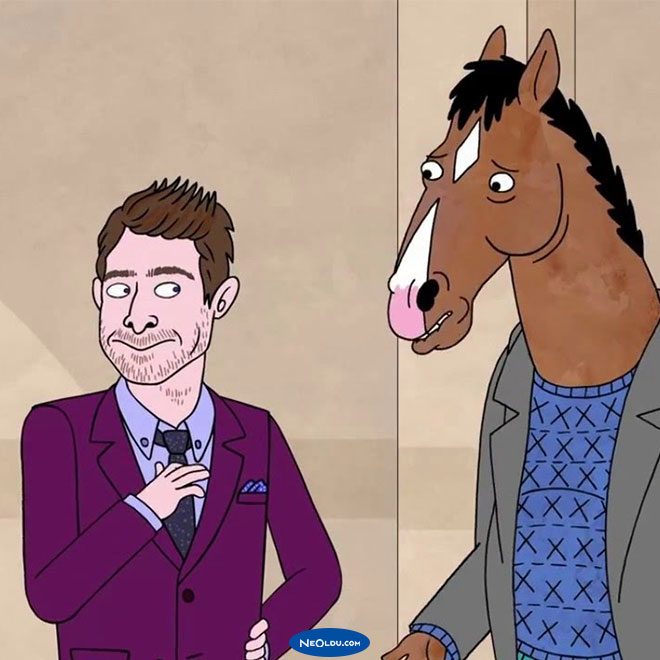
The name of the horse that defined the show
Let’s be honest. Designing BoJack Horseman wasn’t exactly a headache for the creators. When people ask how they came up with the name, the answer is pretty simple. It just felt like a horse’s name. Immediately. Visceral.
There is clearly irony here.
The show’s creators have admitted that it was much easier to draw a sad, depressed horse than trying to nail human characters. You know the drill. Animals have fur. Humans have complex, chaotic psyches that don’t look so clean on paper.
So who gave them the most trouble?
It wasn’t BoJack. It was Diane and Todd.
These two characters proved to be the real problems of the design. Diane’s sharp angles and defensive attitude required a certain kind of imagination that screamed “smart but exhausted.” Todd’s chaotic energy? Even harder to fathom. His design had to convey that kind of desperate, misguided optimism without being too stylish.
“Designing a sad horse is much easier than drawing a human figure.”
The creators knew they had to work harder on people. BoJack got away easily with his horse-like simplicity. The shape of the horse handled the heavy lifting. Sorrow was built into the silhouette.
But Diane? She had to look like someone who overthought every interaction. Todd had to look like someone who was constantly trying to get a connection he couldn’t maintain.
This is a trap of human design. It requires nuances.
All BoJack had to do was look like a horse who was tired of being a horse.
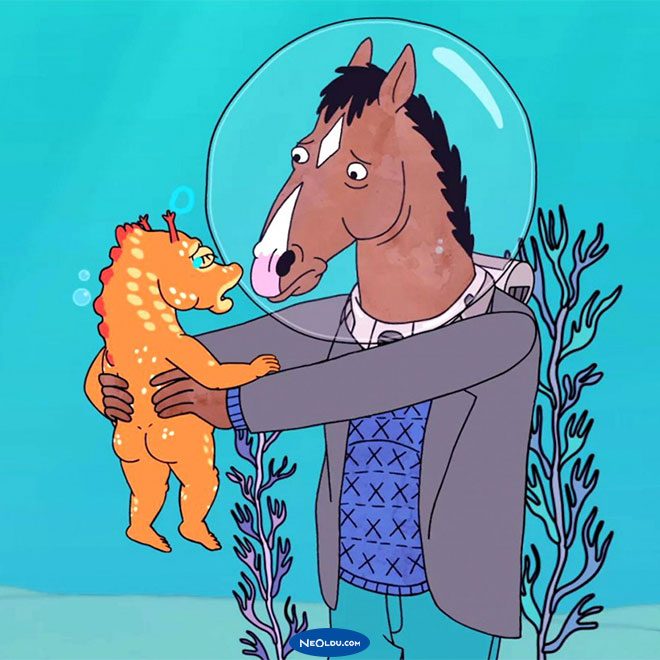
The Live Event That Changed Everything
It wasn’t just a concert. It was a cultural reset button.
When The Beatles took the stage at Candlestick Park in San Francisco on August 29, 1966, the air was thick with something other than just California heat. It was the end of an era. The band had stopped touring years ago, but this final performance felt like a funeral for a specific kind of magic. The screaming fans were still there, but the dynamic had shifted. They weren’t just screaming for fun anymore. They were desperate.
Why did they stop? It wasn’t just fatigue. It was the noise. The famous “Beatlemania” shrieks made it impossible to hear the music. John Lennon famously complained that they couldn’t play what they wanted to play. They wanted to be musicians, not just idols. So they retreated into the studio. They started experimenting with tape loops, backwards recordings, and complex harmonies. Songs like Tomorrow Never Knows and A Day in the Life came out of that isolation. They were creating art, not just pop songs.
But the live shows? Those were a different beast. At Candlestick, the energy was frantic. The band played for about 40 minutes. It was loud. It was chaotic. And it was over.
The Aftermath and the Myth
For decades, people wondered what that last set sounded like. Was it a disaster? Was it a triumph? The truth is somewhere in between. The tapes were lost for a long time. Rumors swirled. Fans traded bootlegs with shaky audio quality. But the reality is that The Beatles were still technically proficient. They knew their instruments. They knew their songs. The problem was the crowd.
“We just wanted to play the music. But you can’t play music if everyone is screaming louder than the guitar.”
That sentiment echoed through the band for years. It influenced their later work. The introspection in Revolver and Sgt. Pepper’s Lonely Hearts Club Band was a direct response to the inability to connect with audiences in real-time. They turned inward. They built a wall of sound around themselves. It was creative, but it was also lonely.
Candlestick Park marked the end of the touring cycle. It was a clean break. No more hotels. No more screaming fans at the window. No more trying to compete with the noise of 15,000 people. Just the studio. Just the four of them.
Why It Matters Today
We look back at that night not because it was the best concert they ever played. It wasn’t. We look back because it was the last time they were a live band. The transition from performers to studio architects happened right there. The energy of the crowd pushed them into a new creative direction. That direction changed music forever.
The song setlists from that night are public record. Taxman. Got to Get You Into My Life. All You Need Is Love. They played the hits. They played the new stuff. But the spirit of the band was already gone. The touring life was over. What came next was something else entirely. Something more complex. Something more difficult. And ultimately, something more lasting.
The silence after Candlestick was deafening. But it was in that silence that the