


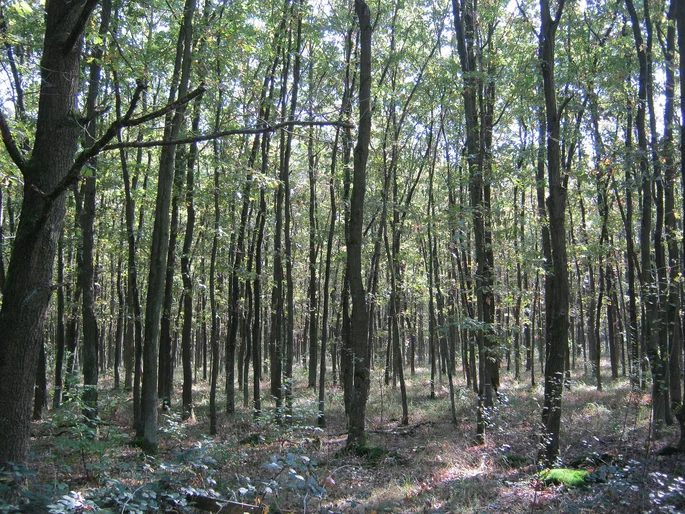
A forest is defined by one thing: trees. They dominate. Bushes hang around the edges. But the canopy is what matters. This is the largest biome on the planet. It stretches across the northern reaches of North America. It covers huge swathes of Brazil. You find it in the north and center of Europe. It dominates parts of China, Russia, and Japan. Look at New Zealand, Chile, and southern Australia. Trees are there. They define the landscape.
But this isn’t just about wood and leaves. Forests are shelters. They are refuges. For animals. For plants. For life itself. The vegetation here is mostly trees. Some are angiosperms. Others are gymnosperms. Some keep their needles all year round. Others shed them in autumn. The variety is staggering.
And the wildlife? It’s packed in. Mammals rule here. Birds are everywhere. In some places, you find reptiles. Arthropods scuttle through the leaf litter. Amphibians hide in damp hollows. Insects buzz in the shadows. It’s a complex web.
Why does this matter to you? Because forests are the lungs of the Earth. They regulate climate. They hold soil together. They provide habitat for countless species. Without them, the planet changes. Fast.
The Structure of a Forest
Think about what makes a forest tick. It’s not just a collection of trees. It’s layers. Canopy. Understory. Shrub layer. Forest floor. Each layer supports different life.
In the canopy, sunlight hits hardest. Trees compete for it. They grow tall. They reach. Beneath them, the understory gets less light. Shade-tolerant plants thrive here. Ferns. Mosses. Small bushes.
The forest floor is dark. Cool. Decomposition happens here. Dead leaves break down. Nutrients return to the soil. Fungi play a huge role. They connect trees underground. A network. Often called the “wood wide web.”
Animals move through these layers. Birds nest in the high branches. Insects crawl on the bark. Mammals hunt on the ground. Everything has a niche.
Where Forests Thrive
Not all forests are the same. Climate dictates the type. Tropical forests sit near the equator. They’re hot. Wet. Biodiversity is insane. Millions of species live in a few square kilometers.
Temperate forests have seasons. Spring. Summer. Autumn. Winter. Trees lose their leaves. Soil is rich. Deer. Bears. Wolves. They roam here.
Boreal forests. Taiga. They’re in the far north. Cold. Long winters. Short summers. Conifers dominate. Pine. Spruce. Fir. Hardwood trees struggle here. The soil is often poor. Frozen in parts.
Each type supports different life. Different ecosystems. Different challenges.
Why Forests Are Disappearing
Deforestation is a major issue. Trees are cut down. For timber. For agriculture. For urban expansion. The Amazon is shrinking. Forests in Southeast Asia are vanishing. Biodiversity loss accelerates.
When trees fall, carbon is released. Climate change worsens. Soil erodes. Water cycles break. Animals lose homes. Species go extinct.
It’s not inevitable. Conservation works. Refore

We often treat the air we breathe as a given. It is not. Forests are the lungs of the planet, pumping oxygen into the atmosphere as a byproduct of photosynthesis. But their role goes far beyond just breathing for us. They are the primary mechanism for carbon sequestration. Trees pull carbon dioxide from the sky, mix it with water and sunlight, and lock that carbon into their very structure. This process is the only thing standing between us and the worst effects of global warming.
Forests are not just collections of trees. They are complex machinery for cleaning air, filtering water, and stabilizing climate.
The hydrological impact is just as critical. Forests act as giant sponges. They catch rainfall, filter it through layers of soil and root systems, and release fresh, potable water slowly over time. Without this natural filtration, rivers would run muddy and scarce. The roots also bind the soil. This prevents erosion and slows down surface runoff, which drastically reduces the risk of devastating floods during heavy rain seasons.
Types of Forests and Their Roles
Not all forests are the same. The climate and location dictate the type, which in turn dictates how the forest functions.
- Temperate forests, such as those in the Mediterranean, experience distinct seasons. They lose their leaves in winter and are less dense than their tropical counterparts.
- Boreal forests dominate the cold, mountainous regions near the poles. These are massive carbon sinks, storing carbon in permafrost and deep soil layers.
- Tropical forests hug the equator and the Caribbean. They are the most biodiverse, densest, and wettest, playing a massive role in global rainfall patterns.
Each type contributes to the global system differently, but all share a common structure.
The Mechanics of a Forest Ecosystem
A forest is an open system where energy and matter are constantly circulating. It is a loop. Trees capture solar energy and atmospheric CO2 to build biomass. They pull water and minerals from the ground. In return, they release oxygen. This exchange feeds herbivores, which feed carnivores, and the cycle continues.
The biodiversity here is staggering. You will find thousands of species of trees, shrubs, herbs, and flowers. Fungi networks connect roots underground. Birds, mammals, reptiles, and amphibians all occupy specific niches. The exact mix depends on the latitude. A tree in Canada is not a tree in Brazil. Yet, both support complex webs of life.
Climate Regulation and Temperature Control
Forests are natural thermostats. They moderate local and regional temperatures. Because they are humid environments—though less so than jungles or mangroves—they buffer against extreme heat. The canopy shades the ground, reducing evaporation. The transpiration from leaves adds moisture to the air, which cools the surroundings.
This humidity also helps attenuate temperature swings. Day and night do not differ as drastically under a forest canopy as they do in a desert or a city. This stability is why many species can survive only in these buffered microclimates.
Water as a Filter and Barrier
The role of trees in water management is physical and chemical. The leaf litter on the forest floor acts as a filter. It catches pollutants and allows water to percolate slowly into aquifers. This process cleans the water before it reaches springs, lakes, or rivers. It is free water purification, done on a massive scale.
The root systems also break up the force of rain. Instead of water hammering directly into the earth, it is intercepted by branches and leaves. This reduces the speed of water flow. Slower flow means less soil displacement. Less soil displacement means less erosion. The land holds together. Wind is also blocked by the tree line, allowing organic matter to settle rather than blow away.
Fauna and Flora Dynamics
The interplay between plants and animals defines the forest’s health. Flora provides the structure. Trees offer nesting sites. Underbrush provides cover. Flowers attract pollinators. Fruits feed dispersers.
Fauna, in turn, maintains the flora. Bees ensure reproduction. Predators keep herbivore populations in check, preventing overgrazing. Decomposers, like fungi and insects, break down dead matter, returning nutrients to the soil. This nutrient recycling is what keeps the forest fertile. Without these interactions, the system collapses. The forest becomes a graveyard, not a habitat.
This delicate balance
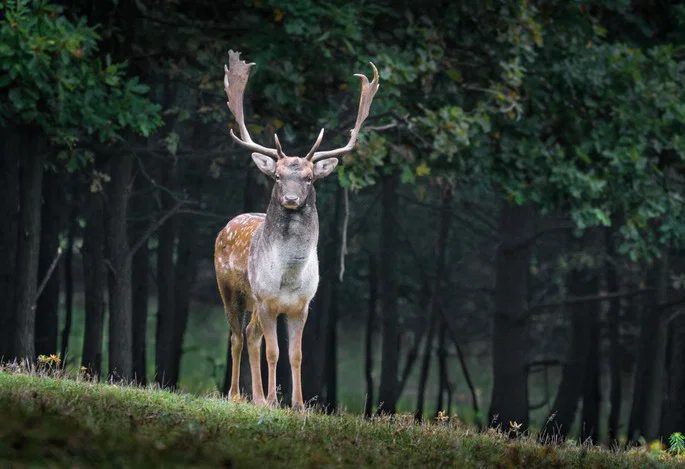

The life within a forest isn’t static. It shifts dramatically depending on where you stand on the map and what kind of woodland surrounds you. In the coldest regions, the variety of animal life shrinks. You will likely encounter bears, wolves, hares, foxes, and various bird species. When winter hits, most of these creatures hibernate, causing the entire ecosystem to slow down significantly.
Activity drops. Silence takes over.
In contrast, warmer and temperate zones host a far broader spectrum of life. It isn’t just about birds and mammals here. Reptiles, amphibians, arthropods, and insects thrive in these environments. Tropical forests, in particular, act as ideal incubators for thousands of animal species.
The most defining feature of any forest is its flora, specifically the trees. Unlike other biomes, forests cover vast stretches of land with this canopy. The specific species change from country to country. In colder areas, you see more conifers or gymnosperms. In warmer climes, angiosperms dominate. Precipitation levels and long-term temperature changes also dictate which plants survive.
Underneath the main canopy, shrubs, herbs, and flowers exist, but they are adapted to lower light conditions. The tree crowns block so much sunlight that only shade-tolerant species can flourish below.
Classifying Forests by Climate and Vegetation
Forests are categorized in several ways, with climate being the most common lens.
Temperate forests appear in temperate and continental climates, often on mountainous terrain. These are typically deciduous, meaning trees shed their leaves seasonally. While conifers can be present, mixed forests are the norm.
Warm temperate forests resemble their cooler counterparts but exist in warmer environments, such as the Mediterranean basin.
Boreal forests are dominated by conifers like pines and firs, though some deciduous trees survive here too. They occupy subpolar and subarctic regions, enduring harsh, cold conditions.
Tropical forests thrive in wet, tropical zones near the equator, between the Tropic of Cancer and the Tropic of Capricorn. They range from humid and rainy to dry or semi-arid, depending on rainfall.
Subtropical forests lie further from the equator. These can be humid, dry, coastal, or mountainous.
Vegetation type offers another clear classification system.
Coniferous forests, or needle-leaf forests, are rich in gymnosperms. They favor colder regions with long winters. The boreal forest is the classic example, but temperate and subtropical coniferous woods also fit here.
Broadleaf forests, or deciduous forests, are dominated by angiosperms. They prefer warmer, wetter conditions compared to coniferous woods, making them typical of temperate and tropical climates.
Mixed forests combine both types in varying proportions. They are common in temperate zones, often sitting geographically between pure coniferous and pure broadleaf regions.
Seasonal Classifications
A final way to look at forests is through the lens of leaf retention.
Deciduous forests are dominated by trees that lose their leaves in autumn or winter. These are most common in moderate climates, particularly in the Northern Hemisphere.
Evergreen forests feature trees whose leaves remain functional for extended periods. This includes most conifer species and many angiosperms. The greenery persists year-round, offering a visual contrast to the bare branches of their deciduous neighbors.
The Temperate Forest in Detail
Moving deeper into the temperate forest, we find a landscape defined by distinct seasonal rhythms. These ecosystems are not uniform. They shift with the weather, offering different challenges and opportunities for the fauna and flora that call them home.
In these regions, the balance between sun and shade creates a complex vertical structure. The canopy layer receives the most direct light, supporting tall trees that compete fiercely for space. Below them, the understory is darker, home to smaller trees and shrubs that have evolved to capture whatever light filters through. The forest floor, often damp and cool, hosts herbaceous plants, fungi, and decomposers that break down the fallen leaves.
This layering isn’t just aesthetic. It determines survival. A bird that nests in the canopy has a completely different diet and predator profile than one that lives in the understory. Similarly, plants at different heights have adapted to specific light levels and humidity. The temperate forest supports a biodiversity that, while less intense than the tropics, is still rich and highly specialized.
Water availability plays a huge role here. In wetter temperate zones, the soil is often rich and deep, supporting dense root systems. In drier areas, trees may have deeper roots to access groundwater, and the understory may be sparse. This variability means that even within the same climate zone, forest structures can look and function quite differently.
Human impact is another factor. Many temperate forests have been altered by logging, agriculture, or urbanization. This fragmentation affects animal migration and plant reproduction. Species that require large territories, like certain predators, struggle in fragmented habitats. Meanwhile, edge species—those that thrive at the boundary between forest and open land—often prosper.
Understanding the temperate forest requires looking beyond the trees. It involves recognizing the intricate connections between soil health, water cycles, and the animals that depend on the changing seasons. It is a system in constant flux, adapting to both natural cycles and human influence.

The Temperate Forest Baseline
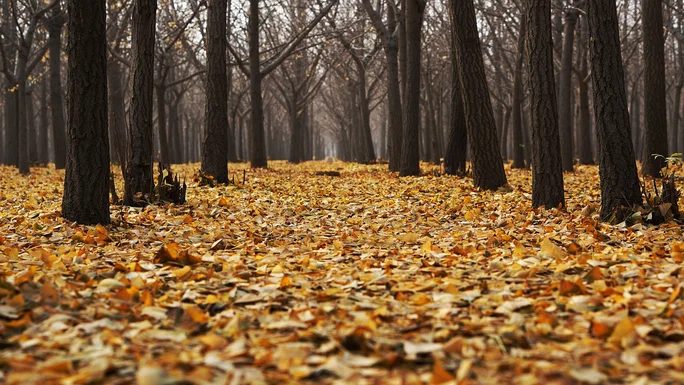
Think of the temperate forest as the middle ground of the planet’s green lung. It isn’t the frozen, unyielding expanse of the north, nor is it the steaming, chaotic density of the tropics. Here, the rhythm is dictated by the calendar. Temperature swings are the main event. You get distinct seasons. Winter bites. Summer warms. Rain falls with a steady, moderate persistence, never overwhelming but never scarce.
This biome dominates the eastern United States. It stretches across western Europe. You find it in East Asia. It clings to the coasts of Chile and New Zealand. It is the most common forest type in the Northern Hemisphere’s mid-latitudes.
Deciduous Dominance
What grows here? Mostly trees that know how to let go. Deciduous trees, or caducifolios, rule the canopy. The strategy is simple survival. In autumn, they strip themselves bare. Leaves fall. The trunk stands naked through the winter. This isn’t a sign of death. It’s a defense mechanism. By shedding leaves, the tree conserves energy and water when the ground is hard and the air is dry.
This cycle allows the forest to flourish from spring through autumn. The soil gets a boost from the falling leaves. As they rot, they create a thick layer of organic matter. The result? Soil that is rich in both organic and inorganic nutrients. Trees here don’t starve. They feast on their own debris.
The Fauna of the Middle Latitudes
When you picture a temperate forest, you probably imagine the usual suspects. Squirrels. Deer. Bears. These are the icons. But look closer and the biodiversity expands. Raccoons forage in the understory. Rabbits dart through the brush. Golden eagles circle the upper branches. Monarch butterflies migrate through these corridors. Snakes bask on warm rocks. Lynceus stalks the shadows.
The climate supports this variety. Temperatures can swing wildly, dipping to -30°C or rising to 30°C. But for most of the year, the sweet spot is between 10°C and 25°C. This stability allows for a long growing season. Precipitation is intermittent but reliable. It’s enough to keep the roots wet without drowning them.
Why the Soil Matters
The nutrient density of temperate forest soil is a direct consequence of the deciduous habit. In tropical rainforests, nutrients are locked in the biomass, not the ground. Here, the cycle is different. Leaves fall. Fungi and bacteria break them down. Nutrients release into the earth. This creates a fertile substrate that supports a dense understory of ferns, shrubs, and young saplings. It’s a self-sustaining loop. The forest feeds itself.
The Boreal Context
This temperate model stands in stark contrast to its northern neighbor. The boreal forest lies just beyond the temperate zone. It is defined by conifers, not deciduous trees. The soil there is often acidic and nutrient-poor. The growing season is short. The temperature range is more extreme. Understanding the temperate forest requires seeing it as the transition zone between the harsh north and the varied mid-latitudes. It is a biome of balance. Of shedding and regrowing. Of moderate rain and
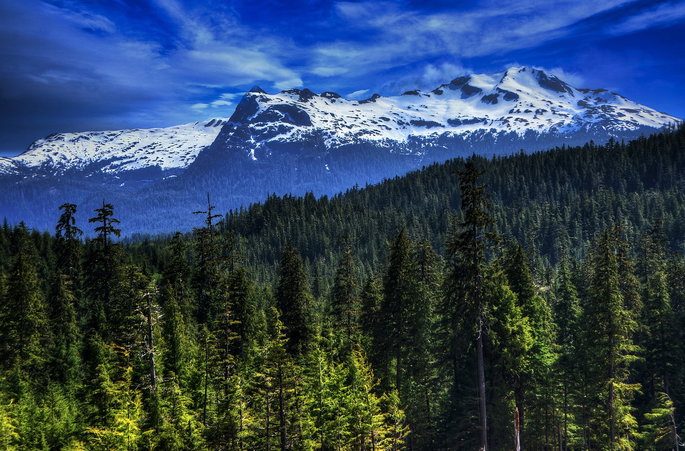

Las latitudes altas no perdonan. Si piensas que el frío es solo una incomodidad, no has visto la taiga en enero. Este vasto cinturón de bosque boreal se extiende a lo largo de Canadá, Alaska, Rusia y el norte de Europa. Es un lugar donde la tierra respira con dificultad. A veces se le llama bosque de coníferas o bosque de pino, pero esos nombres se quedan cortos ante la escala real del bioma.
El clima aquí es brutal en su simplicidad. Inviernos gélidos y secos suceden a veranos lluviosos y frescos. No hay término medio. Las termómetros pueden caer hasta los -54 °C o subir hasta los 30 °C. La precipitación oscila entre los 400 mm y los 1000 mm anuales. La mayor parte cae como nieve, acumulándose durante meses en un manto blanco que parece eterno.
La vegetación ha aprendido a sobrevivir mediante la especialización. Los árboles siempreverdes dominan el paisaje. Pinos, abetos y píceas se alzan con sus hojas en forma de aguja y sus piñas leñosas. No pierden las hojas en otoño. Es una estrategia evolutiva para aprovechar cada segundo de luz disponible durante el breve verano boreal. Las raíces poco profundas buscan nutrientes en el suelo delgado, mientras que la forma cónica de las ramas permite que la nieve se deslice sin romper el tronco.
La fauna es menos variada que en los trópicos, pero nada menos que adaptada. Los osos de cola corta y los grandes osos pardos vagan por los bordes. Los linces de patas largas persiguen a las liebres americanas sobre la nieve compactada. Los lobos aúllan en la oscuridad de la tarde invernal. Las aves migratorias llegan en verano para anidar, aprovechando la explosión de insectos, y luego se marchan antes de que el frío cierre los caminos. Es un equilibrio frágil, mantenido por la resistencia y la paciencia.
Bosque tropical
Mientras la taiga guarda la luz, la selva la gasta.
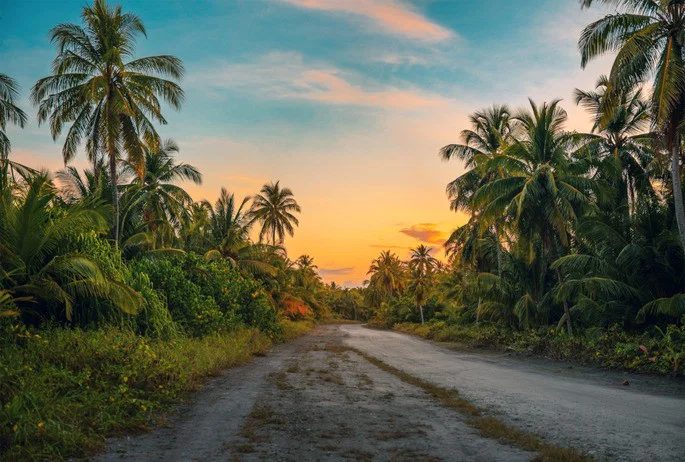

Tropical forests thrive in a specific band between the Tropic of Cancer and the Tropic of Capricorn. This includes vast swaths of South America, the Caribbean, Africa, and parts of southwest Asia. They are not just trees. They are complex, living machines running on heat and water.
Temperatures stay steady. You will rarely see them drop below 20°C or climb past 25°C. The climate is defined by two things: intense light and heavy rain. Days are long. Sunlight hits the canopy hard. Rain falls often. This combination creates a biological engine that never stops.
The Biodiversity Hotspot
This environment supports the highest concentration of plant and animal life on the planet. If you are looking for which forests have the most species of trees, the answer is clear. Tropical forests hold the record.
You will find broad-leaf plants everywhere. Palms dominate the skyline. Shrubs, herbs, and flowers compete for space in the understory. The density is staggering. It is not just variety. It is volume. Every niche is filled.
Four Types of Tropical Forests
Not all tropical forests look the same. Precipitation levels and altitude create distinct categories.
Rainforest
These areas receive heavy rainfall throughout the entire year. The ground is constantly wet. The canopy is dense. This is the classic image most people have.
Moist Deciduous Forest
Rain is abundant here too. But the trees react differently. Many species shed their leaves during drier periods. This adaptation helps them survive seasonal shifts without losing all their foliage.
Dry or Semi-arid Tropical Forest
Rainfall is lower. You see this more often in Africa. The vegetation is tougher. Plants have adapted to hold water. Trees are smaller. The canopy is more open.
Montane Tropical Forest
Altitude changes everything. These forests grow in highlands like the Andes. Temperatures drop. The air is thinner. Species here are specialized for cooler, wetter conditions. They are distinct from the lowland giants.
Why Location Matters
The equatorial belt provides a unique set of conditions. Stable heat. Constant light. Predictable rain. This stability allows ecosystems to become incredibly complex. Evolution has had millions of years to refine these environments.
When you look at a palm tree, you are looking at an adaptation to this specific climate. Broad leaves catch maximum light. Deep roots anchor the tree in soft, nutrient-poor soil. The system is interdependent. Remove one piece, and the whole structure wobbles.
Understanding where tropical forests are located helps explain their vulnerability. They are not just “in the tropics.” They are in a fragile balance of temperature and moisture. Change the rain. Change the heat. And the balance shifts.
The references point to biological studies from OpenStax and Spanish ecological institutions. The data is clear. These forests are biodiversity powerhouses. They are also sensitive. The difference between a rainforest and a dry forest comes down to a few inches of rain per year. That is the line.
We see selvas, deserts, and trees. But the tropical forest is a specific category. It is defined by its location. By its temperature. By its rain. It is a place where life


