Scientists are recreating the dust of dying stars in a Sydney laboratory, a breakthrough that could help explain how the building blocks of life arrived on Earth. This research isn’t just about capturing a bit of the cosmos; it’s about understanding where life came from in the first place.
The Cosmic Origin Story
For decades, the question of life’s origins has puzzled scientists. Did it begin on Earth, or was it seeded from elsewhere? The answer may lie in cosmic dust – the remnants of exploding stars rich in carbon, hydrogen, oxygen, and nitrogen (CHON), the fundamental elements of life.
Scientists have long known that meteorites contain organic compounds. But it’s unclear whether these compounds formed on Earth or were delivered by space debris. Recreating this dust in a controlled environment allows researchers to test hypotheses about how these critical molecules might have formed and traveled through space.
How to Make Stardust in a Lab
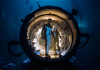
Linda Losurdo, a PhD candidate at the University of Sydney, has developed a method for creating this dust from scratch. The process involves mimicking the conditions around dying stars: a vacuum-sealed glass tube filled with gases like nitrogen, carbon dioxide, and acetylene, then zapped with 10,000 volts to create plasma.
“We’re then able to apply a very high voltage…and it energizes the gas,” Losurdo explained. The result is a synthetic dust analogue that emits a unique infrared signature, allowing scientists to verify its chemical structure.
This approach bypasses the limitations of studying actual cosmic dust, which is difficult to obtain and analyze. As Dr. Sara Webb, an astrophysicist at Swinburne University, put it: “We wouldn’t be here without [cosmic dust]…but we obviously can’t go and grab a bit of the dust from the interstellar medium.”
Implications for the Future
The implications of this research extend beyond Earth. If scientists can accurately simulate interstellar dust, they could test how life might form under different conditions on other planets. This could help us determine whether life is unique to Earth or if it’s a common phenomenon throughout the universe.
While the lab-made dust isn’t a perfect replica of all cosmic environments, Losurdo emphasizes that it provides a physically plausible snapshot for comparison with real samples. This work, published in the Astrophysical Journal, is a step toward unraveling one of the most fundamental mysteries in science: how life began.
Ultimately, the ability to recreate stardust opens new doors for understanding our origins and the potential for life beyond Earth.